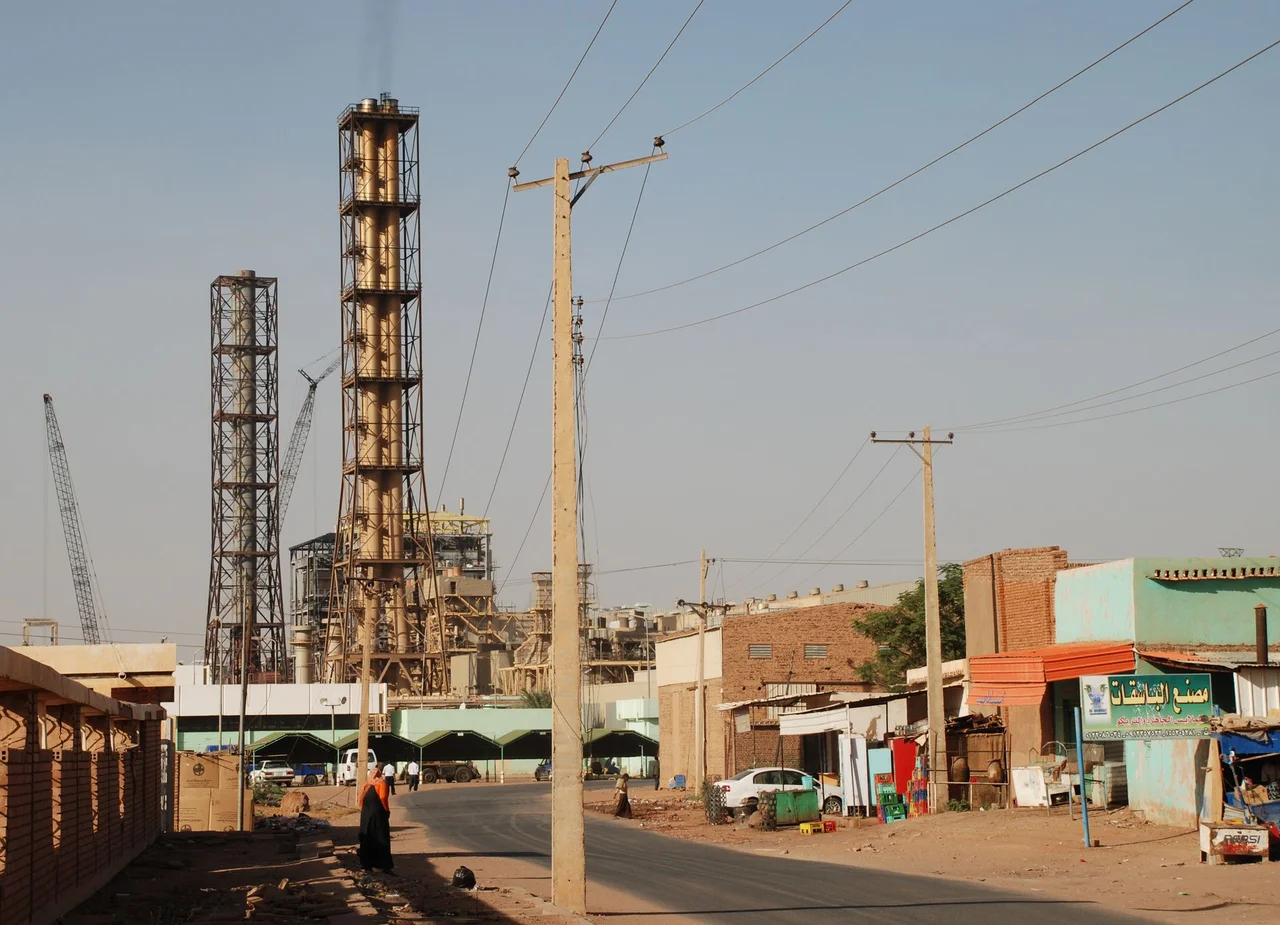

Kafouri
An English company came to Khartoum thinking they could reclaim a thousand acres east of the Bahri railway station. The land was flat, the Nile was close, the climate was reliable in its way. What they did not account for was salt. Their irrigation canals turned white as they pulled salt up from the subsoil, and the English company went bankrupt trying to grow anything useful. Aziz Kafouri, a Lebanese merchant born in Beirut who had arrived in Khartoum in 1899 with shipments of wood, iron, and building materials to rebuild the city after the Mahdist War, bought the failed project cheap. He spent years washing the salt out of the land, organizing the canals properly, and eventually shifted from wheat to dairy. His son Gabriel turned it into an institution, supplying 2,000 customers across the triangular capital with milk from more than two thousand livestock and 480 milking cows. The neighborhood carries his name.
The Lebanese Who Became a District
Aziz Kafouri's story sits inside a larger migration that reshaped post-Mahdist Khartoum. Syrians, Yemenis, and Jews came to Sudan alongside him to rebuild the economy of a city that had been essentially destroyed by the Mahdist reconquest of 1885 and the subsequent Anglo-Egyptian reconquest of 1898. Kafouri settled first in Omdurman, the old capital, then moved north to what is now Khartoum North. The land he rehabilitated, east of the railway station, still sits between Kober to the west (home of Kobar Prison, which held Sudan's political opponents for generations), Hilla Coco Farms to the east, the Ezba extension to the north, and Kassala Street to the south. The neighborhood is divided into twelve squares and is known today as one of the most prestigious districts in Khartoum.
Milk for the Triangular Capital
Gabriel Kafouri expanded his father's operation into something that ran on a scale unusual for mid-twentieth century Africa. The dairy kept more than two thousand livestock. 480 cows were in active milk production. About two thousand customers received daily deliveries across the three cities of the Sudanese capital, Khartoum, Omdurman, and Khartoum North. Milk in the heat of central Sudan is a logistical challenge that most operations of the era could not meet; the Kafouri dairy solved it. By the time the business shifted through various hands in later decades, the neighborhood had already become a place where wealthy Sudanese and expatriates wanted to live. Proximity to Khartoum International Airport made commuting easy. Wide streets and garden compounds defined the architecture. Diamond Lounge, Sana Mall, and Al-Safwa Cars are among the landmarks that grew up around the original farmland.
Mosques and Schools
Kafouri's character as a prestigious district does not erase the ordinary texture of religious and educational life that runs through any Khartoum neighborhood. The Al-Noor Islamic Complex anchors the district's religious geography. The Abdul Qader Al-Fadni Mosque, the Martyr Othman Hassan Ahmed Al-Bashir Mosque, and the Sheikh Hamad bin Jabr Al Thani Mosque each serve their own congregations. Mauhib Schools, Oasis Schools, and Turkish Schools draw students from across the capital. The Sheikh Hamad bin Jabr Al Thani Medical Centre provides medical services. The presence of Qatari-funded institutions alongside private Sudanese and Turkish ones maps the Gulf and Turkish influence that has shaped Sudanese civil society over the past two decades.
When the Bombs Came
At the start of the 2023 war in Sudan between the Sudanese Armed Forces and the Rapid Support Forces, fighting flared near Kafouri within days of 15 April. The neighborhood's proximity to Khartoum International Airport, the immediate target of the RSF attack, made it a forward battleground. Much of the fighting in Kafouri came from Sudanese Air Force bombing runs against RSF positions. By 1 May the SAF continued bombing Kafouri and bombed al-Inqaz street in nearby Bahri. Residents who had not fled earlier left when the infrastructure collapsed. Electricity went. Water went. The Nile kept running but everything else stopped. For nearly two years the district sat in a contested zone before the SAF retook it in February 2025 during the 2024-2025 Bahri offensive.
What a Name Carries
The neighborhood's name has been attached to Aziz Kafouri for more than a century now. A Lebanese merchant's legacy sits above the soil he desalinated, the canals he rebuilt, the cows his son kept, the customers who drank his milk, and the wealthy residents who bought the plots his family eventually sold. That layered inheritance, foreign entrepreneurship embedded in Sudanese geography, is part of what makes Khartoum what it is: a city built by Egyptians, rebuilt by the British, expanded by Lebanese, Syrians, Yemenis, and Jews, made Sudanese by the people who live there. The war has displaced most of the residents who made the neighborhood prestigious. When and whether they come back is one of the open questions of the current peace, still tentative in 2026, that has returned at least part of Khartoum to government hands.
From the Air
Kafouri sits at 15.64 degrees north, 32.57 degrees east, in the northeastern part of the three-city Khartoum capital. It lies within Khartoum North (Bahri), immediately north and east of Khartoum International Airport (ICAO HSSK). The Blue Nile runs south of the neighborhood, the White Nile to the west. From altitude, Kafouri shows as part of the wide residential spread on the east bank of the Blue Nile. The airport reopened for limited domestic flights on 22 October 2025 after being closed since April 2023; situation remains fluid.
Nearby Stories
- Esh Shaheinab 27 km away
- Naqa 56 km away
- Mahdist War 65 km away
- Musawwarat es-Sufra 100 km away
- Gezira State 101 km away
- Northern Sudan 215 km away