
Kamp Sint-Michielsgestel
On the morning of 4 May 1942, the arrests began across the occupied Netherlands. A professor was pulled from his lecture hall, a mayor from his office, a newspaper editor from his desk. By nightfall, 460 of the country's most prominent men had been gathered behind the walls of a minor seminary in the quiet Brabant village of Sint-Michielsgestel. They were not criminals. They were hostages.
A Ransom of Notables
The occupiers had a cold logic. Hold the Netherlands' elite — politicians, professors, clergy, lawyers, writers, musicians — and the wider population might think twice before resisting. If unrest broke out, the hostages would answer for it with their lives. The camp swallowed two boarding schools: the Beekvliet minor seminary and, a kilometre and a half away, the Ruwenberg. At its height it held some 700 men. One of its commandants was Albert Konrad Gemmeker, who in October 1942 moved on to run Westerbork, the transit camp from which Dutch Jews were deported to the death camps in the east. Here, his prisoners were valuable precisely because they were meant to stay alive — a human insurance policy against a nation's defiance.
The Price of Resistance
The threat was not idle. On 15 August 1942, after a resistance cell tried and failed to bomb a German troop train in Rotterdam, five hostages from Sint-Michielsgestel and the neighbouring camp at Haaren were taken to a wood near Goirle and shot: the shipping director Willem Ruys, the lawyer Robert Baelde, the magistrate Otto Ernst Gelder van Limburg Stirum, the police inspector Christoffel Bennekers, and Alexander Schimmelpenninck van der Oye. It was the first time the occupiers executed Dutch hostages in reprisal, and none of the five had any hand in the attack. That October, after a wave of sabotage in the country's east, three more hostages from the camps were among fifteen prisoners shot near Woudenberg. They died for the deeds of strangers, chosen in effect at random from among their peers. Every remaining prisoner now understood the arithmetic of the place: their lives were a currency the occupiers could spend whenever they chose.
The People's University
What the hostages did with their captivity became legend. These were among the most educated men in the country, and they refused to let their minds rot behind the wire. They organised lectures for one another — on history, philosophy, economics, even drawing — until the inmates began, half in earnest, to call the place a volksuniversiteit, a People's University. A theologian might teach in the morning, a physicist in the afternoon, a poet in the evening. The novelist Simon Vestdijk kept writing. Niko Tinbergen, decades from a Nobel Prize, lectured to his fellow captives. In a place designed to decapitate the Dutch establishment, its finest minds instead convened a seminar.
The Ghost of Gestel
Prewar Dutch society was rigidly 'pillarised.' Protestants, Catholics, liberals and socialists lived in parallel worlds, each with its own schools, unions and newspapers. The camp collapsed those walls. Men who would never have shared a table now shared a dormitory, and from their long conversations grew a vision of a different country. Seventeen of them, led by the future prime minister Wim Schermerhorn, formed the Heeren Zeventien — the Gentlemen Seventeen, wryly named for the governing board of the old East India Company — to plan the postwar Netherlands. Their ideas fed the Nederlandse Volksbeweging and, later, the Labour Party. The solidarity they forged earned its own name: the Geest van Gestel, the Ghost of Gestel.
What Remained
The camp closed on 12 September 1944, as Allied armies swept into the southern Netherlands. The seminary returned to its students and survives today as the Gymnasium Beekvliet. Yet Sint-Michielsgestel is remembered less for its cruelty than for the improbable community its prisoners built — a captive parliament of writers, scientists and statesmen who, not knowing whether they would live, chose instead to imagine the nation they would go on to lead.
From the Air
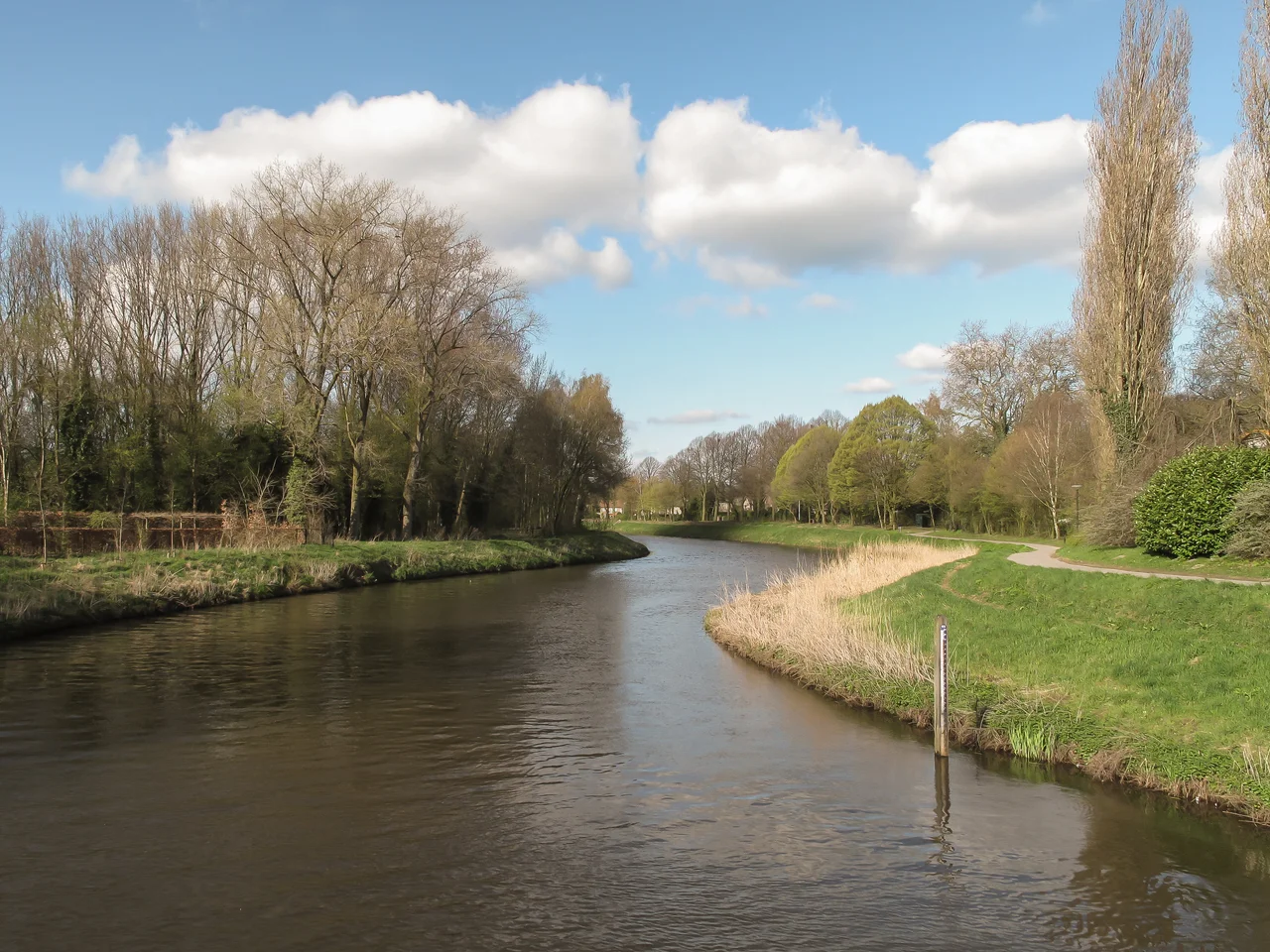
Sint-Michielsgestel lies at 51.63°N, 5.35°E in North Brabant, just south of 's-Hertogenbosch along the river Dommel. The Beekvliet and Ruwenberg complexes still stand among the village's tree-lined streets. Best viewed from 2,000–3,000 feet in clear weather; the nearest airport is Eindhoven (EHEH), roughly 20 km south, with the military airfield at Volkel (EHVK) to the east.
Nearby Stories
- Rivierenland 6.2 km away
- Wire of Death 7.5 km away
- Breda 9.6 km away
- Battle of Tolhuis 9.7 km away
- Schoonhoven 11 km away
- Hillenraad Castle 13 km away
- Weeze 16 km away
- Malle 16 km away