
Schoonhoven
On the night of February 1, 1953, the worst storm in modern Dutch history pushed a wall of sea water up the Rhine delta, broke through dikes across Zeeland and South Holland, and drowned 1,836 people. In a small fortified town on the south bank of the Lek River, one piece of medieval architecture held. The Veerpoort, Schoonhoven's Ferry Gate, the last surviving entrance from the town's original 14th-century walls, sealed shut. Behind it the streets stayed dry. The gate had been built around 1350 to keep enemies out. Six hundred years later it kept out the North Sea. It still functions as a water barrier today, a working medieval flood defense quietly doing the job it was designed for in a different century, against a different threat.
Why It's Called the Silver City
Schoonhoven is small. The 2010-2014 stretch when it counted as the smallest municipality in the Netherlands by land area was not really an honor; it just meant nobody had been merged with anyone else yet. But the town is famous out of all proportion to its size for a single craft: silversmithing. The trade arrived in the 17th century and never left. Today Schoonhoven still calls itself Zilverstad, the Silver City, and houses both the Nederlands Zilvermuseum and the International Silver School where new generations of smiths learn to raise and chase metal by hand. Walk the two main shopping streets and you can watch silversmiths working through their windows, hammers tapping at sheets of metal that will become spoons, jewelry, ceremonial pieces. The supply chain that started before the Dutch Golden Age never fully shut down. It is the kind of continuity that European travel writers usually have to invent. In Schoonhoven, it is just the local economy.
Clocks and a Carillon
Silver was not the town's only metal trade. Schoonhoven has been making clocks for centuries, and several active clockmakers still keep workshops in the old center. The masterpiece of the craft sits in the tower of the medieval town hall: the Van den Gheyn beiaard, a large carillon of 38 bells cast between 1767 and 1777 by Andreas Joseph van den Gheyn of Leuven, one of the few carillon founders whose work approached the tuning standards that the Hemony brothers had established a century earlier. When the bells ring across the rooftops at noon, the sound has the curious clarity that comes from instruments designed before mass production. You can hear individual strikes, individual decays. The town hall itself is a 14th-century structure, modest by Dutch standards, but the tower has the proportions of a small cathedral. The clockwork inside is mechanical, maintained, alive.
The Walls That Were and Weren't
Around 1350, Schoonhoven was wrapped in stone walls and gates. By 1582 those walls were renewed and extended to enclose the shipyards on the riverfront. After the Disaster Year of 1672, when France, England, Münster, and Cologne all invaded the Dutch Republic simultaneously, the fortifications were reinforced again. Then in 1816, with bastion warfare suddenly obsolete in the age of artillery, the town demolished most of its defenses and turned the cleared ground into a cemetery and a park. Only the Veerpoort survives. Walk through it down to the riverbank and you stand where Olivier van Noort, the first Dutchman to sail around the world, lived out his final years. His statue is just outside the gate, looking out over the Lek. He sailed from Rotterdam in 1598 with four ships and 248 men; he returned in 1601 with one ship and 45 men, having completed the fourth circumnavigation of the planet. Born in Utrecht, he served as Schoonhoven's garrison commander from 1620 until his death here in 1627.
Storks Over the Polders
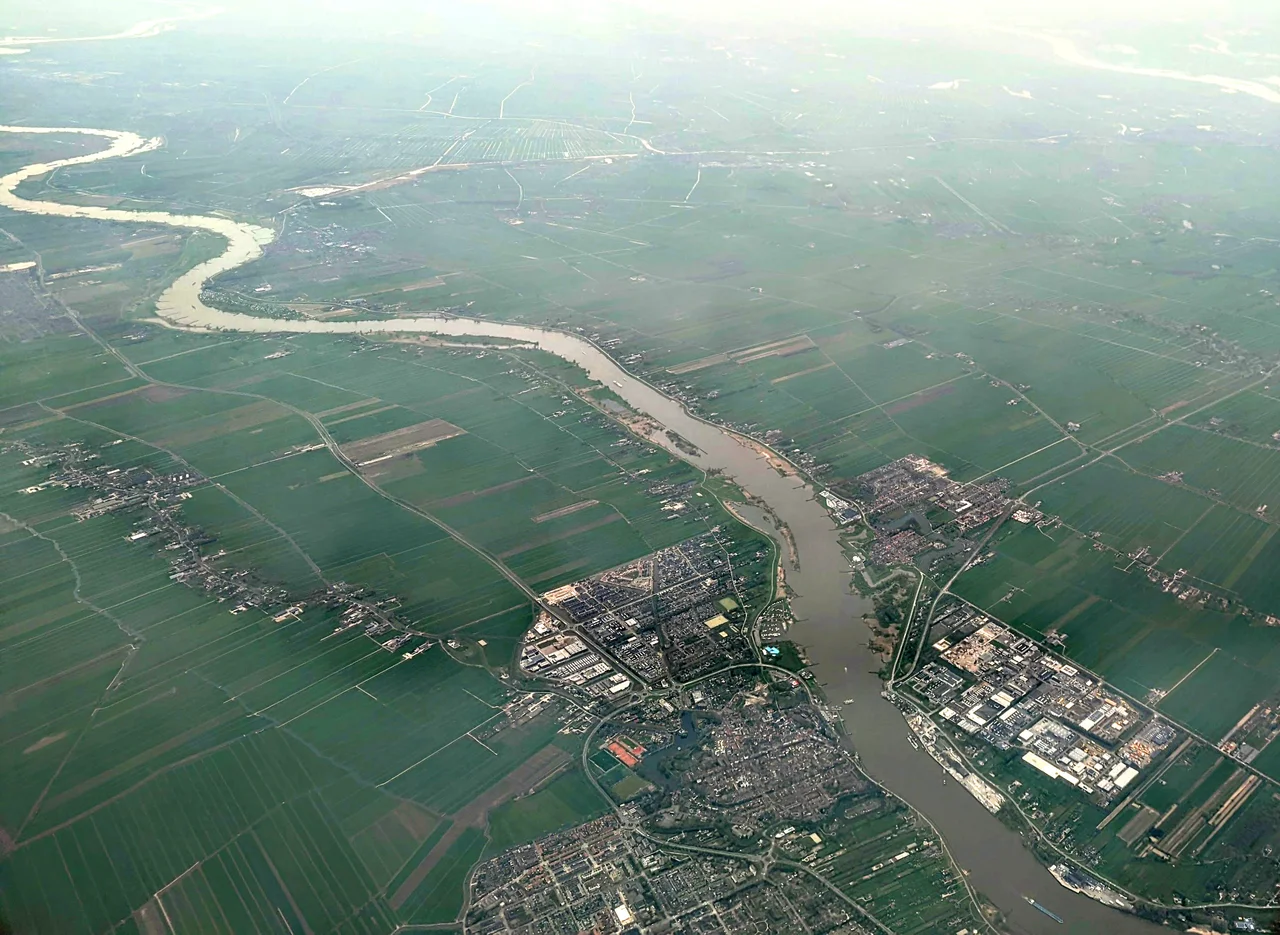
Schoonhoven sits in the Groene Hart, the Green Heart of Holland, a rural pocket of grass-covered polders surrounded by the country's biggest cities but somehow still empty. The flat fields of the Krimpenerwaard, the Lopikerwaard, and the Alblasserwaard radiate outward from the town. Storks nest here in spring. Cyclists pour out from the city center on weekends to thread the canal-side paths past dairy farms and 17th-century windmills. The town has no railway, only buses and a small car-and-foot ferry across the Lek to the village of Gelkenes. That isolation is part of why the historic core has survived so intact. The 21st century arrived in Schoonhoven slowly, then politely declined to fully unpack.
Spookhoven, Silver Day, and Sinterklaas
For a town of fewer than 13,000 people, Schoonhoven keeps an unreasonably full calendar. Every Whit Monday, Silver Day brings the workshops onto the streets, with demonstrations of silversmithing in the squares and special exhibitions at the museum. Around Halloween the town stages 'Spookhoven,' a multi-day festival of costumed wandering and ghoulish street theater through the historic gates and along the canals. In late November, Sinterklaas arrives by boat at the Veerpoort, and the children of Schoonhoven gather along the river to watch their gift-giving saint sail in from over the water. None of this is for tourists. The inland cruise ships that dock here in summer get to share the spectacle, but the festivals would happen with or without them, the way they have happened more or less continuously since this small town was given its city rights in 1280.
From the Air
Coordinates 51.948°N, 4.849°E, in the Krimpenerwaard polder on the south bank of the Lek River. From altitude, the town is identifiable by its dense oval historic core enclosed by the remnant of its outer canal, set in the otherwise empty grassland of the Green Heart of Holland. The Lek River bends sharply just east of the town. Nearest airports: Rotterdam The Hague (EHRD) about 25 km west, Schiphol (EHAM) about 45 km north. The terrain is flat and uniform, so the Lek itself and the spire of Schoonhoven's town hall make the best visual landmarks. Best viewed in clear weather from 2,000-4,000 ft AGL.
Nearby Stories
- Baarn 1.1 km away
- Oud Herlaer 3.5 km away
- Battle of the Slaak 5.5 km away
- Dorestad 5.8 km away
- Holland 7.2 km away
- Polanen Castle 9.8 km away
- Breda 11 km away
- Hollandse Kust Zuid Offshore Wind Farm 19 km away