
Kempische Vaart
In 2015, Antwerp engineers replacing a bridge over the Albert Canal made a small archaeological discovery: when they dug down they found two walls running in parallel beneath the IJzerlaan, perfectly preserved, the remains of a canal that had been filled in eighty years earlier. They could have removed them. Instead, they reopened the gap, filled it with water again, and put back into service a short stretch of the Kempische Vaart - a canal that had quietly carried iron, coal, and pine wood for ninety years before being swallowed by its successor. The new IJzerlaan Canal uses pieces of the old walls and a remnant of Lock 17. It is a canal that refuses, even now, to stay buried.
Why a Canal Through Sand
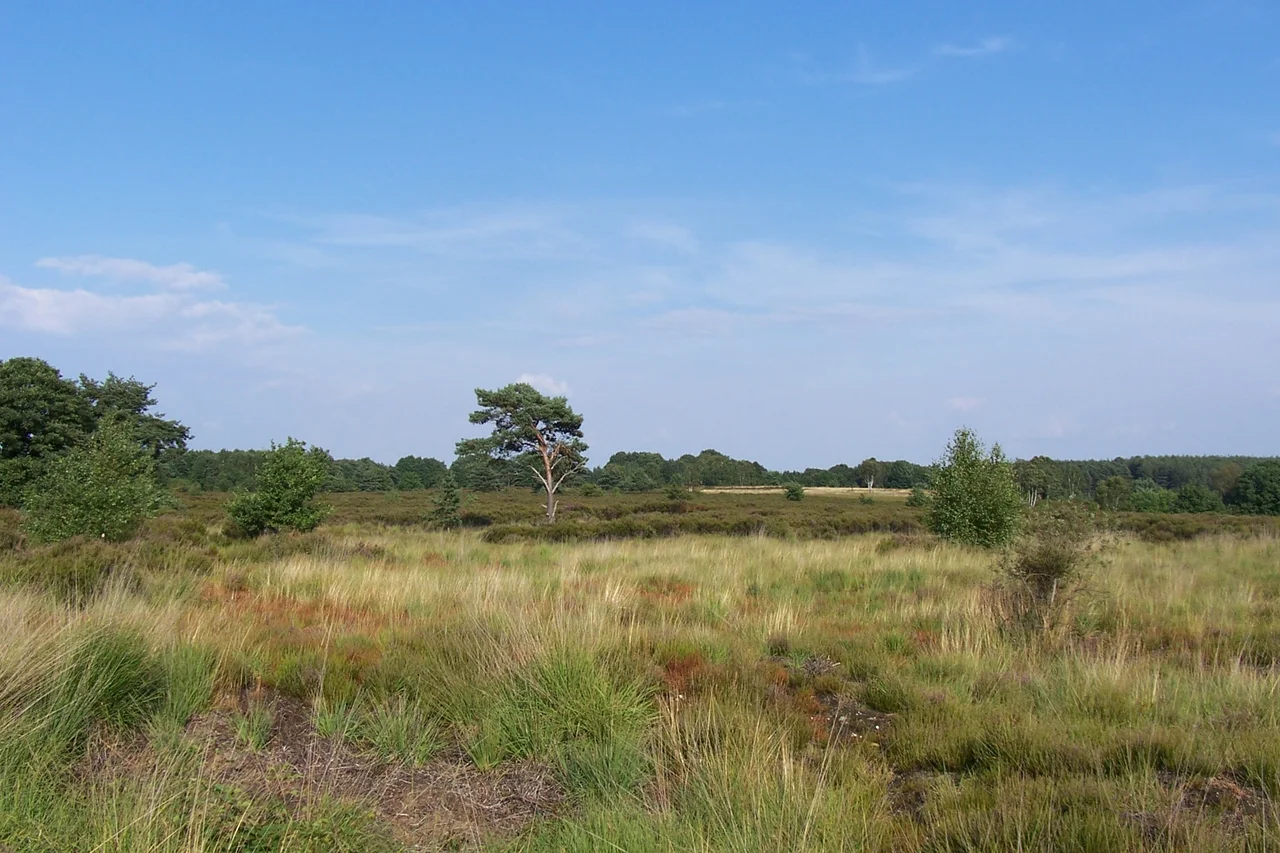
The Campine - in Dutch the Kempen - is a stretch of sandy soil between the Meuse and the Scheldt that for most of recorded history grew almost nothing. Up to about 1860 it was open heath, peat moss, and oak forest, sparsely populated because the ground would not feed the people. Whatever the Campine did produce - timber, bark, charcoal - was bulky and cheap, and there was no way to move it cheaply enough to make it worth selling. A canal was the obvious answer. Belgium, newly independent after 1830, had inherited a forty-five-kilometer stretch of the Dutch Zuid-Willemsvaart and now needed to link Antwerp's port to the Meuse and to the coal fields beyond. The two ambitions - irrigate the heath, connect the rivers - merged into one project. Engineer U. Kümmer drew the plan in 1838. Parliament approved the first phase in 1842. Digging began the next year.
Opening the Land
The first stretch, from Bocholt to a place called Blauwe Kei, opened on 22 August 1844 - twenty-seven kilometers of new water cut through sand. Two years later the canal reached Herentals, with eleven locks bringing barges down the gentle slope toward the Scheldt basin. By 1859 the canal extended all the way into Antwerp, its final lock connecting to the Kattendijk Dock and through it to the sea. The cargo lists are a snapshot of a region waking up: coal from Liège heading north to the port, overseas timber and grain heading south toward the iron works, building materials in both directions, sand dug out of the canal's own banks for glass factories along the route. Hay from the newly irrigated Campine meadows. Iron rails from the new mills. The Belgian government collected tolls. Barges carrying fertilizer paid nothing - the irrigation project was the soul of the thing.
Horses on the Towpath
An account from 1880 describes the daily life of the canal with the precision of someone who walked beside it. The towpaths along both banks were at least 1.5 meters wide, surfaced with gravel, busy from dawn. Most barges were pulled by horses. Smaller boats of 50 to 70 tons were pulled by men - cheaper at 2.5 francs a day to a horse's ten. Steam tugs had been tried multiple times and abandoned, all of them, for reasons the writer does not bother to explain. The traffic was constant but slow. A trip from Antwerp to Liège took sixteen days in 1926. By 1938 motor vessels had cut it to about five. Cargo doubled between 1926 and 1937. Freight rates dropped by more than half over the same period. The canal was succeeding so completely that it was about to be replaced.
Politics of Water
The irrigation project that justified the canal turned into a quiet political scandal. A small group of landowners around Barthélémy de Theux de Meylandt - a few dozen men in all - had acquired most of the newly fertile Campine and lobbied the government to send them as much water as possible. They wanted to dam the Meuse. The Dutch government refused. Meanwhile Dutch barge traffic on the Meuse was crippled in dry summers, sometimes for five months at a stretch, freight prices increasing by up to 500 percent. In 1863 the two countries signed a Meuse treaty that tied Campine water allocations to the river's level. The lesson of the canal, repeated in projects across nineteenth-century Europe, was that hydraulic engineering is never just about water. It is about who owns the meadows once the water stops flowing.
Replacement and Memory
By the 1920s, Belgian planners feared Rotterdam would steal Liège's coal traffic if a new Dutch canal could carry 2,000-ton barges directly to the Meuse. They proposed the Albert Canal - bigger, straighter, on Belgian soil. It opened in 1939 and ate the Kempische Vaart from both ends. The Antwerp section was rebuilt as part of the Albert. The stretch east of Herentals was filled in entirely, the new canal routed south of the town. About two-thirds of the original canal survived, from Herentals back to Bocholt, renamed the Bocholt-Herentals Canal and demoted to a waterway of local interest. The Kempische Vaart had been the spine of Belgian industrial transport for ninety years. From the air today you can still trace its route by the place names along it - Dessel, Mol, Geel, Olen - villages whose growth followed the canal and whose roads still mark where the towpaths once ran.
From the Air
Coordinates 51.17°N, 4.82°E. The surviving Bocholt-Herentals Canal cuts a straight east-west line across the flat Campine countryside, visible from 3,000 ft as a thin silver thread between dark pine plantations and pale farmland. The much larger Albert Canal runs roughly parallel to the south. Antwerp International (EBAW) lies 40 km west. The historic lock at Bocholt - the canal's original eastern terminus - is best photographed in the late afternoon when the lock chambers cast long shadows. Brussels (EBBR) is 65 km southwest.
Nearby Stories
- Rotselaar 3.8 km away
- Walter Adolph 5.9 km away
- Hasselt 6.9 km away
- NAC Breda 8.7 km away
- Affligem Abbey 9.4 km away
- Sint-Niklaas 10 km away
- Sint-Maartensdijk Castle 11 km away
- Sint-Oedenrode 15 km away