_(4455298382).jpg)
Kerameikos Archaeological Museum
The potters who gave their name to Kerameikos would have found the irony fitting: the neighbourhood they made famous for fired clay eventually became famous for the dead. Kerameikos — from *keramos*, the Greek word for pottery — sat just outside the ancient city walls of Athens, which made it the natural location for the city's necropolis. For centuries Athenians buried their dead along the Sacred Way here, marked by elaborate grave monuments. Then in 1863, archaeologists began pulling those monuments from the earth, and the story of what to do with them began. The Kerameikos Archaeological Museum is that story's current home.
From Makeshift Outpost to Museum
The earliest accommodation for the finds was improvised: a small outpost set up in 1863 to house pottery and objects as they emerged from the ground. For decades this served as an exhibit of the German Archaeological Institute, which oversaw excavations at the site. The formal museum building came in 1937, designed by H. Johannes and funded by Gustav Oberlander, a Prussian entrepreneur whose philanthropy reached across the Atlantic to fund German-American cultural institutions as well. In the 1960s, the Boehringer brothers — of the family behind the pharmaceutical firm Boehringer Ingelheim — funded an expansion. The result is a small, unhurried space: four rooms on a single floor, open to a garden courtyard planted with olive trees and laurels, the kind of greenery that would have been entirely familiar to the Athenians whose belongings are kept inside.
The Objects the Living Left for the Dead
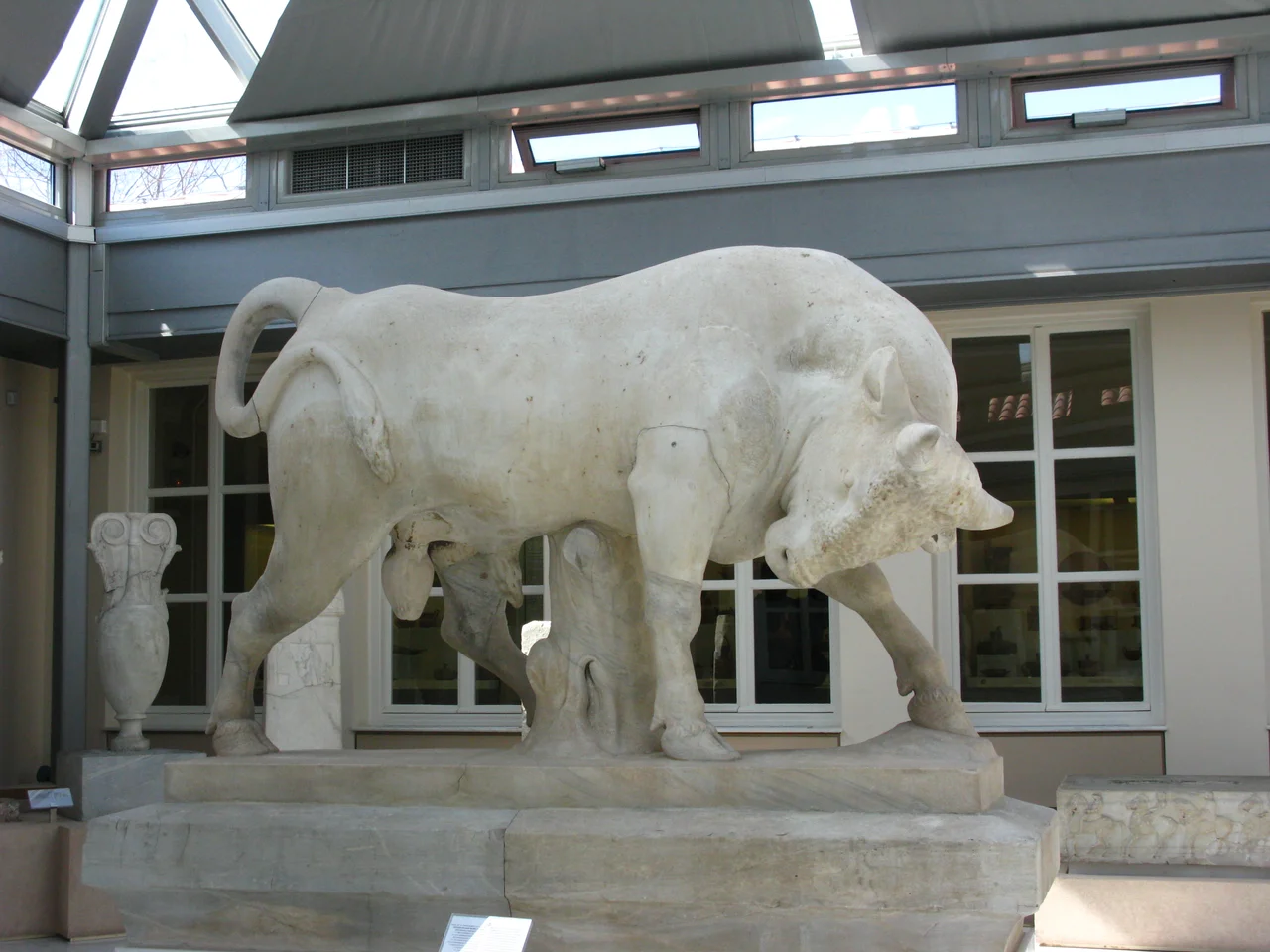
Three of the museum's four rooms hold artifacts from the Kerameikos necropolis. The fourth houses sculpture from all archaeological periods found across the wider site. Athenian grave culture was elaborate and deeply felt: the living brought lekythoi (narrow-necked oil flasks, often painted white and decorated with scenes of mourning), urns, grave reliefs, and stone stelae. These were not casual tokens but deliberate statements about the person who had died and the world the survivors hoped they had entered. Some of the most striking pieces document offerings made to the victims of the Plague of Athens, the epidemic of 430 BC that killed perhaps a quarter of the population including the statesman Pericles. The museum holds works spanning the Archaic, Classical, Hellenistic, and Roman periods — more than a thousand years of grief rendered in clay, stone, and bronze.
The Stele That Tells You Everything
Among the funerary sculptures here, the Grave Stele of Dexileos stands out. Dexileos, son of Lysanias of Thorikos, was a young Athenian cavalryman who died in 394 BC fighting in the Corinthian War. His family erected a stele showing him on horseback, in the act of striking down an enemy — idealized, noble, frozen at the moment of his final engagement. He was twenty years old. The detail that makes this monument remarkable is that his birth date was carved alongside his death date, allowing scholars to confirm that Dexileos was not a veteran but a young man who barely outlived his youth. The stele carries no ambiguity: this was a life cut short, publicly mourned, and publicly memorialized by people who understood exactly what had been lost.
A Living Site
The museum does not sit in isolation from the ground it describes. It is embedded in the Kerameikos archaeological site itself, surrounded by excavated roads, burial enclosures, and the remains of the Dipylon and Sacred Gates — the largest gateway into ancient Athens. Walking from the garden court of the museum out into the site is to move between two eras without a break. The Sacred Way runs past the museum toward Eleusis; the Street of Tombs, lined with the grave enclosures of wealthy Athenian families, branches off nearby. A black-figure lekythos was stolen from the museum in 1982, a reminder that these objects are not yet entirely safe from the carelessness of the present. But the rest remain, steady in their quiet rooms, tending the ancient city's long conversation with its dead.
From the Air
The Kerameikos Archaeological Museum is located at approximately 37.967°N, 23.717°E, in the Kerameikos district of central Athens. From the air at 2,000–4,000 feet, the site is identifiable by the green rectangle of the archaeological park beside the busy Ermou Street corridor. The Acropolis and Parthenon are visible approximately 1 km to the southeast — a useful navigational anchor. Athens International Airport (LGAV / Eleftherios Venizelos) lies about 24 km to the east-southeast.
Nearby Stories
- Parnitha 3.4 km away
- Kea (island) 7.3 km away
- Sanctuary of Apollo Maleatas 11 km away
- Sousaki Volcano 12 km away
- Battle of Leuctra 14 km away
- Great Sand Beach 18 km away
- Agios Georgios (island) 23 km away
- Skyros 84 km away