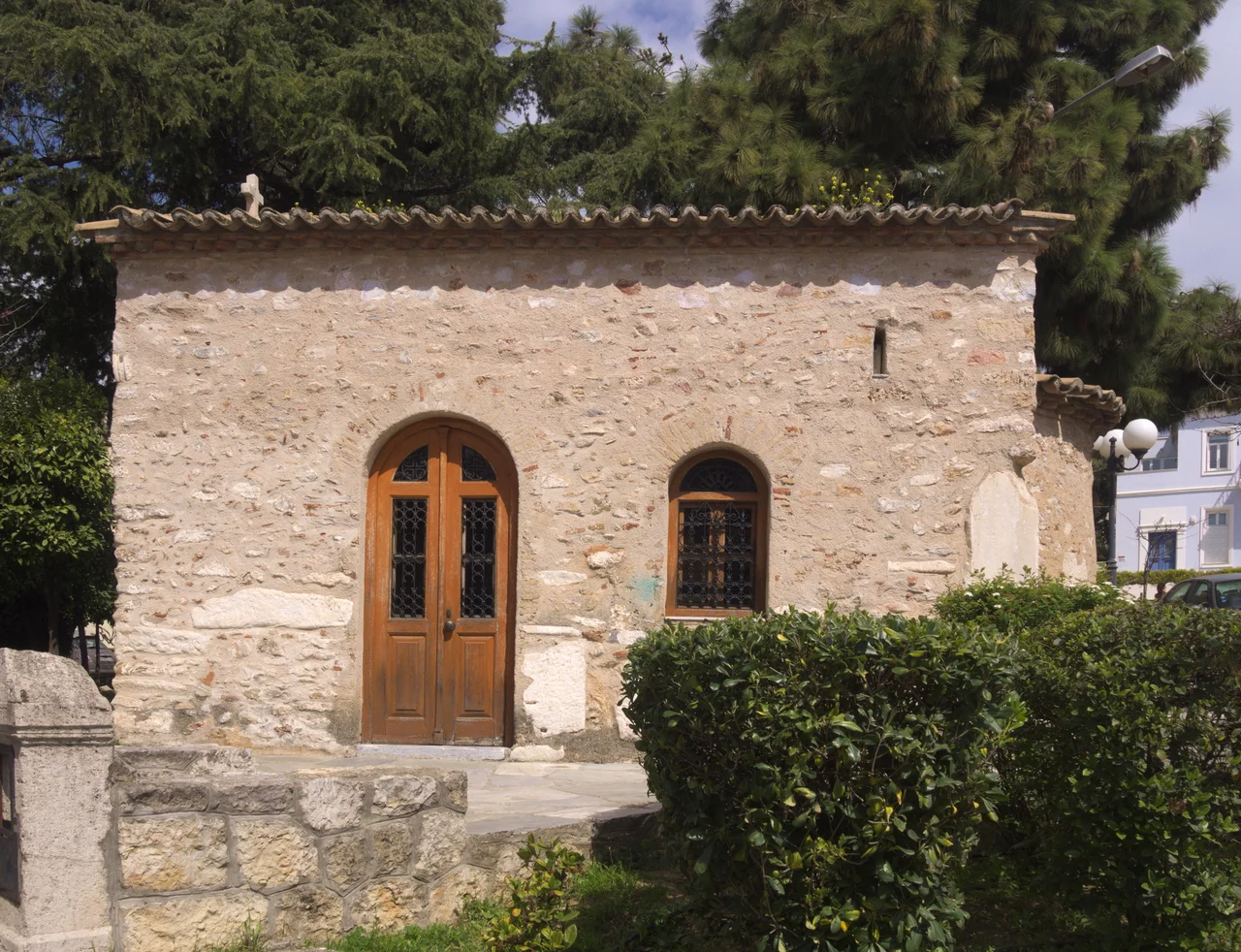

Kifissia
When the Athens basin bakes, Kifissia stays cool. Tucked against the lower slopes of Mount Pentelicus on the northern edge of the city, it sits high enough and green enough that its average temperature runs noticeably below the dusty center, and it catches far more rain - the most generous rainfall in the whole Athenian basin. The wealthy have understood this for a very long time. Two thousand years ago they came here to escape the heat, and they never really stopped.
A Retreat for Philosophers
Athenian tradition credited the mythical king Cecrops with founding ancient Cephisia as one of the twelve cities of Attica - a lineage reaching back into the Mycenaean Bronze Age, before even Theseus. In classical times it was a deme of its own, home to the great comic dramatist Menander, born around 342 BC, and a favored escape for the Athenian elite who prized its mild air and abundant water. By the reign of the emperor Hadrian, Cephisia had become a famous haunt of philosophers. The fabulously rich Herodes Atticus of Marathon built his Villa Cephisia here, a sprawling estate near where the Kifisia Grove stands today. The pattern was set early: the powerful built their summer houses in Kifissia, and the centuries simply repeated it.
The Railway and the Villas
By the mid-19th century the area had lost some of its luster. Brigands like Christos 'Davelis' Natsios roamed the Attic countryside with near impunity, and a summer estate could be a risky proposition. Then two things changed everything: the suppression of the brigands, and the arrival of the railway in 1885. Suddenly Kifissia was an easy ride from central Athens, and fashionable families raced to build there. Social competition turned architectural. Villas rose in ever more exotic styles, a one-upmanship rendered in stone and stucco, and the result is the leafy, eclectic streetscape that still defines the suburb. For those who couldn't afford a villa, opulent hotels appeared by the 1920s - places to spend the season rubbing shoulders with one's social betters.
Where the Powerful Lived and Died
Kifissia has long been home to Greece's leading political families, and its quiet streets carry an outsized share of national history. The novelist Penelope Delta, beloved chronicler of Greek childhood, is bound to the place; her great-grandson, the politician Antonis Samaras, would later become prime minister. The dictator Ioannis Metaxas, who ruled Greece from 1936, died in Kifissia in 1941. So did the generals and politicians Theodoros Pangalos and Themistoklis Sophoulis, and the poet Andreas Empeirikos. The shadow-theatre master Evgenios Spatharis was born here. To walk Kifissia is to pass, house by house, through a roll call of modern Greek life - its writers, its leaders, and its strongmen alike.
Snow in the South
Kifissia keeps a secret most of Athens never sees: it gets snow. Its higher elevation, its trees, and cold air spilling off the Aegean give it a genuinely cooler, wetter climate than the coast, and when winter storms line up just right, the snow can fall hard and fast. In early January 2002, a severe storm dropped exceptional accumulations on the northern suburbs - enough to paralyze daily life in a city that rarely owns a snow shovel. The same conditions that once drew heat-weary Athenians in August produce, a few months later, a landscape of white villas and snow-laden pines that looks nothing like the Greece of postcards.
Old Money, New Towers
Today Kifissia wears two faces. It remains the leafy, expensive suburb of parks and wooded parcels, anchored by the Goulandris Museum of Natural History, which gathers the wildlife of the Greek lands under one roof in the heart of town. But it is also corporate Greece's preferred address - the headquarters of Aegean Airlines and a long list of banks and multinationals line Kifisias Avenue, the artery that runs from central Athens out to the suburb's edge and connects to the motorway. The Athens metro's oldest line, Line 1, ends its long run north at Kifissia station. The villas and the office towers share the same shaded streets - belle-epoque leisure and 21st-century business, both drawn to the same cool, green ground.
From the Air
Kifissia centers on roughly 38.083 degrees N, 23.817 degrees E, at the far northern edge of the Athens urban area against the foot of Mount Pentelicus. From the air the suburb stands out as a denser band of greenery than the gray basin to the south, threaded by Kifisias Avenue running north-south. Mount Pentelicus to the northeast and the broad Athenian plain to the south aid orientation. Nearest airport is Athens International (LGAV), about 20 km to the east-southeast. In winter, be aware that this northern fringe can see snow and reduced visibility when the rest of Athens stays clear.
Nearby Stories
- Great Sand Beach 5 km away
- Battle of Delium 7.7 km away
- Tower of Aliartos 9 km away
- HMHS Britannic 10 km away
- Saronic Gulf 15 km away
- Sousaki Volcano 17 km away
- Sanctuary of Apollo Maleatas 24 km away
- Skyros 66 km away