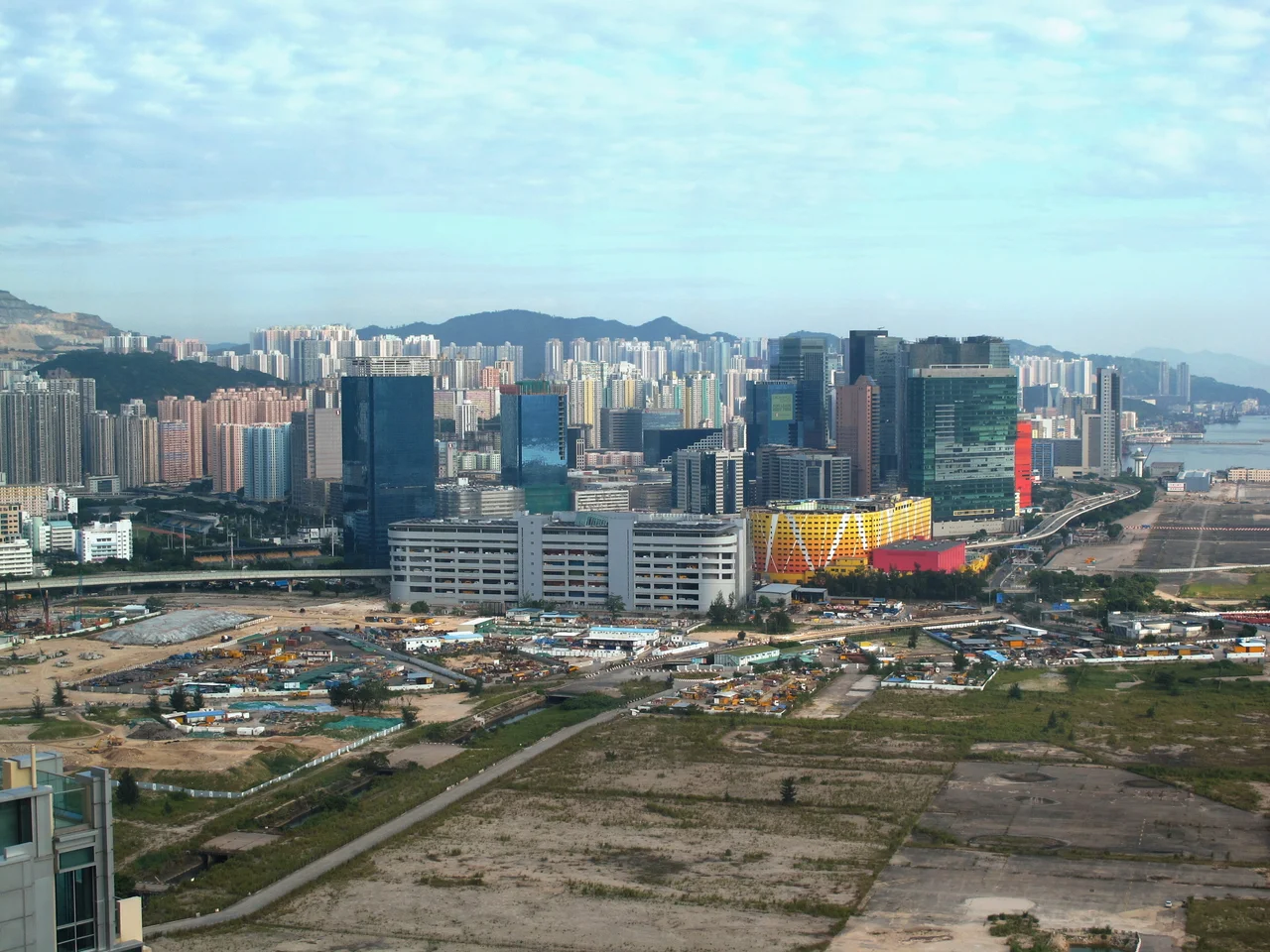

Kowloon Bay
Pilots who once flew into Kai Tak Airport called the approach the most nerve-wracking in the world. Their Boeing 747s would scream low over Kowloon's tenement rooftops, bank sharply at the famous 'checkerboard hill,' and touch down on a single runway jutting into Kowloon Bay — surrounded by water on three sides. When Kai Tak closed in 1998 and flights moved to the new airport on Lantau Island, the bay lost its most dramatic tenant. What happened next is a story of reinvention that Hong Kong has been writing, quite literally, from the water up.
A Bay Divided by a Runway
Kowloon Bay forms the eastern portion of Victoria Harbour, tucked between Hung Hom to the west and the narrow channel at Lei Yue Mun to the east. For most of its modern history, the bay was defined by what sat in its middle: the 13/31 runway of Kai Tak International Airport, constructed in the mid-1950s on reclaimed land that physically split the water in two. Ships, fishing boats, and the occasional wayward aircraft lived in uncomfortable proximity for decades. The western slice eventually became a protected typhoon shelter, tucked behind a breakwater, where small Kowloon Rock and the former Hoi Sham Island — long since connected to the shore by landfill — offered modest shelter from the South China Sea storms that roll through every summer. The eastern side remained open water, giving arriving passengers an intimate view of the city they were about to enter: laundry on balconies, neon signs at eye level, and a density of urban life found almost nowhere else on earth.
Reclaiming the Shore
Land reclamation is not merely a feature of Kowloon Bay's history — it is the engine that built it. San Po Kong, the industrial district that now stands well inland, was once part of the bay's shoreline. Over a century, engineers pushed the sea progressively back. The neighborhood now known simply as Kowloon Bay — centered on the MTR station of the same name — rose from the northeastern corner of the bay on reclaimed ground that had previously been the Ngau Tau Kok Industrial Area. That land is now split in character: the streets near the station are residential, a mix of public housing estates and private towers like Telford Gardens (built, unusually, directly atop MTR's first depot), while the shoreline remains given over to industry and trade. The Kowloonbay International Trade and Exhibition Centre, known as KITEC, filled that waterfront role for years before closing in 2024 for redevelopment, leaving yet another chapter of the bay still unwritten.
After the Last Departure
When the final flight lifted off Kai Tak's runway in July 1998, the airport site became one of the largest blank slates in any major city on earth. Plans proliferated. In the 1990s, ambitious proposals called for reclaiming the entire bay to house 240,000 to 340,000 residents — a new town dropped into the middle of Victoria Harbour. Public outcry and the Protection of the Harbour Ordinance put an end to that ambition. Instead, the Kai Tak Development Plan took shape around the existing footprint: the old runway's southern tip became a cruise terminal, welcoming ocean liners to a berth that once launched jetliners. An East Kowloon Cultural Centre is set to open on the site, adding arts and performance to a district long defined by commerce and transit.
Getting There, Then and Now
The old airport also explains why getting around Kowloon Bay has always required a certain navigational intuition. The runway cut straight through the administrative logic of the area: the airport and its surrounding waters belonged to Kowloon City District, while the reclaimed eastern neighborhoods fell under Kwun Tong District. Today the MTR Kowloon Bay station on the Kwun Tong line ties the neighborhood together most efficiently, sitting next to Telford Plaza and connecting residents to the wider city in minutes. Bus routes along Kwun Tong Road handle the rest. What the area lacks is the raw drama of the approach — that stomach-dropping bank over the city, wheels skimming the tenement towers. But the bay keeps the memory in its geography: that long concrete spit pointing south, empty of aircraft, still reaching into the water like something waiting.
From the Air
Kowloon Bay sits at approximately 22.32°N, 114.20°E, on the eastern edge of Victoria Harbour. From the air, the former Kai Tak runway — a long concrete finger jutting into the bay from the north — remains the most distinctive feature. It is visible at cruising altitude on clear days. The closest airport is Hong Kong International Airport (VHHH) on Lantau Island, roughly 30 km to the west. Approaching from the northeast, Lion Rock and the Kowloon hills form the backdrop behind the bay. Recommended viewing altitude is 3,000–5,000 feet to pick out the runway footprint and the surrounding urban density.
Nearby Stories
- Lok Ma Chau Loop 2.3 km away
- Portas do Cerco 2.3 km away
- Kweilin Incident 17 km away
- Wanshan Archipelago Campaign 34 km away
- Nanxiong Formation 115 km away
- Battle of Nanpeng Island 148 km away
- Heyuan 169 km away
- Cape Maobitou 632 km away