
Kowloon Park
Somewhere in Kowloon Park, if you know where to look, a pair of gun emplacements still stands. The naval guns mounted in them were discovered at a construction site on Chatham Road in 1980, rescued from the rubble, and reinstalled in what had been the Kowloon West II Battery — a Grade I historic building that now serves as a children's adventure playground. That is Kowloon Park in miniature: a place that has quietly accumulated history in layers, turned barracks into gardens, and installed flamingoes where soldiers once drilled. It covers 13.3 hectares in the middle of Tsim Sha Tsui. In a city that rarely wastes land on greenery, it is a remarkable thing to have.
From Whitfield Barracks to Public Park
Before it was a park, this land belonged to the British Army. The Whitfield Barracks occupied the site for decades, housing troops in colonial-era blocks that were, by any reasonable measure, handsome buildings — two-storied, pitched roofs finished with Chinese tiles and tar, built around 1910 in a style that fused military utility with a tropical colonial aesthetic. More than 70 of those buildings were demolished when the Urban Council redeveloped the site. What survived did so because it was worth keeping. The park's first phase opened on 24 June 1970, when Governor Sir David Trench cut the ribbon. That first phase covered 18 of a planned 26 acres, but the full vision took years to complete. An aviary opened in 1980. The pool complex followed in 1989. The park doubled in size through expansions to the north and south, absorbing more of the old barracks land, building over the memory of the garrison piece by piece.
Controversies on the Hillside
Not everyone agreed about what should happen to this particular patch of Tsim Sha Tsui. In 1982, the Executive Council approved plans to carve a strip of retail premises into the hill facing Nathan Road — a commercial development that the government had actually been considering since 1970, when the barracks were first converted. The Urban Council opposed it. So did the Muslim community, whose mosque stood immediately next door. Neither objection carried the day. The rights to develop the 5,410-square-metre strip were sold in February 1983 to a subsidiary of New World Development for HK$218 million. The result was Park Lane Shopper's Boulevard, which hugs the Nathan Road hillside in a configuration that has always felt slightly odd: because the ground drops away, the roofs of the shops are level with the park's lawns above, and the gardens extend directly onto the rooftops. It is the kind of solution that Hong Kong's layered topography tends to produce.
The Creatures of the Park
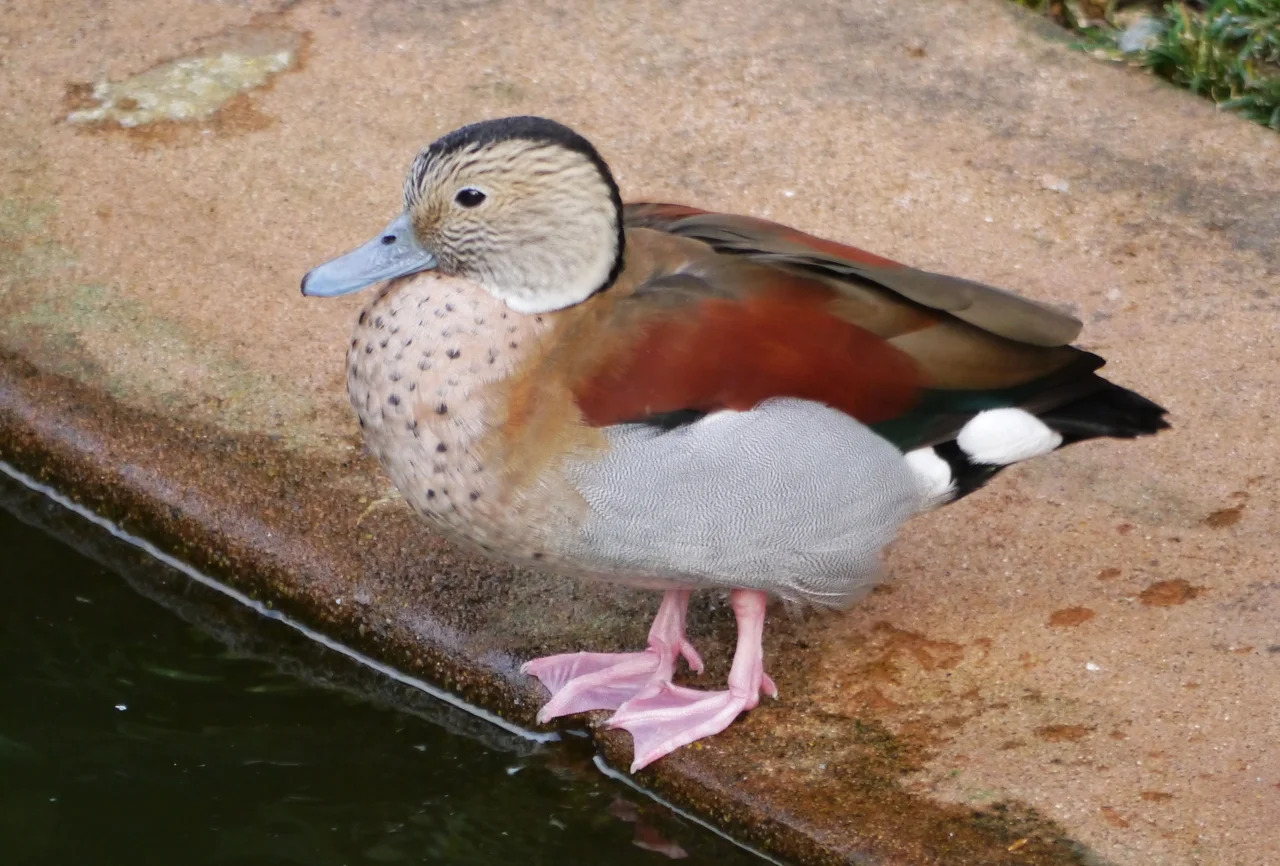
Walk past the Rose Garden and you reach the Bird Lake and the Aviary, where the park's most conspicuous residents live. Flamingoes wade in pink clusters. Swans drift. Ducks and tropical pigeons go about their business with studied indifference to the city pressing in on all sides. About 100 species of wild birds have been recorded in the park — not just in the aviary but throughout the grounds, drawn by the trees, the water, and the relative quiet. Stone wall trees grow from the walls adjacent to the aviary pond, their roots gripping the masonry in one of Hong Kong's stranger horticultural arrangements. The Conservation Corner, the Chinese Garden, and the Fitness Trail each offer different angles on a park that is much more ecologically varied than it looks from Nathan Road.
The Pool That Never Closes
The swimming complex at Kowloon Park is the most heavily used in Hong Kong, which is saying something in a city that takes competitive swimming seriously. More than 2,000 swimmers pass through daily; annual attendance exceeds one million. The complex includes an Olympic-sized 50-metre main pool, two 25-metre training pools, a 20-metre diving pool, and an assortment of outdoor leisure pools connected by waterfalls. It opened on 12 September 1989 and can accommodate up to 1,530 swimmers at once — a number that suggests the design team understood the demand they were planning for. Major swimming events and events from the Hong Kong Games are held here regularly. Beyond the pool, the park also houses the Hong Kong Heritage Discovery Centre, occupying the two surviving colonial barrack blocks, and the Hong Kong Avenue of Comic Stars, which opened in 2012 and runs for 100 metres near the Park Lane entrance, lined with 24 bronze figurines of local cartoon characters and the handprints of their creators.
From the Air
Kowloon Park sits at approximately 22.30°N, 114.17°E, in Tsim Sha Tsui — the southern tip of the Kowloon Peninsula. From altitude, the park appears as a green rectangle against the dense urban grid, clearly visible on the western side of the peninsula adjacent to Nathan Road. The white marble of the Kowloon Mosque on its eastern boundary provides an additional visual marker. Hong Kong International Airport (VHHH) is on Lantau Island, roughly 28 km west. At 2,000–4,000 feet, Victoria Harbour opens dramatically to the south, with Hong Kong Island's skyline filling the horizon beyond.
Nearby Stories
- Lok Ma Chau Loop 2.3 km away
- Portas do Cerco 2.3 km away
- Kweilin Incident 17 km away
- Wanshan Archipelago Campaign 34 km away
- Nanxiong Formation 115 km away
- Battle of Nanpeng Island 148 km away
- Heyuan 169 km away
- Cape Maobitou 632 km away