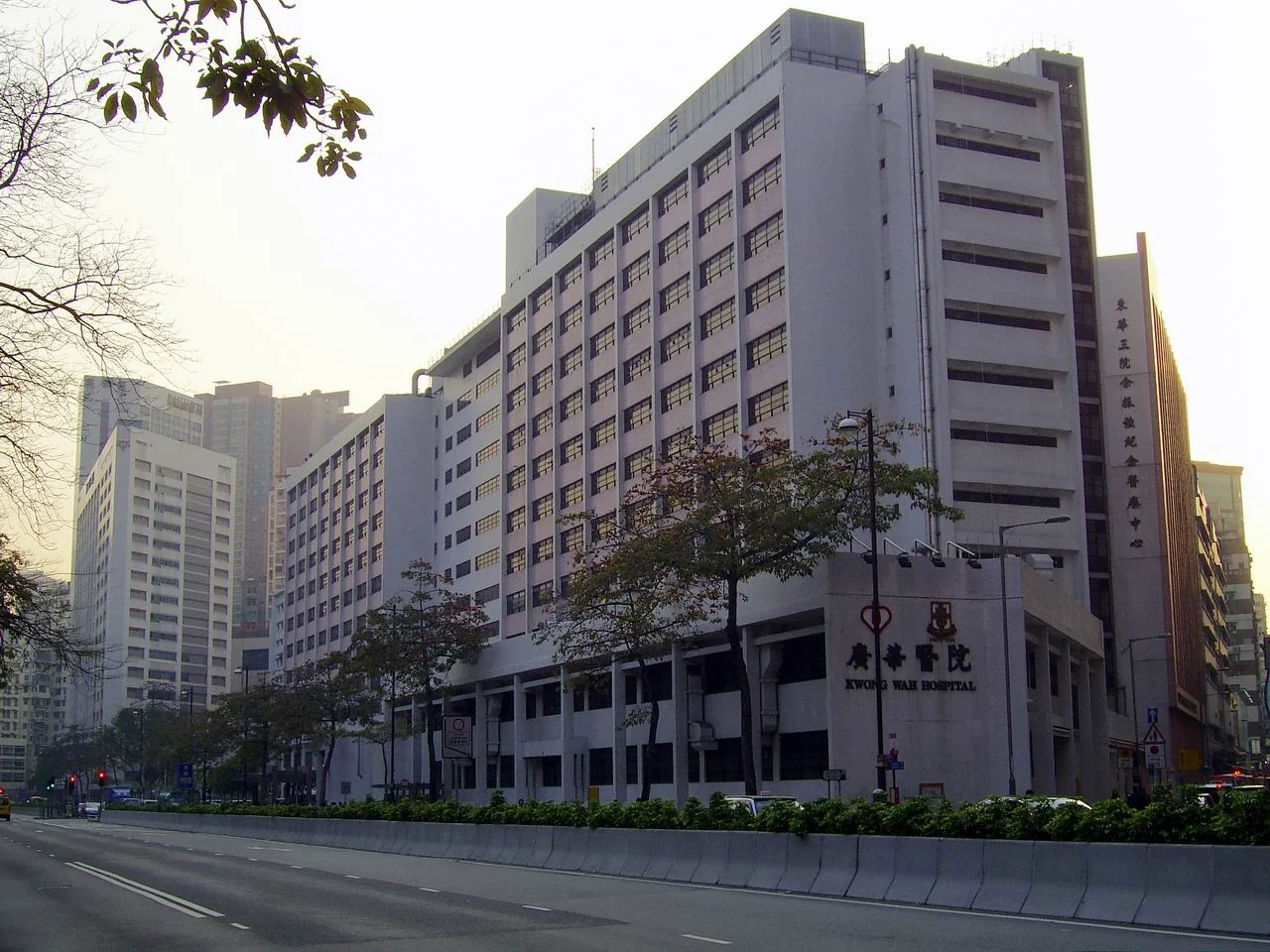

Kwong Wah Hospital
Before Kwong Wah Hospital opened in October 1911, if you lived in Kowloon and needed hospital care, you took a ferry. There was no other option: the only hospitals in Hong Kong served Hong Kong Island, and the harbour between was a genuine barrier for the sick and the injured. The growth of the Han Chinese population in Kowloon after the British lease of the New Territories in 1898 had outpaced every piece of civic infrastructure. A group of Chinese philanthropists and physicians, led by Kai Ho, decided that could not continue. The hospital they built — Kwong Wah, meaning "Guangdong Chinese" — was conceived from the start as a charitable institution serving the people the colonial system had not yet gotten around to.
Building a Hospital on Charity
The Hong Kong government eventually backed the proposal in 1907, contributing $139,340 — equivalent to approximately $6 million in today's Hong Kong dollars — over five years, alongside local charitable organizations. Construction proceeded, and the opening ceremony took place in October 1911. From the beginning the hospital operated as a charitable service: medicine and care provided free of charge to residents who could not pay. Funding was a constant challenge. The Kowloon area had fewer wealthy residents than Hong Kong Island, and the hospital ran close to the margin in its early decades. A significant turning point came in 1928, when local Chinese leaders persuaded the Yau Ma Tei Tin Hau Temple — itself a major local charity — to transfer its assets to the hospital, stabilising its finances. In 1931, Kwong Wah became part of the newly reorganized Tung Wah Group of Hospitals.
Where Two Medicines Met
At the turn of the twentieth century, much of the Chinese community in Hong Kong was deeply skeptical of Western medicine. Some patients refused Western treatment even as they were dying. Yet the repeated outbreaks of bubonic plague carried by global trade made the need for modern medicine impossible to ignore. Kwong Wah's founders chose a practical path: adapt the scientific knowledge and effective methods of Western medicine while keeping traditional Chinese medical care available alongside it. The compromise was genuinely radical. In 1922, local philanthropists donated $50,580 to establish a specialist Chinese medicine clinic within the hospital. That integration never stopped. Today, the TWGHs Wilson T S Wang Integrated Chinese and Western Medicine Treatment Centre operates within Kwong Wah, offering joint consultations under protocols developed by both Chinese and Western medicine practitioners.
SARS and the Room on the Ninth Floor
The hospital's most consequential moment arrived on 22 February 2003. Liu Jianlun, a 64-year-old physician from Guangdong who had treated early SARS patients in China, checked into room 911 on the ninth floor of the Metropole Hotel in Kowloon on 21 February. He had developed symptoms on 15 February but felt well enough to travel and sightsee. The following day he went to Kwong Wah's accident and emergency department and was admitted to the intensive care unit. He died on 4 March. Investigators later traced approximately 80 percent of Hong Kong's SARS cases back to his brief stay in that hotel — guests on his floor carried the virus to hospitals and communities across multiple countries. Kwong Wah treated him and others who followed, becoming part of the frontline response to an outbreak that reshaped how the world understood epidemic preparedness.
From 72 Beds to Seven Towers
The hospital that opened in 1911 with a single building and 72 beds has been rebuilt and expanded more than a dozen times. Today it is a complex of seven towers with 1,141 beds, offering a full range of acute and specialty care for West Kowloon and Wong Tai Sin districts. Neurosurgery, neuroscience, cardiac surgery, obstetrics, an intensive care unit, a geriatric day hospital, a renal dialysis service — the breadth of clinical work would be unrecognizable to the philanthropists who first petitioned the colonial government for funds. The original Main Hall Building was preserved and now houses the Tung Wah Group of Hospitals Museum. Within it, a plaque records that Ma Ying-jeou, who would become President of the Republic of China, was born in this hospital in 1950.
From the Air
Kwong Wah Hospital is located at approximately 22.315°N, 114.172°E in Yau Ma Tei, at 25 Waterloo Road. From the air at 2,000–4,000 feet, the hospital complex is visible in the residential density of central Kowloon, roughly 1.5 km north of the Tsim Sha Tsui waterfront. The preserved historic Main Hall building is distinguishable within the modern complex. Nearest major airport: Hong Kong International (VHHH), approximately 28 km to the west-southwest. The Kwun Tong line and Tsuen Wan line MTR interchange at Yau Ma Tei station is immediately adjacent.
Nearby Stories
- Lok Ma Chau Loop 2.3 km away
- Portas do Cerco 2.3 km away
- Kweilin Incident 17 km away
- Wanshan Archipelago Campaign 34 km away
- Nanxiong Formation 115 km away
- Battle of Nanpeng Island 148 km away
- Heyuan 169 km away
- Cape Maobitou 632 km away