_at_Lalibela_Airport.jpg)
Lalibela
Bet Giyorgis is cut from the top down. Where most builders begin with foundations and rise from the ground, the masons of twelfth-century Ethiopia started at the surface of a pink volcanic plateau and chiselled a perfect cruciform church into the rock below - roof first, then walls, then interior, then the drainage trenches surrounding it. What they left is not a structure placed on the earth. It is a cathedral subtracted from it. And Bet Giyorgis is only one of eleven.
A New Jerusalem
King Gebre Mesqel Lalibela founded the town of Roha in the Zagwe period more than nine centuries ago, intending it as a substitute for Jerusalem - a pilgrimage city for Ethiopian Christians suddenly cut off from the Holy Land. Early in his reign, Saladin captured Jerusalem from the crusaders, and Ethiopians found themselves excluded from the traditional pilgrimage across the Red Sea. So Lalibela built their destination into the mountain. The seasonal river flowing through the site was named Yordanos - the Jordan. A nearby hill became Debra Zeit, the Mount of Olives. The Church of Golgotha contains what tradition says is the tomb of the king himself. The place names are a map of faith transplanted.
The Angels Night Shift
Ethiopian Orthodox tradition does not shrink from the scale of what was accomplished here. How, the reasoning goes, could eleven churches have been hewn from living rock during the quarter-century reign of one king, unless angels completed the work at night, labouring twice as fast as the human masons of the day? Modern scholars offer a quieter timeline - some of the rock-hewn features may date to the seventh or eighth centuries, extended and elaborated in Lalibela's reign. The medieval Ethiopian civilisation that did this work stands on its own. The persistent myth that the Knights Templar helped is exactly that: a myth born of the European refusal to believe Africans could build what Europeans could not.
Pink Tufa, Bare Feet
The churches are open before sunrise. Arrive by 05:45 to hear the bass drums summon the call to prayer. Services begin at 05:50. You remove your shoes - you will remove them many times before the day is out - and step onto stone that pilgrim feet have worn smooth across nine centuries. Bet Medhane Alem, the House of the Saviour of the World, is believed to be the largest monolithic church on Earth, likely modelled on the original Saint Mary of Zion at Axum. Bet Maryam may be older still. The eleven churches cluster in three groups - north-western, north-eastern, and Bet Giyorgis on its own five hundred metres south - connected by trenches and tunnels carved through the same pink tufa. Red, yellow, and blue-headed lizards scamper between them once the sun is up.
The Smell of Frankincense
North of town rises Dewosach, where much of the illumination of holy books was done in Lalibela's time, at an elevation of 3,670 metres. Nearer and slightly lower sits Asheten with its distinctive flat top. The name means smell in Amharic - the mesa was christened during the reign of Lalibela's nephew King Neakutoleab, who burned frankincense while building Saint Mary's church on its summit. Visiting monks, the story goes, found it by following the scent. The everyday craftsmanship of Lalibela stands in quiet contrast: round two-storey stone dwellings with conical thatched roofs, wattle-and-daub houses, corrugated roofs patched with thatch. The ancient builders carved cathedrals. Their descendants work quietly around them, still.
At Altitude
The town sits at 2,600 metres in the Lasta Mountains of northern Ethiopia, home to around 15,000 people. The climate is exhilarating almost year-round - dry, bright, and clear, with mountain views that open off every path. A Sunday morning draws hundreds of white-robed worshippers to the rock-hewn churches for Ethiopian Orthodox liturgy. Pious Ethiopians walk here in bare feet from across the country, sometimes for hundreds of kilometres. What they find at the end of that journey is a place the rest of the world has called the eighth wonder - but for them, simply, home.
From the Air
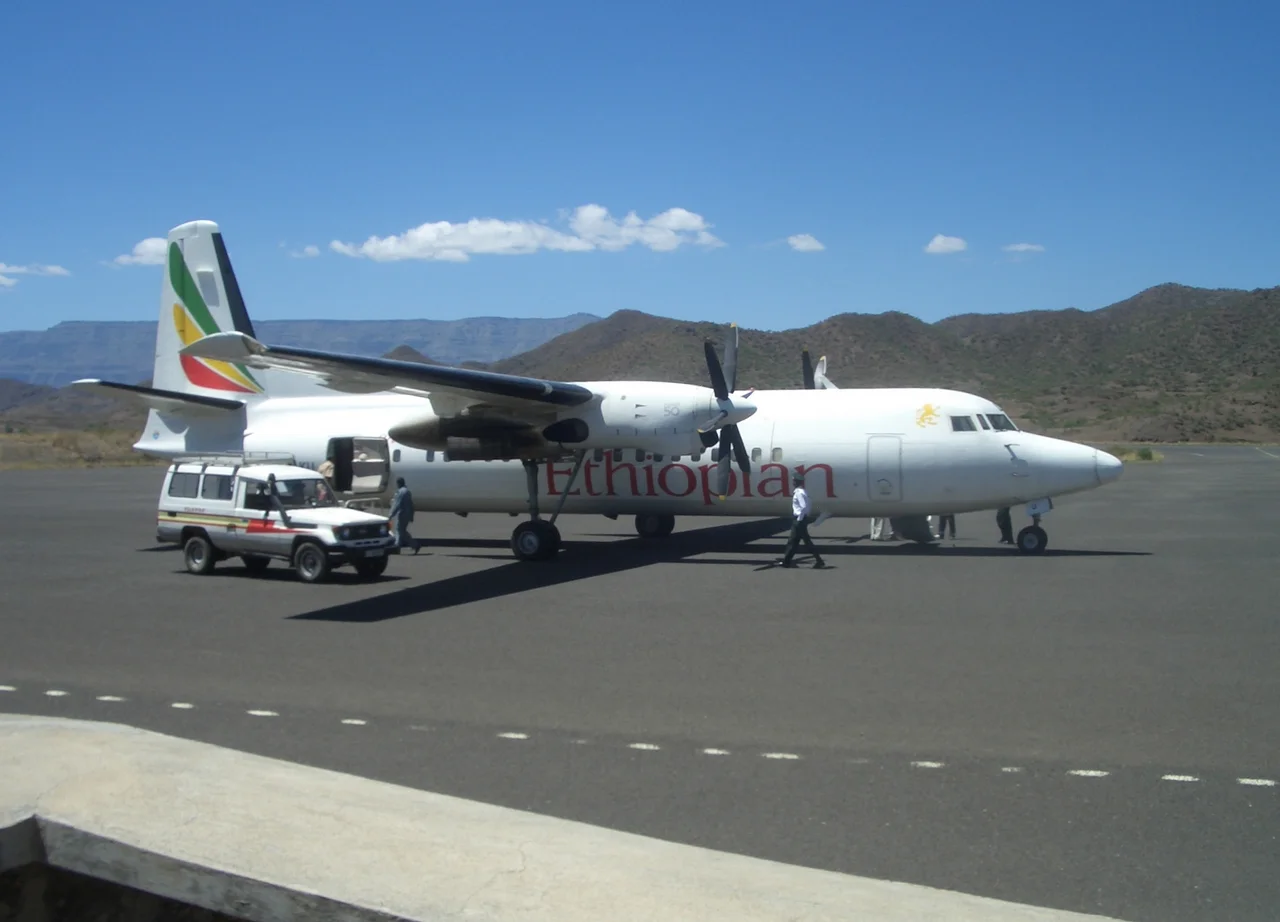
Lalibela sits at 12.04 degrees N, 39.05 degrees E at an elevation of approximately 2,600 metres in the Lasta Mountains of northern Ethiopia. Lalibela Airport (ICAO HALL) lies on the plateau below the town, served by Ethiopian Airlines from Addis Ababa and Gondar. From the air, the town is a scatter of conical roofs on a ridge; the rock-hewn churches are set below ground level and are best identified by the cross-shaped pit of Bet Giyorgis and the trenches surrounding the northern and eastern clusters. Thin air at altitude requires acclimatisation. Best visibility is October through May.
Nearby Stories
- Amba Geshen 34 km away
- Wollo Province 43 km away
- Debre Tabor 74 km away
- Amhara Region 79 km away
- Simien National Park 118 km away
- Battle of Amba Aradam 119 km away
- Afar Triangle 151 km away
- Dallol (hydrothermal system) 224 km away