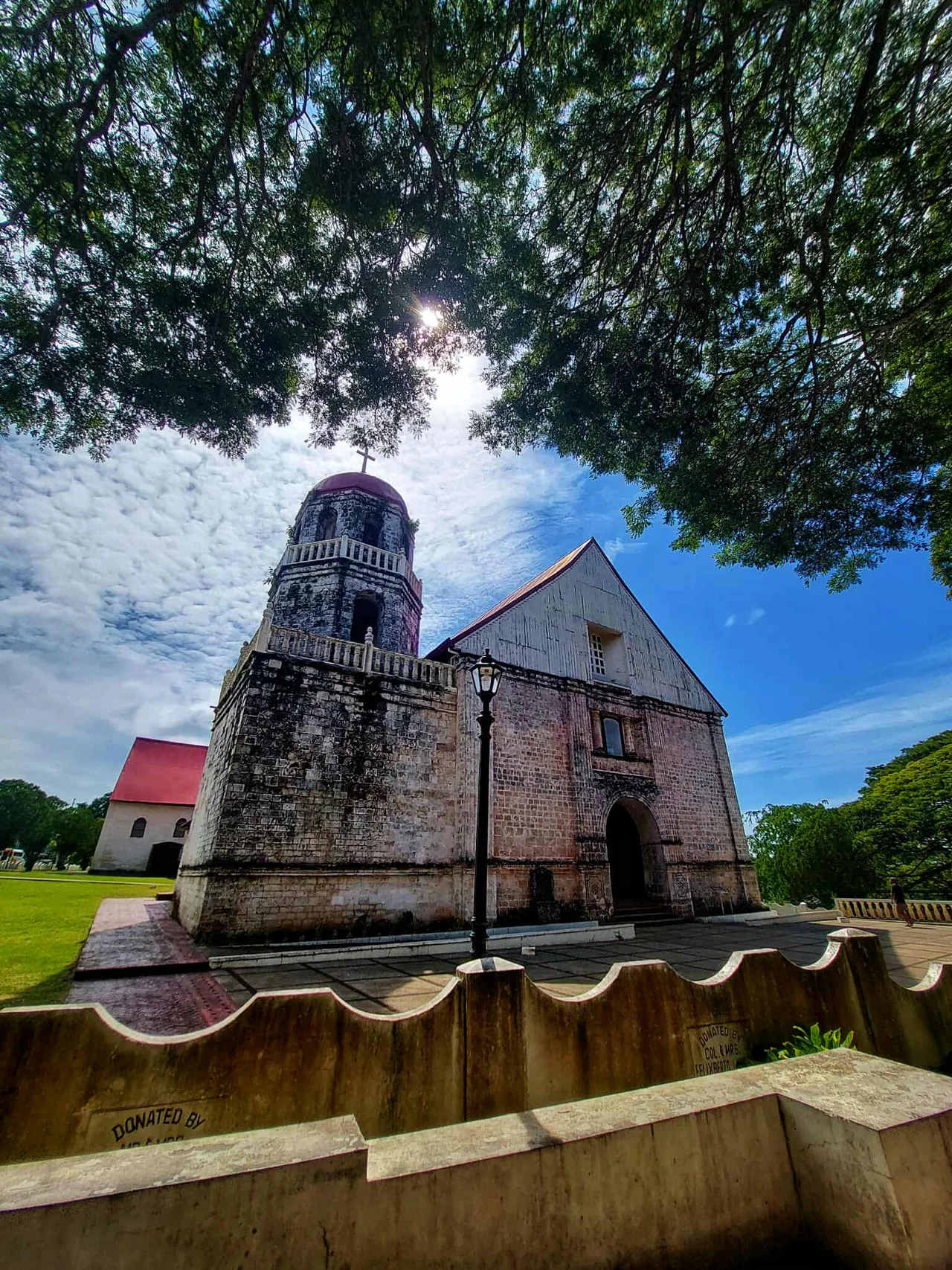

Lazi Church
The convent is what catches your eye first. Built of coral stones and hardwood between 1887 and 1891, the convent of Lazi Church is enormous -- one of the largest and best-preserved in the Philippines, a structure so imposing it seems to belong to a much larger city than the quiet municipality of Lazi on the island of Siquijor. Then you turn to the church itself: San Isidro Labrador Parish Church, built of sea stones and wood in 1884, its bell tower added the following year, both completed under the direction of Augustinian Recollect priest Father Toribio Sanchez. Together, they form a compound that the National Museum of the Philippines has declared a National Cultural Treasure -- and that UNESCO has placed on its tentative World Heritage list.
From Tigbawan to Treasure
The parish began modestly. Lazi -- originally called Tigbawan -- became an independent parish from Siquijor on August 8, 1857, placed under the advocacy of Saint Isidore the Laborer, the patron saint of farmers and rural communities. For nearly three decades, the parish functioned without the stone structures that would eventually make it famous. Then, in 1884, Filipino artisans began construction of the present church, using sea stones quarried from the surrounding coast and wood harvested from the island's forests. The bell tower followed in 1885. Construction of the convent, the more ambitious project, began in 1887 and required four years to complete. Both buildings were realized under Father Sanchez's direction -- a collaborative effort between a Spanish Recollect priest and the Filipino craftsmen who actually shaped the stone and fitted the timber.
Sea Stone and Coral Bone
The church is built from materials drawn directly from its island environment. Sea stones form the walls; wood provides the structural framework. The convent's construction is even more striking: coral stones and hardwood, assembled with a solidity that has withstood more than a century of typhoons, earthquakes, and tropical humidity. The architectural style belongs to the broader tradition of Philippine Baroque, a colonial adaptation that blended European ecclesiastical forms with local materials and building techniques. The scale of the convent -- its long corridors, tall windows, and heavy stone walls -- speaks to the ambitions of the Augustinian Recollects, who saw their missions in the Visayas as permanent establishments, not temporary outposts. Restoration work has maintained the buildings' structural integrity; photographs from September 2019 show the convent exterior after repair, its coral walls freshly stabilized.
Treasures and Tentative Lists
The recognitions have come steadily. In 1984, the National Historical Commission of the Philippines installed a historical marker at Lazi Church, formally designating it a National Historical Landmark. In 2001, the National Museum elevated its status to National Cultural Treasure -- the highest cultural designation the Philippine government can bestow. Since 2006, Lazi Church has been on UNESCO's World Heritage Tentative List under the collective nomination "Baroque Churches of the Philippines (Extension)," alongside the churches of Patrocinio de Maria in Boljoon, Cebu; La Inmaculada Concepcion in Guiuan, Eastern Samar; San Pedro Apostol in Loboc, Bohol; and San Mattias in Tumauini, Isabela. In 2014, the government announced plans to formally nominate Lazi Church for the World Heritage List, conducting dossier training for local representatives as the first step in what remains a long and rigorous process.
Siquijor's Quiet Anchor
Siquijor is an island better known for folk healing and mystical reputation than for monumental architecture, which makes Lazi Church all the more surprising. The municipality of Lazi sits on the southeastern coast, within the jurisdiction of the Diocese of Dumaguete, far from the tourist circuits that bring visitors to the Visayas' more famous beaches and dive sites. The church and convent are not showpieces designed for visitors but working parish buildings that have served the community for well over a century. Sunday Mass still happens here. The convent's rooms still function. The bell tower still marks the hours. For a place that holds National Cultural Treasure status and sits on a UNESCO tentative list, Lazi Church is remarkably unpretentious -- a building that earns its significance not through spectacle but through the quiet persistence of stone, wood, and faith.
From the Air
Lazi Church is located at approximately 9.13N, 123.63E on the southeastern coast of Siquijor Island in the Central Visayas. The nearest significant airport is Dumaguete-Sibulan Airport (RPVD) on neighboring Negros Island, approximately 25 km to the west across the Siquijor Strait. From the air, Siquijor is a compact, roughly oval island visible between Negros, Bohol, and Mindanao. At 3,000-5,000 ft, the church compound is identifiable as a large stone structure near the Lazi waterfront. The island's small size makes it easy to spot the town from altitude.
Nearby Stories
- Pamplona Massacre 10 km away
- Jose Rizal Memorial Protected Landscape 22 km away
- Boljoon Church 36 km away
- Japanese Cruiser Abukuma 64 km away
- 1995 Ipil Massacre 123 km away
- November 2023 Mindanao Earthquake 371 km away
- Balut Island 430 km away
- Sinking of MV Sewol 2777 km away