
Leticia
Step off the plane in Leticia and the first thing you notice is the heat - dense, wet, and absolute. The second thing is the geography. Walk fifteen minutes south from the main plaza and you are in Brazil. Walk a few hundred meters to the riverbank, board a small boat, and you are in Peru. This is the triple frontier, where three nations converge at the Amazon River without fences, without checkpoints between them, without ceremony. The jungle does not care which government claims it, and neither, it seems, does Leticia.
The River Capital
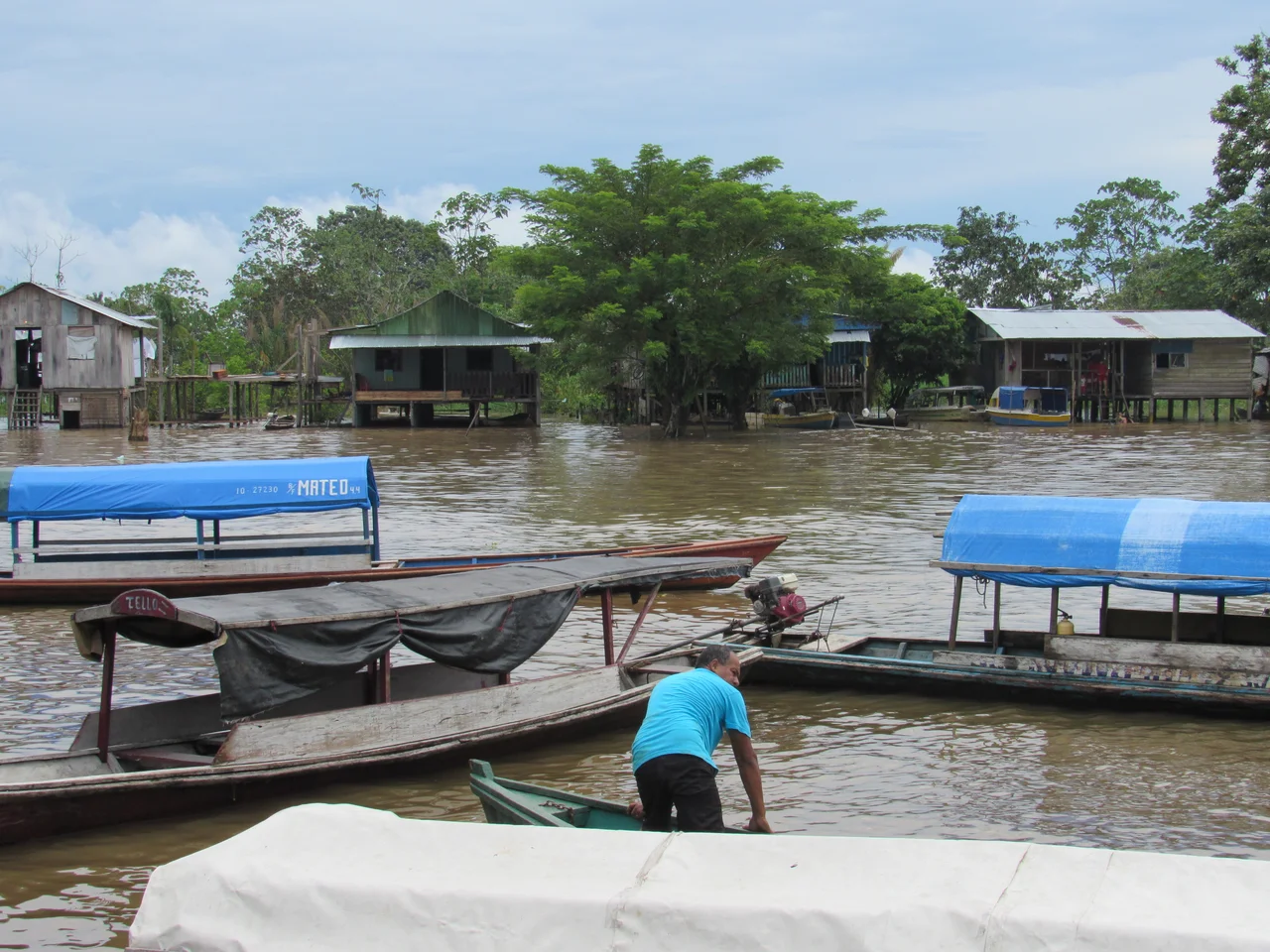
Leticia is a small town of about 42,000 people, perched on the north bank of the Amazon at 4 degrees south of the equator. It is the capital of the Amazonas department of Colombia and the country's only major port on the river, yet it sits closer to Iquitos and Manaus than to any other Colombian city. No highway reaches Leticia. You arrive by plane from Bogota - a two-hour flight that crosses the Andes and then descends over an unbroken green horizon - or you arrive by boat, the way most people have arrived for centuries, riding the slow current downstream from Peru or upstream from Brazil. The town has one hospital, one airport, and one continuous rhythm: the sound of outboard motors on water.
Three Countries, One Sidewalk
The border with Tabatinga, Brazil, is not marked by anything dramatic. A street simply changes name. Signs switch from Spanish to Portuguese. Prices shift between pesos, reais, and Peruvian soles, all three freely traded in the money changers' stalls. Across the river sits Santa Rosa, a small Peruvian settlement reachable by a five-minute boat ride. Residents move between the three countries daily for work, school, shopping. Tabatinga is a Free Trade Zone with good deals on electronics. Santa Rosa offers the fast and slow boats to Iquitos - ten hours on the rapido, three days on the lancha, where travelers sling hammocks on the top deck and share rice and fish with strangers. Immigration rules exist but are loose by necessity. Stamp in, stamp out, try not to annoy the officers.
The Forest Breathes Through Town
Every evening around sunset, something extraordinary happens in Parque Santander. Thousands of small parrots descend on the park's trees to roost for the night, filling the air with a thick, chattering cloud of green. Ask politely at the church next door and the caretakers will unlock the bell tower for a small donation, giving you a view of the spectacle and the river beyond. The Tikuna, Yagua, Huitoto, and Bora peoples have lived in this region for centuries, and Leticia serves as a launching point to visit their communities, though the most heavily touristed visits can feel more performance than encounter. Jungle lodges line the Yavari River and the surrounding reserves, where days pass in canoe glides, canopy walks, and night safaris listening for caimans in the dark water.
Pink Dolphins and Water Lilies
The standard day tour out of Leticia heads downstream to Puerto Narino, stopping at Monkey Island and a water-lily lagoon along the way. The Victoria amazonica lilies grow to more than two meters across, large enough to hold the weight of a small child on their ribbed undersides. At Lake Tarapoto, pink river dolphins surface in brief, startling arcs - Inia geoffrensis, a freshwater species found nowhere outside the Amazon basin. The Parque Ecologico Mundo Amazonico, seven kilometers from town, showcases over three hundred Amazonian plant species and offers tours where visitors can try traditional blowguns and bow-and-arrow. For many travelers, Leticia is not a destination so much as a trailhead - the last town with electricity before the jungle proper begins.
Life at the Crossroads
Food in Leticia is a crossroads too. Colombian cooks bring sancocho, the hearty meat-and-tuber soup that changes recipe with every family. Brazilian influence shows up in grilled skewers and farinha. Peruvian dishes appear in riverside stalls. Along the waterfront promenade from noon until sunset, vendors sell arepas, skewers of beef topped with yuca, small fried rice balls wrapped in leaves. Motorbikes buzz everywhere - mototaxis charging two thousand pesos for a ride, identifiable by the spare helmet the driver carries. The Amazon rises and falls with the seasons, sometimes flooding the lower streets, sometimes retreating so far that the port itself must be temporarily relocated toward the receding water. Leticia bends with the river. It has no other choice.
From the Air
Located at 4.29 degrees S, 69.84 degrees W, at an elevation of 96 meters. Alfredo Vasquez Cobo International Airport (SKLT) serves Leticia with direct flights from Bogota. Tabatinga International Airport (SBTT) is 2 km away across the Brazilian border. The surrounding Amazon basin stretches uninterrupted in every direction - visible as a vast green carpet at cruising altitude. Yellow fever vaccination required. Average temperature 27 degrees Celsius year-round with high humidity.
Nearby Stories
- Puerto Nariño 30 km away
- Cujubim Sustainable Development Reserve 109 km away
- Ticuna language 116 km away
- Central Amazon Ecological Corridor 184 km away
- Solimoes-Japura Moist Forests 221 km away
- Eirunepé 233 km away
- Tamshiyacu Tahuayo Regional Conservation Area 324 km away
- Matsés National Reserve 363 km away