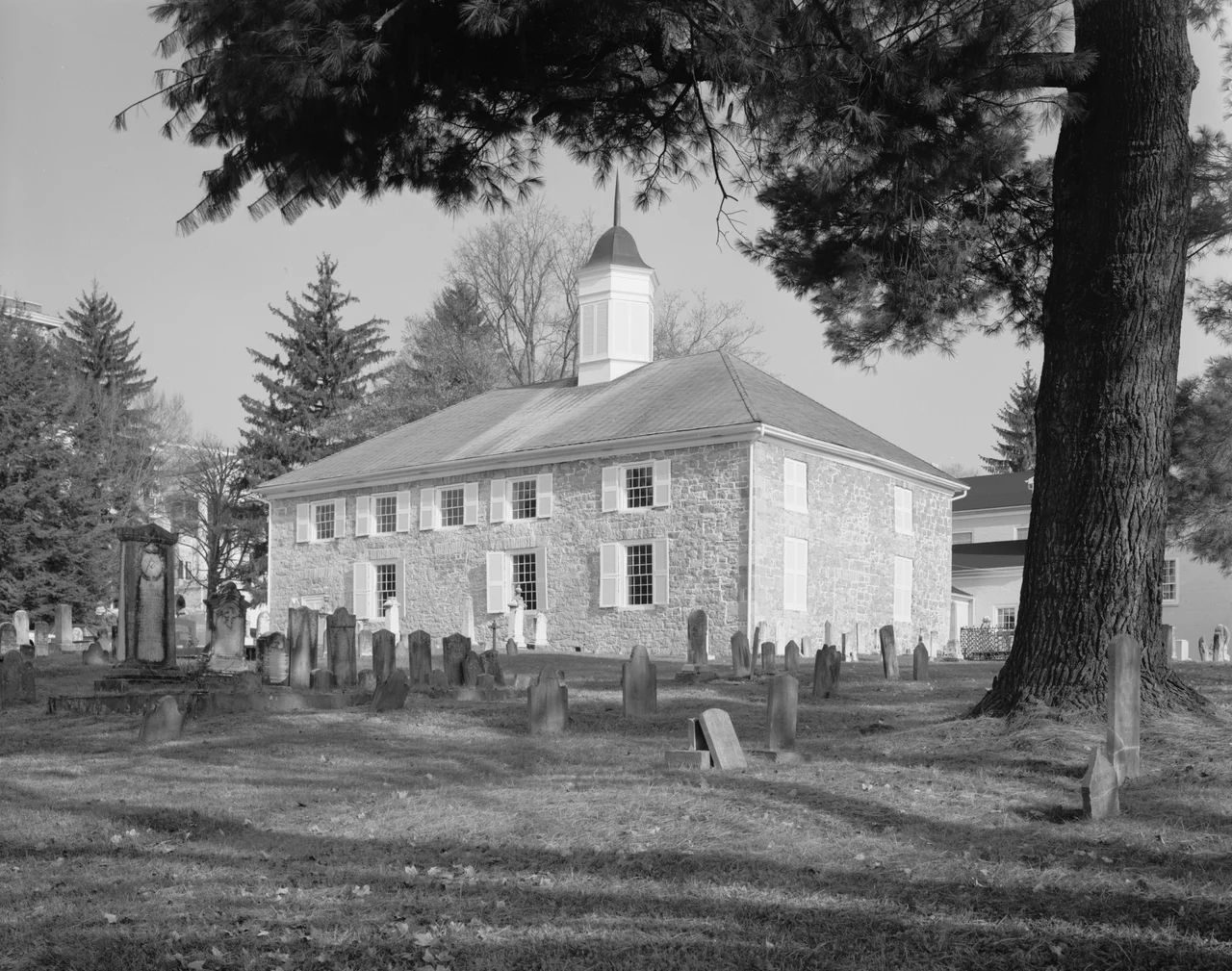

Lewisburg, West Virginia
Every New Year's Day in Lewisburg, costumed marchers parade through downtown in a tradition called the Shanghai Parade - a relic of Old Christmas customs that survived the calendar reform of 1752, and somehow survived everything else, too. Shops stay open. Spectators line the sidewalks of a town whose downtown historic district covers 235 acres and whose population is barely 3,900 people. That ratio of history to residents is the secret of Lewisburg. A town this small should not have this many stories. It was named for the Virginia colonel who led the Battle of Point Pleasant in 1774. Its spring house was built in 1770. Its Civil War battle in May 1862 left ninety-five unknown Confederate dead, still buried together at the Confederate Cemetery on McElhenny Road. National travel magazines have named Lewisburg one of America's coolest small towns more than once. Spend an afternoon walking its brick sidewalks and you start to understand why.
The Spring That Started a Town
Andrew Lewis Park sits in the middle of Lewisburg, and at the heart of the park stands a small stone structure called Lewis Spring. This is why the town exists. The natural spring was discovered in the 1750s; the stone spring house enclosing it was built in 1770, four years before General Andrew Lewis assembled his army at Fort Union to march on the Shawnee at Point Pleasant. The town gathered around the spring and the fort, took the general's name, and grew into the county seat of Greenbrier County. The spring still flows. You can stand beside it and recognize what every settled place started as: water that someone trusted enough to build a life around. Most modern American downtowns have buried their founding waters under pavement. Lewisburg kept hers visible.
A Battlefield in the Streets
On May 23, 1862, Union forces under Colonel George Crook fought Confederate troops under Brigadier General Henry Heth through the streets of Lewisburg. The Union won. Among the casualties were ninety-five Confederate soldiers whose names were never recorded - the unknown dead now buried at the Confederate Cemetery on McElhenny Road. The town also saw the war up close in other ways: African American resident Dick Pointer, who had defended Fort Donnally in 1778, was buried in Lewisburg Cemetery; his grave marker stands beside Carnegie Hall. A second cemetery commemorates him. Two graveyards, two centuries apart, recording the same town's encounters with the largest American story. The 235-acre historic district preserves much of the architecture those events left behind.
The Districts You Walk Through
Three historic districts overlap in Lewisburg. The downtown district covers most of the brick-front commercial core. The Maple Street district records the historically African American neighborhood, where Black residents lived, worshipped, and worked through the segregated decades. The South Church Street district holds many of the early houses. Walking among them - past the General Lewis Inn, the John A. North House Museum, Carnegie Hall - you are reading a town in three voices. None of them is fully restored or sanitized. Carnegie Hall still hosts performances. The General Lewis still rents rooms. The Black church on Maple Street still meets on Sunday. Lewisburg is a living museum, but the emphasis is on living.
Caverns Below, Galleries Above
Drive a few miles outside town and you reach Lost World Caverns - a system of limestone passages that drops nearly a hundred feet below the surface. Organ Cave, longer and stranger, runs for more than forty miles of mapped passage. Both have been worked through by spelunkers and tourists; both still have unexplored corners. Back in town, the streets above the cave country are full of art galleries, specialty shops, bed-and-breakfasts, and the kind of bakery you don't expect to find in a county of 33,000 people. Lewisburg has been mining its dual identity - historic town and cultural destination - for decades, and the strategy works because the bones are real. You can stay in an inn from the 1830s, eat dinner at a chef-driven restaurant, and walk down to a 1770 spring before bed.
The Shanghai Parade and the General Lewis Inn
The Shanghai Parade, held every New Year's Day for more than 150 years, is one of the strangest small-town traditions in America. It dates from the period before the Gregorian calendar swap, when Old Christmas was celebrated on January 6 and the surrounding days carried their own customs. Costumes, marching, downtown shops open for business: a tradition stitched to a calendar that no longer exists. The General Lewis Inn, two blocks from the parade route, has rented rooms since 1929, and the building's older sections go back to 1834. The lobby's antique register has signatures going back generations. Read enough names and Lewisburg starts to feel less like a place you visit and more like a place that has been visiting itself.
From the Air
Lewisburg sits at 37.804 north, 80.440 west, at roughly 2,300 feet elevation. Greenbrier Valley Airport (KLWB) is four miles north, with a 7,000-foot runway suitable for jets serving the nearby Greenbrier resort. The Allegheny ridges rise to the north and east. From cruising altitude, look for I-64 running east-west and US-219 north-south through the small grid of the historic downtown. White Sulphur Springs and the Greenbrier resort lie fifteen miles east on I-64.
Nearby Stories
- Bath County Pumped Storage Station 7.2 km away
- Botetourt County, Virginia 7.5 km away
- Paint Bank, Virginia 8.2 km away
- Gauley River National Recreation Area 8.8 km away
- Seebert Lane Colored School 12 km away
- Babcock State Park 16 km away
- Garth Newel Music Center 16 km away
- Concord University 25 km away