
Liming New Village
The plan began with a fear. In the early decades of the Republic of China's government in Taiwan, Taipei served simultaneously as the national capital and the seat of the Taiwan Provincial Government — a concentration of power that officials worried would be catastrophically vulnerable if mainland China ever launched an invasion. The solution, drawn up and slowly enacted across the 1950s and 1960s, was to disperse. Provincial government functions would relocate to central Taiwan, and the workers who carried out those functions would need somewhere to live. Liming New Village, built on what had been farmland in Taichung's Nantun District, was one of those somewhere places — and it has been navigating the tension between its original purpose and the city pressing in around it ever since.
Moving the Government South
Taiwan's planners looked to the garden city movement when they designed the new provincial communities — the British urban planning ideal of low-density housing woven through with parks, green space, and human-scaled streets. The first two communities, Guangfu New Village and Zhongxing New Village, came earlier. Liming followed a different path: in 1972, several government agencies relocated temporarily from Taipei to Gancheng military base near Taichung railway station while planners searched for permanent land. They found it at Sancuo Farm, an empty agricultural plot, and construction began. The Water Resources Agency, the Land Administration Agency, and the Environmental Protection Agency were among the first to move in, with other branches arriving across the following decade.
A Thousand Families, A Neighborhood
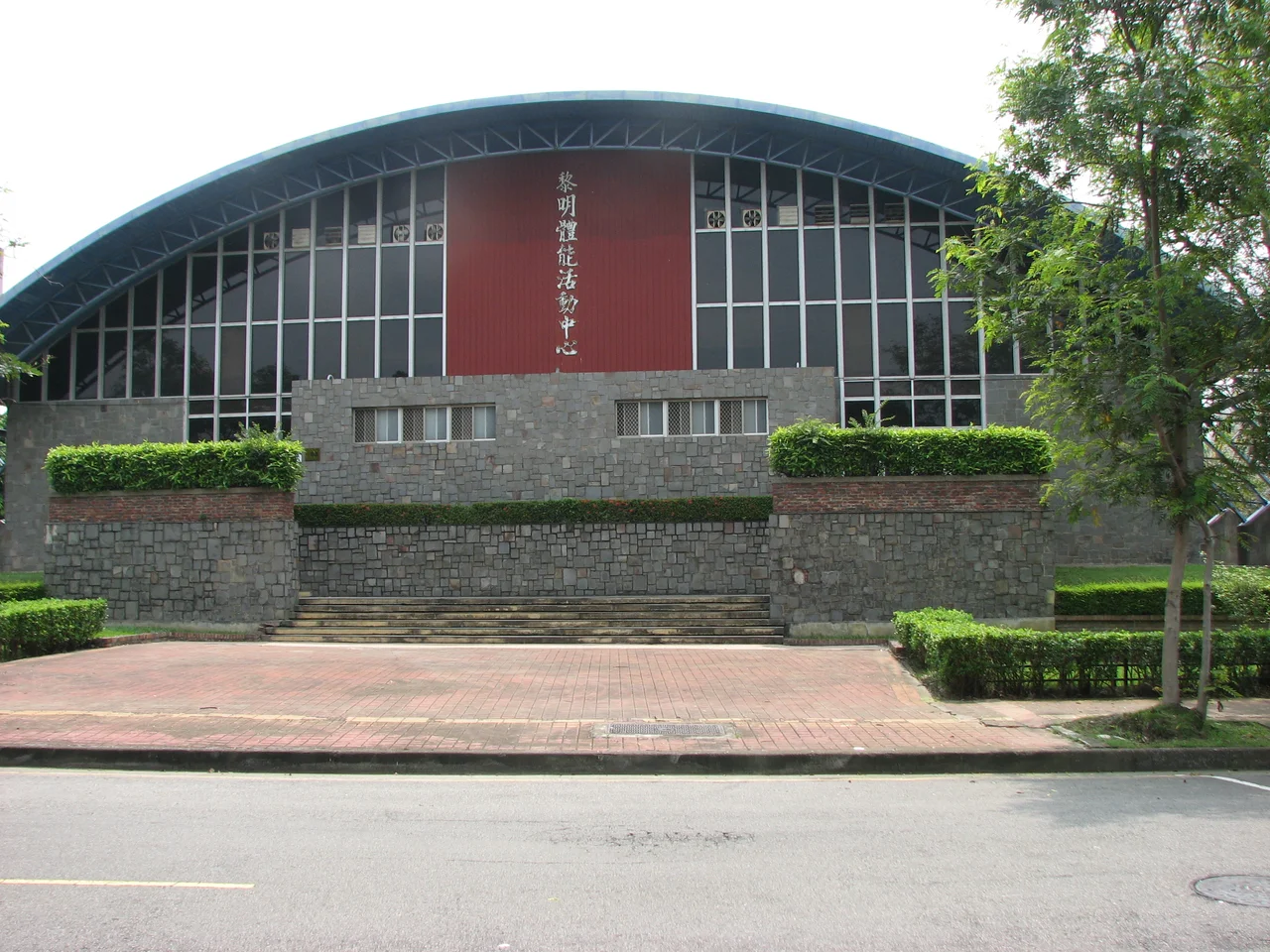
Low-density residential blocks went up alongside the government offices, built to house roughly one thousand civil servant families. The result was a neighborhood with a character distinct from the city around it: quieter streets, older buildings with covered walkways, a small creek and some remaining agricultural land to the west, and the easy rhythms of a community where everyone largely worked for the same employer. A traditional market served daily needs. A gymnasium gave residents a place to exercise. The character of the place was unglamorous and functional — the kind of neighborhood that doesn't appear in travel guides but where the same families shop at the same stalls for decades.
Held Between Two Futures
Taichung's growth eventually surrounded Liming New Village on all sides. The adjacent 7th Redevelopment Zone became the city's gleaming new central business district, with the National Taichung Theater as its cultural centerpiece. Against that backdrop, Liming looked increasingly like a relic. Multiple proposals have emerged over the years to demolish the village and redevelop it along the lines of the modern zones nearby. A 2011 Taipei Times article noted that Taichung's mayor at the time opposed such plans — a reminder that these villages have defenders as well as critics. The debate over whether to preserve or raze touches questions that cities across Taiwan have wrestled with: what counts as heritage, who gets to say, and what happens to the ordinary human texture of a place when it is rebuilt for economic efficiency.
What Remains
Walking through Liming New Village today is to walk through a particular chapter of post-war Taiwanese history — not the dramatic chapter of military conflict or economic miracle, but the quieter chapter of bureaucratic life, of families who followed the government south and made their lives in a planned community on reclaimed farmland. The stone plaque dating from 1975 that commemorates the completion of the residential buildings stands as a modest monument to that story. The old residences, the market stalls, and the gymnasium remain — for now — as evidence that not every place of historical value announces itself with grandeur.
From the Air
Liming New Village lies at approximately 24.154°N, 120.632°E in Taichung's Nantun District. Taichung International Airport (RCMQ) is roughly 10 kilometers to the west-northwest. On final approach or departure, the contrast between the older, tree-filled low-rise streets of the village and the gleaming high-rises of the 7th Redevelopment Zone immediately to the east is visible from the air. The National Taichung Theater — a distinctive organic white structure — marks the edge of that newer district at around 24.163°N, 120.641°E.
Nearby Stories
- Taroko National Park 4.5 km away
- Jiji, Nantou 9 km away
- Miaoli Ceramics Museum 9.2 km away
- Smangus 17 km away
- Taixi, Yunlin 23 km away
- Lintianshan Forestry Culture Park 24 km away
- Taiwan Strait 52 km away
- China Airlines Flight 611 60 km away