.jpg)
Lindenstraße
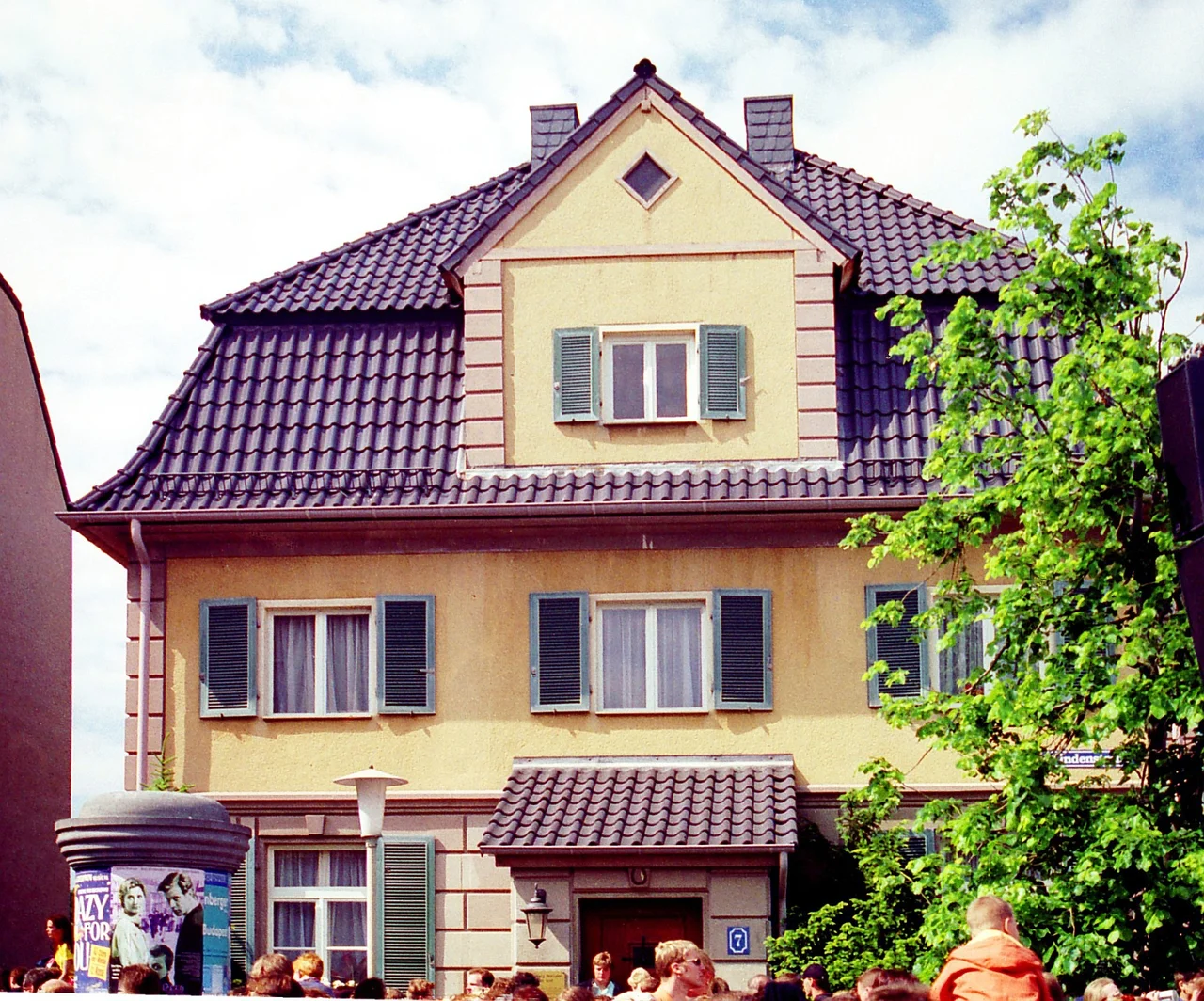
Every Sunday at 6:50 in the evening, between two and three million Germans tuned in to find out what was happening on a street that did not exist. The Lindenstraße was officially set in Munich, but the cameras rolled in a Cologne studio, and over 34 years the soap opera turned the ordinary apartment building at Lindenstraße 3 into one of the most argued-about addresses in the country. A homeless man, a child with Down syndrome, a trans woman, two husbands raising an adopted son, a Greek restaurateur, a Vietnamese family who had been there from the first episode in 1985: this was Germany the way the show's creator Hans W. Geißendörfer wanted his viewers to see it, and the way many viewers furiously did not.
The Sunday Ritual
Lindenstraße premiered on 8 December 1985, and even the time of day it depicted became a quiet act of stubbornness. Episodes always pretended to take place on a Thursday, even though they aired on Sunday, because the original plan had been to broadcast on Thursday nights and Geißendörfer refused to abandon the premise. So Sunday evening in living rooms across Germany meant watching Thursday play out in a fictional Munich, which had been filmed weeks earlier in a Cologne studio. The show worked the way Coronation Street worked in Britain, which is to say it built a parallel universe just realistic enough that arguing about it felt like arguing about your own neighbours. Critics savaged the early episodes. Audiences kept watching anyway.
A Mirror Held a Little Too Close
Geißendörfer wrote and directed the first 31 episodes himself, then handed off to a rotating crew of directors working in roughly ten-episode blocks. The show became known for the speed with which it folded current events into its storylines, so a federal election on Sunday could resurface in dialogue by the following weekend. American actor Larry Hagman dropped in for a cameo in February 2006. Writers came and went. One of them, Irene Fischer, played a main character starting in 1987 and was also writing scripts from 1999 to 2016 — a peculiar kind of double life that the show's open-ended structure made possible. By 2013 Geißendörfer's own daughter Hana had joined the writers' room. The Lindenstraße was a family business about families.
A Street That Welcomed Everyone
The fictional residents of the Lindenstraße were never meant to be typical. From the start, the Greek restaurant Akropolis and a Vietnamese family anchored a cast that grew to include Turkish, Italian, and Eastern European families, three gay men (two of them married and raising an adopted son), a lesbian mother who had conceived via IVF, a homeless man played by the writer Harry Rowohlt until his death, a man who used a wheelchair, a child with Down syndrome, and a trans woman. Fans joked that no "normal" family could survive the street, and the Stadlers — introduced as a model Bavarian household in 2008 — proved the point spectacularly. By the early 2010s the father had fled the street, the mother had cycled through an affair with her brother-in-law and then with a young undocumented immigrant from the Balkans, and the older daughter, who had married a beloved neighbour in Las Vegas, died of food poisoning traced to the Akropolis.
The End of an Era
On 16 November 2018, the ARD programme conference made an announcement that felt to many viewers like the end of a relationship. Despite Lindenstraße still pulling between two and three million viewers a week, the network would not renew the contract with Geißendörfer Film- und Fernsehproduktion. The decision was about cost, not ratings. The final episode aired in March 2020, almost 35 years after the first, and a generation of Germans who had grown up arguing about whether the Beimers should forgive each other suddenly had Sunday evenings back. The pilot of every social storyline German television would attempt for decades afterward had run here first, on a fictional street that millions of strangers had treated like their own block.
From the Air
The WDR production studio sits in the Bocklemünd district of Cologne at roughly 50.973°N, 6.854°E, in the city's northwest. From cruising altitude the area shows as dense residential neighbourhood threaded by the Bundesautobahn 1 and 57. Nearest major airport is Cologne Bonn (EDDK / CGN), about 15 km southeast across the Rhine.
Nearby Stories
- Diamond Interchange: How a Simple Idea Reshapes Towns Like Julich 2.8 km away
- Dusseldorf-Unterbach 6.1 km away
- Baumwollspinnerei Ermen & Engels 11 km away
- RAF Bruggen 15 km away
- Hagen Open-air Museum 21 km away
- Belgium 130 km away
- Marcinelle Mining Disaster 173 km away
- Zwingenberg Castle 178 km away