
Locomotion Museum
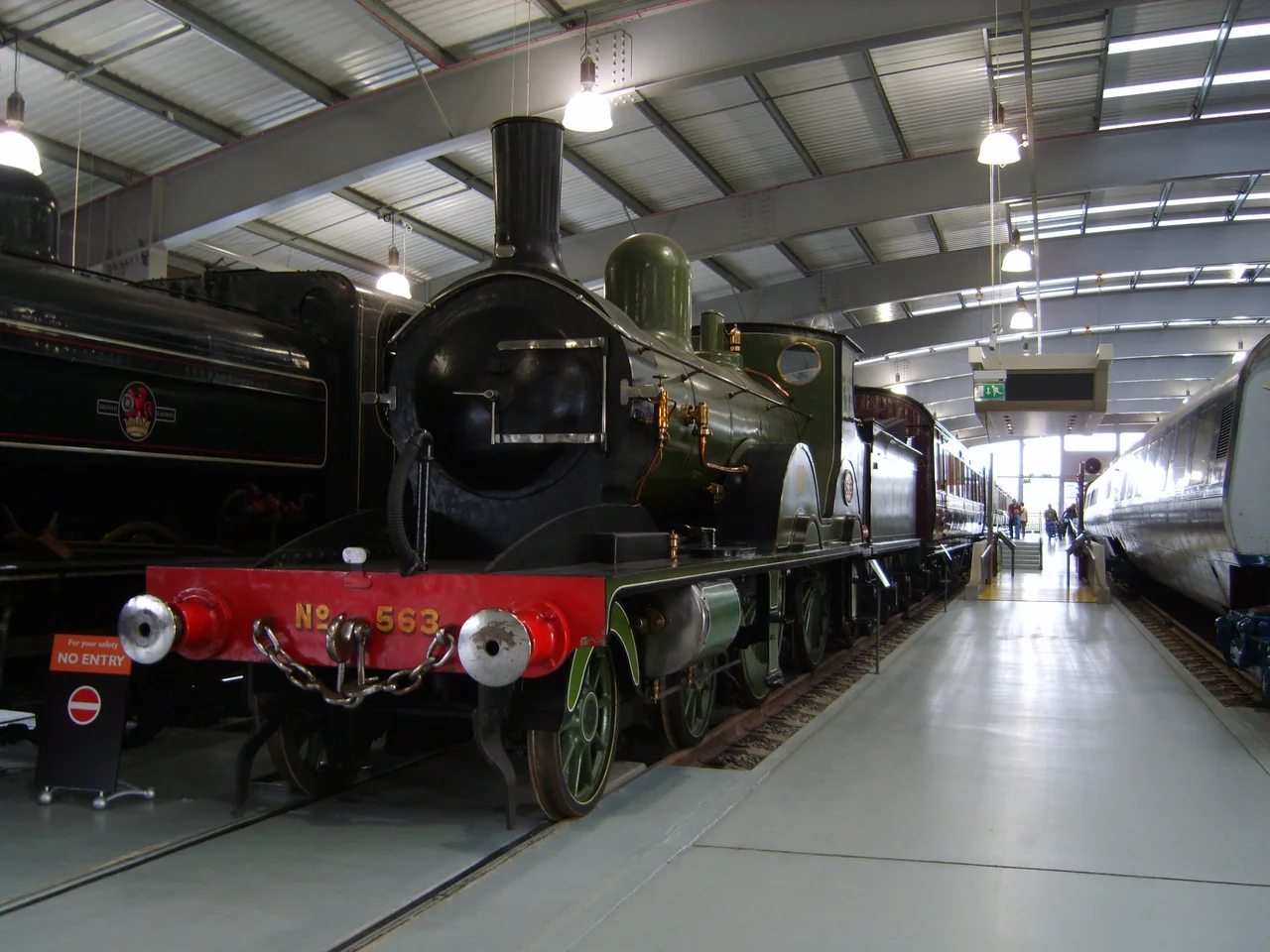
Two hours. That was how long it took Locomotion No. 1 to drag its train from Shildon to Darlington on 27 September 1825, a distance of twelve miles. The engine hissed and clanked through fields that had never heard such a noise. Today the route through Shildon is a one-kilometre walking trail, dotted with the buildings that made it all possible: Timothy Hackworth's house, his stone workshop, the coal drops where wagons were hauled up an incline and tipped down wooden chutes into waiting tenders. The trail ends at the Collection Building, the largest shed in the museum, where engines from across the National Collection sit on six parallel tracks.
Tony Blair Cuts the Ribbon
When Tony Blair opened the Locomotion museum on 22 October 2004, he was both Prime Minister and the local MP for Sedgefield, the constituency that included Shildon. The £11.3 million project replaced the older Timothy Hackworth Victorian Railway Museum and partnered with Durham County Council. Planners predicted 60,000 visitors a year for the small County Durham town. In the first six months alone, 94,000 people came. The museum was shortlisted for the Gulbenkian Prize, then the United Kingdom's largest arts prize. In 2017 it joined the Science Museum Group and dropped "National Railway Museum at Shildon" from its name, becoming simply Locomotion. On 24 May 2024 a second building opened, called New Hall, housing national collection vehicles built in the old Shildon Works and the surrounding area.
Sans Pareil Comes Home
In 1829 the Liverpool and Manchester Railway needed to decide which steam engine would haul its new passenger line. They held the Rainhill Trials, a competition that pitted four engines against each other in front of judges. Stephenson's Rocket won, but the runner-up was Sans Pareil, built by Timothy Hackworth at Shildon. The name means "without equal" in French. Hackworth's engine had been the favourite of many, but a cracked cylinder forced it out of contention. For 175 years it lived elsewhere. Then it came home. The original Sans Pareil now sits in the Collection Building, alongside a working replica that occasionally steams along the demonstration line. The Rainhill Trials were Stephenson's moment, but they were also the moment when Shildon's claim to railway history was sealed.
Mallard and the Speed Kings
From June 2010 to July 2011, Locomotion borrowed LNER Class A4 4468 Mallard from the National Railway Museum in York. Mallard holds the world steam speed record at 126 miles per hour, set in 1938 on a stretch of the East Coast Main Line. In 2014, ahead of the 75th anniversary celebrations, 8,000 visitors came to Shildon to welcome five of Mallard's sister A4 locomotives. Two of them, 60008 Dwight D Eisenhower and 60010 Dominion of Canada, had been repatriated from museums in the United States and Canada. Dominion of Canada received a cosmetic overhaul in Shildon's workshop before going on display. For a few months the small County Durham town had assembled the largest gathering of streamlined A4s anywhere in the world.
The Strange and the Experimental
Not everything at Locomotion is steam. The main exhibition building holds the sole surviving example of APT-E, British Rail's experimental Advanced Passenger Train, a gas-turbine tilting train from the 1970s that could lean into curves at high speed. Beside it sits the prototype Deltic, a 3,300 horsepower diesel engine that would later define express services on the East Coast Main Line. The site has a wind turbine that feeds the National Grid and a biodiesel bus that ferries visitors between the buildings on busy days. The trail itself uses recycled stone sleeper blocks from the original railway, the fixing slots still visible in the walls of the goods shed. Even the building materials have a story.
Shildon, the Railway Town
Shildon was a tiny place when the Stockton and Darlington Railway arrived. The railway made it a major British engineering centre, and the Shildon wagon works employed thousands until it closed in 1984. The town has never fully recovered from that closure, but Locomotion has given it something else: a reason for people to visit. Shildon railway station, on the Tees Valley Line, was rebuilt and modernised when the museum was built. It sits right beside the demonstration railway, so trains arriving from Darlington or Bishop Auckland pull in within sight of the historic engines that started it all. Every Northern service that stops at Shildon today is a descendant of what George Stephenson did here two centuries ago.
From the Air
Locomotion sits at 54.62 degrees north, 1.63 degrees west, in the village of Shildon, about 9 miles west of Darlington town centre. Teesside International Airport (ICAO: EGNV) is the closest commercial field, 13 miles to the east. Durham Tees Valley appears on older charts but is the same airport. Newcastle (EGNT) lies 35 miles north-east. From the air, look for Shildon's compact terraced streets nestled between the open farmland of southwest County Durham. The Pennines rise sharply about 10 miles to the west; the North Pennines AONB begins shortly beyond. The railway line through the museum continues to operate as part of the Tees Valley Line, so look for active services on the rails. Cruising altitude visibility is usually good in summer, but low cloud and Pennine drizzle are common from autumn through spring.
Nearby Stories
- Gisborough Priory 4.9 km away
- Beamish Museum 6.9 km away
- Hutton-le-Hole 9 km away
- Battle of Stainmore 9.8 km away
- Jervaulx Abbey 12 km away
- Hadrian's Wall Path 21 km away
- Gordale Scar 27 km away
- German submarine U-2367 70 km away