
Lomami Province
In 1992 Kabinda's thermal power plant - three cabins, 75 kilovolt-amperes each - went out of service and did not come back on. The capital of Lomami Province still has no collective water supply, electricity, or public lighting. This is the context you need to understand Lomami. In 2015 the Democratic Republic of the Congo carved fifteen new provinces out of the older map, fulfilling a 2005 constitutional promise. Lomami was one of them, split from the sprawling Kasaï-Oriental together with Sankuru. Its roughly 2.3 million people inherited a province built from Belgian-era airstrips, Congolese post-independence rearrangements, and infrastructure that has more often decayed than improved.
A Province Through Many Maps
Lomami's boundaries have moved before. The area that is now the province was part of the Lualaba district of what became Katanga between 1908 and 1947. In 1965 it was folded into Kasaï-Oriental. In 2015 it came out again, reassembled from the Kabinda district and the independently administered city of Mwene-Ditu. The town of Kabinda was elevated to capital. The people of Lomami are drawn mostly from three large groups - the Songye, the Luba, and the Kanyok - along with the Kele in Kamiji and the Kanitshin in Luilu. All of them have watched maps and administrative boundaries be redrawn around them, usually by officials in distant capitals with their own priorities. Each redraw has promised better services. The services have tended to arrive late or not at all.
Cotton, Diamonds, And Coltan
The economy is mostly agro-pastoral. In the colonial era Lomami's cotton fed Belgian mills; when that market collapsed after independence the industry did too, though a cotton research center still operates at N'Gandajika. N'Gandajika and Kamiji remain the province's agricultural engine, feeding neighboring Kasaï-Oriental and the roughly two million people of Mbuji-Mayi. Under the soil the story is mineral. Artisanal diamond mining runs in Lubao, Luputa, Kabinda, and Wikong. Artisanal gold is worked throughout the Luilu territory. There is gold around Mwene-Ditu and Luputa. And in Luilu near Luputa the ground holds coltan - the columbite-tantalite ore that goes into mobile-phone capacitors the world over. Carbonate rock deposits sit in Ngandajika. North of Kabinda stretches a forest rich in timber.
Roads That End And Airstrips That Don't Open
Lomami is hard to move through. Rail exists in Mwene-Ditu but is in deep disrepair. The province has one airport, at Kabinda, largely unused by national standards. There are Belgian-era airstrips at Kabinda, Gandajika, Luputa, and Mwene-Ditu - plus a Presbyterian airstrip at Kasha, seven kilometers from Luputa - all in advanced states of degradation. Ngandajika and Lubao have strips used only for humanitarian flights by NGOs. For everything else, residents depend on the Mbuji-Mayi airport in neighboring Kasaï-Oriental. On the ground, the Mbuji-Mayi road toward Mwene-Ditu is one of the province's few meaningful connections, and maintaining it is a recurring challenge. Most movement happens by bicycle and motorcycle. The province remains one of the poorest in the Democratic Republic of the Congo.
What Communities Build When The State Doesn't
Where public infrastructure fails, communities sometimes build their own. A potable water network in Luputa exists because the Church of Jesus Christ of Latter-day Saints funded it, drawing from the Kaya Lubil spring near Lusuku. The National Rural Water Service has built wells, springs, and supplies across the province, though many have stopped functioning for lack of maintenance. SNEL and SNCC provide irregular electricity to around 5,000 people in Mwene-Ditu - a city of more than half a million. Regideso offers patchy water service to a few thousand subscribers there. Education, meanwhile, has stubbornly kept growing: Kabinda hosts more than five higher-education institutions, including the University of Our Lady of Lomami (UNILO), once Catholic and now public. The University of Mwene-Ditu, with seven faculties and 14 programs, is the province's largest. Many of the province's young people still migrate to Mbuji-Mayi, Lubumbashi, or Kinshasa for better schooling - as young people from poor provinces everywhere tend to do. But the institutions remain here, waiting for those who come back.
From the Air
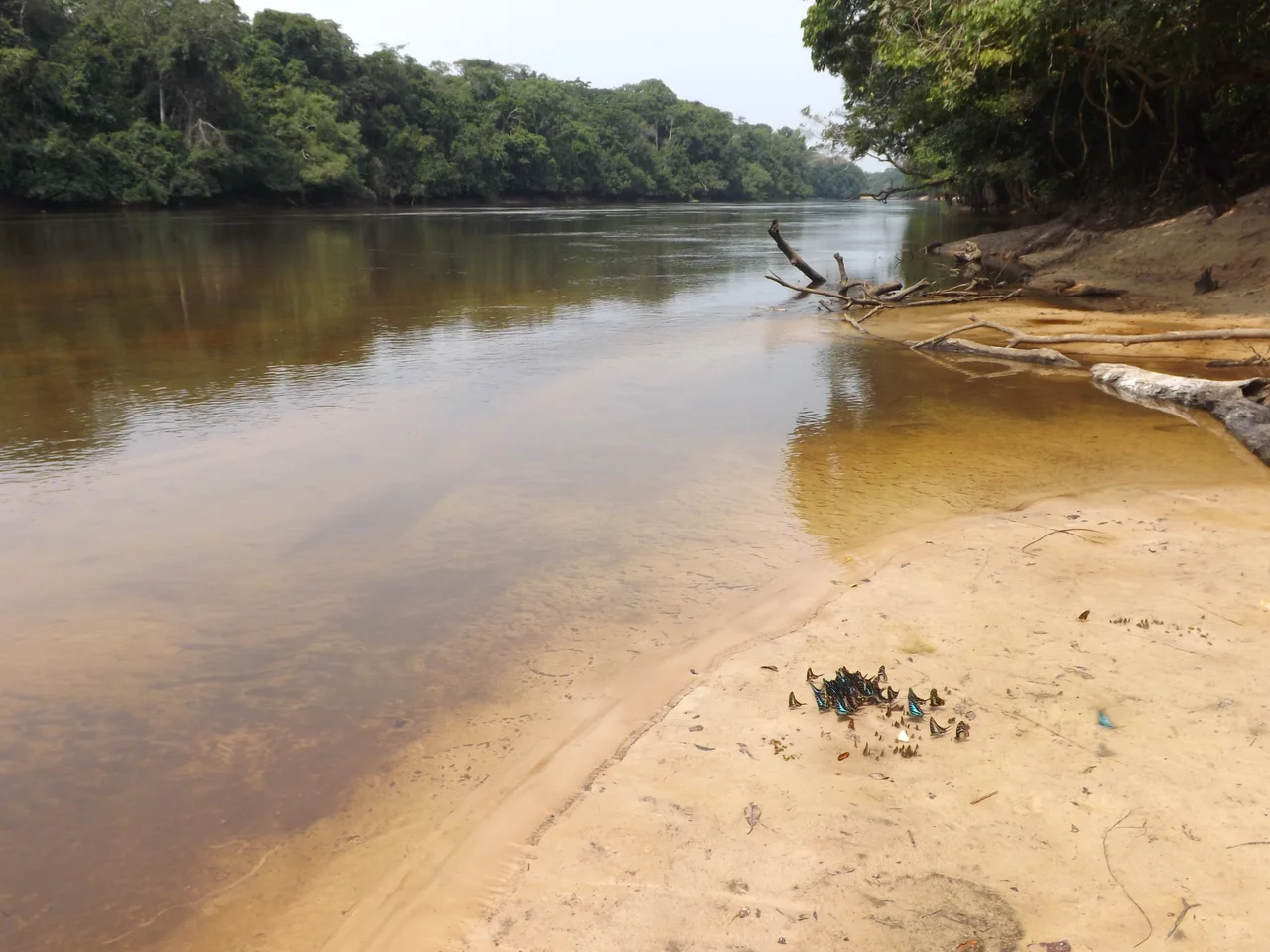
Located at about 6.13°S, 24.48°E in south-central DRC. Kabinda Airport (ICAO: FZVI) serves the capital; larger Mbuji-Mayi Airport (FZWA) lies to the southwest in Kasaï-Oriental and handles most regional traffic. Elevation roughly 600-900 m across the province. From cruise altitude Lomami appears as a mix of miombo woodland and agricultural clearings, with the network of small rivers that drain into the Lualaba system visible as green corridors. Artisanal mining sites show as cleared, reddish-brown patches along the rivers. Dry season May-September gives best visibility.
Nearby Stories
- Mbuji-Mayi 35 km away
- Lulenge 123 km away
- Luba Empire 164 km away
- Lukuga River 217 km away
- Luvua River 283 km away
- Kisenge 490 km away
- Kipupu Massacre 530 km away
- Congo Basin 679 km away