
Los Organos
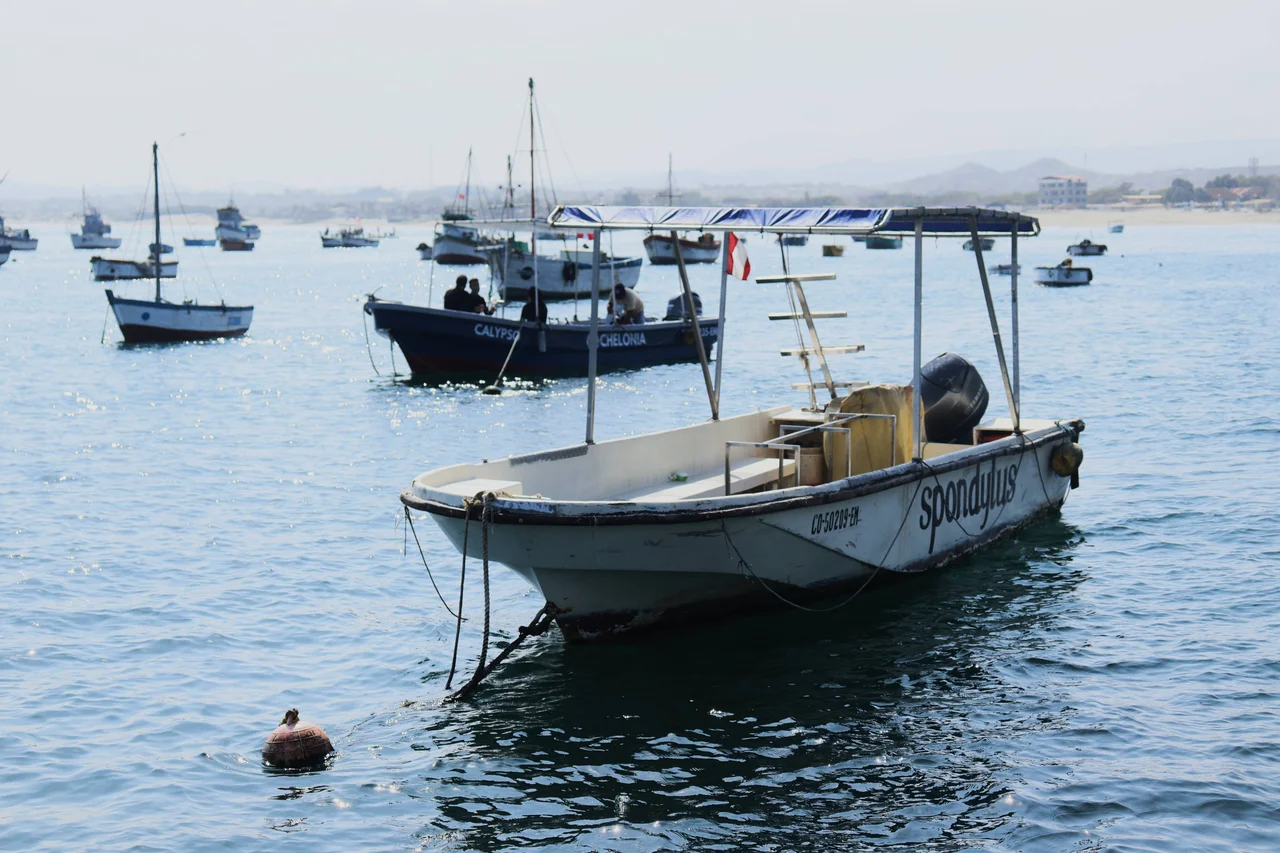
Fifteen minutes south of Mancora, where the tourist buses unload and the beach bars run until sunrise, Los Organos sits on the Peruvian coast as if someone forgot to tell it to compete. Pelicans wheel over the harbor. Fishermen haul mero and congrio off wooden boats at the main dock. Crabs cross the sand in numbers that would be alarming if you did not quickly realize the beach is too empty for the crabs to worry about anyone. The town revolves around a small central square, and everyone who wants to be social ends up there in the evenings. Los Organos is what coastal Peru looked like before the tourism industry arrived, and for travelers willing to slow down, that is the draw.
Twenty Hours From Lima
Getting to Los Organos is not a quick errand. From Lima, the bus trip runs about twenty hours, with overnight service available through companies like Cruz del Sur and Palominos. The alternative is to fly from Lima to Piura, then take a bus the remaining two and a half hours north. Once you arrive, mototaxis, the three-wheeled motorcycle taxis that double as public transportation in most of the Peruvian north, cover the town. A ride from the town center to the beach costs one sol. For longer trips, you can rent a bicycle, a motorcycle, or a small car. The Panamerican Highway passes through, and the next town south, Talara, is an hour and a half by road. For most travelers, the trip down from Mancora (1.50 soles on the Eppo bus, fifteen minutes) is the only journey that matters.
The Waves at Punta Veleros
The best surfing in Los Organos is at Punta Veleros, a beach whose consistent waves attract surfers and kitesurfers in modest numbers. Unlike more famous Peruvian surf destinations, the lineups stay uncrowded. You can paddle out and have sets to yourself, a rarity in the modern surfing world. Beyond surfing, the water holds plenty of fish, and both recreational fishing and scuba diving are available. A short drive north brings you to Cabo Blanco, where Ernest Hemingway came to fish for marlin. Local lore holds that the beach there inspired The Old Man and the Sea, which is partially true. Hemingway fished Cabo Blanco in the 1950s and caught large marlin there. The novel was already written, but his Cabo Blanco fishing reinforced its images, and locals have held onto the connection ever since.
The Life of the Main Square
Los Organos has no mall, no chain hotels, no traffic signal that controls anything. What it has is a main square where people gather during the day and into the evening. Around it are convenience and grocery stores, boticas (the neighborhood pharmacies that anchor Latin American towns), drugstores, restaurants, and an ATM. The mercado sells local fruits and clothing. For anything more specialized, you go to Talara, an hour and a half up the road. The restaurants, most of them, serve traditional Peruvian food. A full meal runs about 15 soles. Cevicherias dominate the menu landscape, offering ceviche made with whatever the boats brought in that morning, fish or seafood marinated in lemon juice until the acid denatures the proteins and effectively cooks the flesh. The result is cold, bright, and distinctly Peruvian.
Pisco, Pelicans, and the Long Beach
Drinking in Los Organos means pisco or beer, most often pisco. The classic pisco sour (pisco, lemon juice, sugar) appears on nearly every menu. Variations include the chilcano de pisco (pisco, lemon juice, ginger ale) and the Peru Libre (pisco and Coke, the local answer to the Cuba Libre). Imported spirits are available, but drinking imported spirits in Los Organos feels somewhat beside the point. The beach itself is the day's main activity, and the beach here is the kind travelers remember. Long, quiet, mostly empty. A few walkers cross it. Pelicans dive offshore. Crabs scramble in the sand. The main dock hosts the fishermen's daily work. You can swim, walk for hours without seeing anyone, or simply sit and watch the Pacific do what it has always done against this stretch of desert coast.
Where to Sleep
Accommodations cluster mostly along the beach, though some are in town. Options range from single houses and bungalows to simple bedrooms, with nightly rates typically between US$20 and US$80. Most include basic amenities like internet, pool access, a bar or restaurant, and hot water. Soleil Bungalows, both matrimonial and familiar, rent from US$90 to US$170. Cerro Mar, a large house that sleeps ten, goes for US$1,000 to US$1,500 a week depending on the season. For the more budget-conscious, Idyllic Peru offers options starting at US$10 that are not always publicly listed. The whole town has the scale where everyone knows who is renting what, and the line between a formal hotel and a friendly arrangement can be thin. Most visitors come for a few days, settle into the rhythm, and end up staying longer than they planned.
From the Air
Located at 4.18 degrees S, 81.12 degrees W on the northern coast of Peru, about 15 minutes by road south of Mancora. Best viewed from 2,000 to 4,000 feet to see the long Pacific beach and the fishing harbor at the main dock. Nearest airport: Capitan FAP Guillermo Concha Iberico International in Piura (SPUR/PIU), about 150 kilometers southeast. The arid coastal climate here, shaped by the cold Humboldt Current, delivers reliable visibility most of the year, with the clearest conditions outside the brief summer rains from January through March.
Nearby Stories
- Poechos Reservoir 31 km away
- Tumbes 34 km away
- Talara Refinery 35 km away
- Alamor 56 km away
- Battle of Punta Malpelo 73 km away
- Malpelo Island 875 km away
- San Cristóbal (Galápagos) 946 km away
- Easter Island: The Mystery of Rise and Collapse 3882 km away