.jpg)
Lower Zambezi National Park
For decades before it became a national park, the floodplain along the north bank of the Zambezi was effectively one man's backyard: the private game reserve of Zambia's president. Tourists were kept out. Wildlife was, by that peculiar accident of autocratic privilege, left largely undisturbed. In 1983 the area was gazetted as Lower Zambezi National Park, and the accident became policy. What survived is one of the few truly untouched wilderness blocks left in southern Africa, a UNESCO-listed floodplain shared with Zimbabwe's Mana Pools across the river, ringed by mountains, and now in the middle of a fight over whether a copper mine can legally be dug inside its boundary.
The Shape of the Valley
The park slopes down from the Zambezi Escarpment to the river. Two ecoregions overlap here: Southern Miombo woodlands on the higher ground in the north, and Zambezian and Mopane woodlands on the lower slopes in the south, distinguished mostly by which species of tree dominates. At the river's edge the ground flattens into floodplain. There are no fences between the park and the much larger game management area that surrounds it; animals and people move freely between the two. There are no paved roads. The Jeki Airstrip, served by Proflight Zambia, is the main way tourists actually reach the place. Visitors who drive in along the few graded tracks can go days without encountering another vehicle.
A Wild River's Wildlife
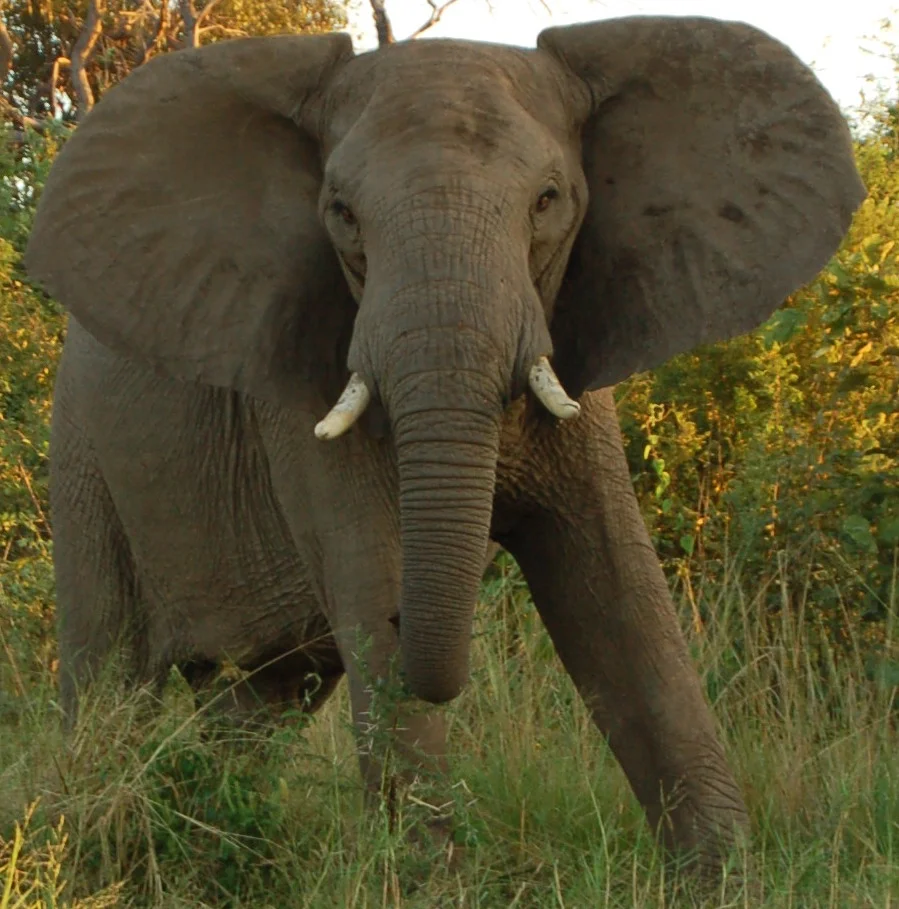
Most of the large mammals in Lower Zambezi congregate along the floodplain. Cape buffalo, in herds sometimes several hundred strong. An elephant population that is one of the most visible in Zambia. Lion. Leopard. Many species of antelope including kudu, impala, and waterbuck. Nile crocodile basking on the sandbars. Hippopotamus in the shallows and pods splashing into the channels at dusk. The Cape wild dog, endangered and shy, is sometimes glimpsed. Birds are the other great reason to come: African fish eagles along the riverbank, carmine bee-eaters nesting in the earthen cliffs during breeding season, herons and kingfishers in the oxbow lagoons. The park and its surrounding GMA are designated an Important Bird Area. The Zambezi, broad and slow here, is unusually clean; it has not yet been dammed below Kariba.
The Kangaluwi Mine Fight
In 2011 a company called Mwembeshi Resources Limited proposed a copper mine inside the park. The project, named the Kangaluwi Mine, was approved by Zambian regulators in 2014 despite intense opposition from conservation groups and tourism operators. A decade of legal battles followed. In May 2023 the Ministry of Green Economy and Environment ordered Mwembeshi to pause operations, citing breaches of the conditions attached to the original approval. In August 2023, ZEMA cancelled the mining approval entirely, bringing the twelve-year legal standoff to a close. Conservationists had argued throughout that the mine would damage the tourism industry that several Lower Zambezi lodges depend on, threaten the river itself, and set a precedent that would weaken every other national park in the country. The floodplain is quiet for now. The buffalo still come down to drink. Whether they will in twenty years depends on a court and a regulatory agency and the political weather in Lusaka.
Across the River
From the north bank you can see the southern bank, and on the southern bank is Zimbabwe's Mana Pools National Park, established in 1975 and inscribed as a UNESCO World Heritage Site in 1984. The two parks together protect roughly 6,800 square kilometers of continuous floodplain habitat. Wildlife crosses freely. Lion prides have been tracked moving from one country to the other by wading or swimming the main channel in the dry season. Time magazine named Lower Zambezi one of the world's greatest places in 2022, which brought a small wave of international attention and a longer queue of safari-goers at the lodges. The park is not easy to reach and not easy to leave, and that inaccessibility is what has kept it wild. The canoe trips, ten-hour drifts down channels lined with winterthorn trees and sand bars, are widely regarded as among the finest water safaris anywhere in Africa.
From the Air
Located at 15.75 degrees S, 29.33 degrees E in southern Zambia, along the north bank of the Zambezi River. Primary access by air is Jeki Airstrip (served by Proflight Zambia from Lusaka and Mfuwe). Royal Airstrip also serves the area. Nearest major airport is Kenneth Kaunda International (FLKK) in Lusaka, roughly 180 km north. From cruising altitude, the Zambezi Valley is unmistakable: a broad green floodplain ringed by the Zambezi Escarpment to the north and the Zimbabwean highlands to the south. Mana Pools sits on the opposite bank.
Nearby Stories
- Lusaka Province 39 km away
- Kenneth Kaunda International Airport 43 km away
- Chirundu Bridge 54 km away
- Luangwa River 57 km away
- Siavonga 59 km away
- State House, Lusaka 63 km away
- Luangwa Bridge 65 km away
- Tengenenge 138 km away