.jpg)
Lublin Ghetto
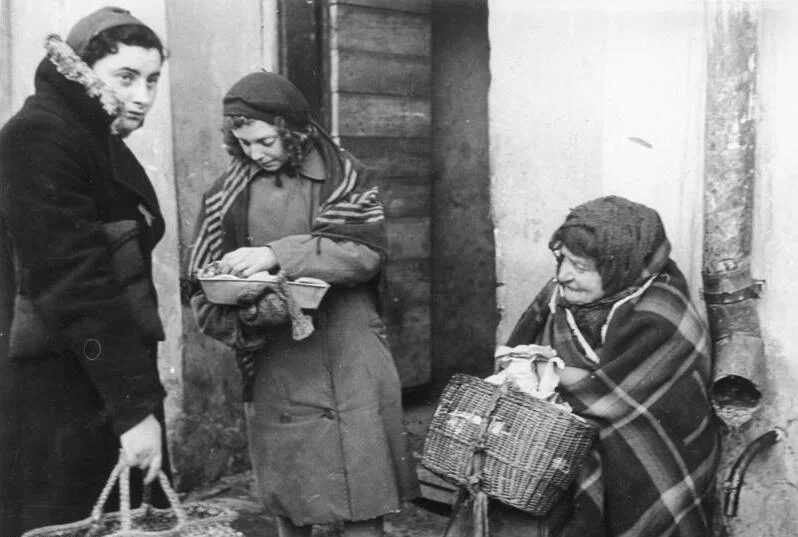
Of the roughly thirty-four thousand Jews held in the Lublin Ghetto on the day its destruction began, only two hundred and thirty are known to have survived the German occupation. That number is the heart of this story and the reason it has to be told carefully. Lublin had been a Jewish city since the late Middle Ages, home to the Yeshiva Chachmei Lublin, the largest Talmudic academy in the world when it opened in 1930, and to a culture so old that visitors before the war wrote about Lublin the way visitors wrote about Vilnius or Warsaw. In the spring of 1942, in the deadliest single phase of the Holocaust in Poland, almost all of that ended in cattle cars bound for Bełżec.
Before the Ghetto Walls
The walls were not the beginning. From 1939 onward, the SS and Police Leader for Lublin District, Odilo Globocnik, had been pushing Jews out of the city neighborhood around his headquarters on Spokojna Street. Globocnik was the architect of much of what followed; he would later run all of Operation Reinhard, the secret German program to murder the Jews of occupied Poland. The ghetto itself, formally announced on March 24, 1941, was given a sanitizing German name, Wohngebiet der Juden, the Jewish residential quarter. The reason the Germans created it when they did was logistical and brutal: Wehrmacht troops were arriving in Lublin to prepare for Operation Barbarossa, the invasion of the Soviet Union, and they needed housing close to the new German-Soviet frontier. The Jews of Lublin were moved to make room.
Inside the Quarter
The ghetto held roughly thirty-four thousand Polish Jews, with smaller numbers of Roma also imprisoned there. Life inside was a managed deprivation, controlled by hunger and by collaborators who exploited that hunger. The most feared was Szama Grajer, who ran a Jewish restaurant and a brothel that served Nazi officers on Kowalska Street, and who was known to hunt the ghetto for starving young women to deliver to that brothel. He is named here because his victims should not be the only ones whose names are forgotten. The community of which they were part had been in Lublin for five centuries. The Yeshiva Chachmei Lublin, founded by Rabbi Meir Shapiro, had opened in 1930 with the ambition of being the greatest yeshiva in the world. By the time the ghetto was sealed, Shapiro was dead and his great library had already been burned by the Germans in front of the building.
Operation Reinhard Begins Here
On March 17, 1942, the trains began. The Lublin Ghetto was the first to be liquidated under Operation Reinhard, the SS code name for the program that would eventually murder almost two million Jews at the camps of Bełżec, Sobibor, and Treblinka. The Germans set a daily quota of 1,400 deportees. Between mid-March and mid-April, roughly thirty thousand Lublin Jews were loaded into cattle trucks and sent the 130 kilometers south to Bełżec, where they were murdered on arrival in gas chambers using carbon monoxide from a diesel engine. Another four thousand were taken to the Majdanek concentration camp on the edge of the city. About four thousand more were moved to a small secondary ghetto at Majdan Tatarski in the suburbs and were murdered there in subsequent roundups. Joseph Goebbels wrote in his diary that the procedure was barbaric and not to be described in detail. Adam Czerniaków, the head of the Warsaw Judenrat, dismissed the early reports as exaggerations. Goebbels was right about the procedure. Czerniaków was wrong about the reports.
What Two Hundred and Thirty Means
Only 230 Lublin Jews are known to have survived the German occupation. Some hid with Polish families in the city or in surrounding villages, sheltered by people who knew the punishment for hiding a Jew was death. Some escaped to the forests and joined partisan units. Some lived through the camps. The boy Henio Zytomirski, who has become one of the symbolic faces of Lublin's lost community, was nine years old when he was murdered at Majdanek; the photograph of him at the gates of his father's apartment building, taken just before the war, is now carried through the streets every April on the day of remembrance. The Lublin Jewish community, once tens of thousands strong and culturally central to Polish Jewry, did not survive. The Brama Grodzka, the Grodzka Gate that once separated the Christian and Jewish quarters of the Old Town, now houses the Theater NN center, which has spent decades reconstructing the names and addresses of the people who lived on the other side of the gate before 1942.
From the Air
The Lublin Ghetto stood at 51.23°N, 22.57°E in the Podzamcze district at the foot of Lublin Castle in eastern Poland. Most of the ghetto's buildings were demolished after the war and the area was paved over for postwar Soviet-style boulevards; the Grodzka Gate (Brama Grodzka) survives at the western edge as the symbolic boundary. Majdanek concentration camp, where many ghetto inmates were murdered, sits about 4 km southeast of the city center and is visible from above as a preserved camp landscape. Nearest airport: Lublin Airport (EPLB) about 10 km southeast.
Nearby Stories
- Poniatowa Concentration Camp 8 km away
- Sobibor Museum 11 km away
- Zamość Fortress 29 km away
- Damachava Ghetto 39 km away
- Battle of Komarow 68 km away
- Brest Castle (Belarus) 93 km away
- Battle of Warsaw (1831) 113 km away
- Krakow 186 km away