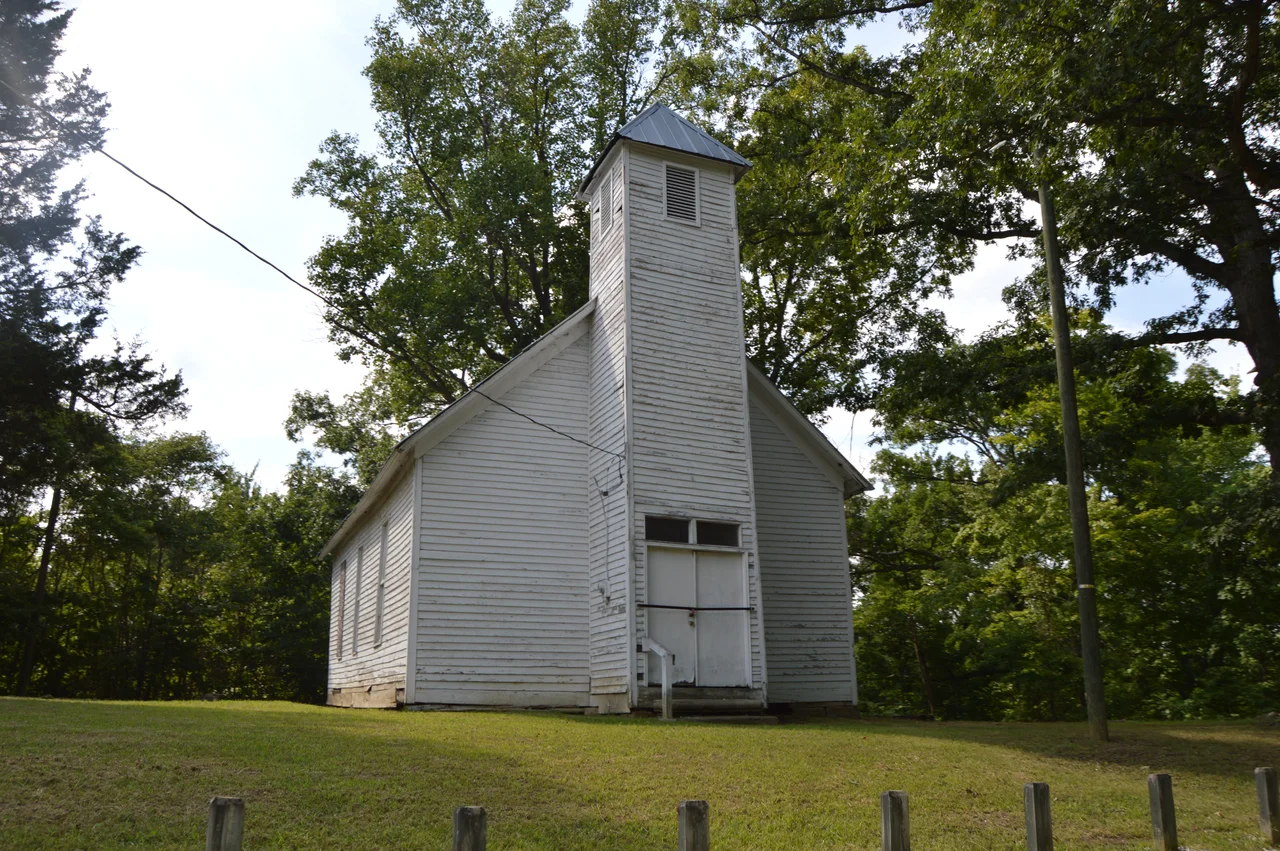

Macedonia Baptist Church
When the Virginia landowner James Twyman died in 1849, his will did something unusual for its time and place. He freed many of the people he had enslaved and provided that they be given land near Burlington, Ohio - across the river from Virginia, on free soil. Thirty-two people made the journey north and settled in late October on land they themselves now legally owned. They joined an existing Black Baptist congregation that had been worshipping in the area since around 1811, and together they built a new church on Macedonia Ridge. The Macedonia Baptist Church still stands. Its very existence - a building put up by free Black settlers in 1850s southern Ohio - is one of those quiet American structures that carries enormous historical weight in modest wooden walls.
Ohio's Free Soil Edge
Burlington sits at the southernmost point of Ohio, on the north bank of the Ohio River directly across from the enslaving states of Kentucky and Virginia. That geography mattered. Anyone crossing the river from south to north crossed from slave territory into free territory - though as the Fugitive Slave Acts of 1793 and 1850 made clear, free territory did not mean safety for escaped enslaved people, who could be legally captured and returned. Burlington in the decades before the Civil War became a destination for both freedom seekers crossing illegally and free Black families settling legally. Some of those families had been freed in wills like Twyman's. Others had purchased their freedom over years of labor. Together they formed a small but durable community at Ohio's southern edge.
The Original Congregation
A group of Baptists had organized a church somewhere in the Burlington area between 1811 and 1813, initially meeting in members' homes before building a small and primitive church structure. The early congregation was Black - free Black families and some who had escaped enslavement. Baptist polity, which emphasized congregational governance, fit the practical needs of communities that could not depend on outside religious or political institutions. The congregation read scripture, sang together, baptized their children, buried their dead. Without state support or wealthy patrons, they kept their religious life going through the difficult decades before the war made it possible for them to organize more openly.
The Twyman Settlers
James Twyman's death in 1849 and the resulting manumission set thirty-two people in motion. They traveled from Virginia to Burlington in late October. The land Twyman's estate had provided was theirs by deed - actual recorded title in their own names. The legal distinction between settling on someone else's land and owning your own land was the difference between dependence and dignity. The Twyman settlers joined the existing Macedonia Baptist congregation and contributed their labor to building a replacement church on Macedonia Ridge. The community grew. Together they cultivated the surrounding fields, raised their children, and built the infrastructure of a free Black agricultural community on the Ohio River bank in the years just before the Civil War.
Recognition and Survival
The church building has survived. In 1978 the Macedonia Baptist Church was listed on the National Register of Historic Places, qualifying both for its architectural significance and for its place in local history. It is one of four Register-listed sites in and around Burlington, alongside the old Lawrence County Jail, the Burlington 37 Cemetery (the local Black cemetery), and the William C. Johnston House and General Store. The cluster makes Burlington one of the more architecturally documented small Black settlements from the antebellum era. In 2003 the Ohio Historical Society placed a state historical marker at the church, formally acknowledging at the state level what local memory had long maintained.
Burlington 37 and the Continuing Memory
The Burlington 37 Cemetery, named for the thirty-seven Black residents buried there in its early years (though hundreds more followed), preserves the names and dates of the families who built the Macedonia community. Many of the surnames in the cemetery match the family names recorded in the church's history. The continuity of community, church, and cemetery across nearly two centuries documents a particular American story - the story of how free Black settlers in southern Ohio built durable institutions in a hostile region, kept them functioning through the worst decades of American racial conflict, and passed them forward to descendants who still remember. The church building, modest and wooden and easy to drive past, is the architectural anchor of that memory.
From the Air
Located at 38.440 degrees north, 82.530 degrees west, near Burlington on the north bank of the Ohio River in Lawrence County, Ohio, at the state's southernmost point. Recommended viewing altitude 2,500 to 4,000 feet AGL for clear views of the river bank and surrounding rural landscape. Nearest airports are Tri-State (KHTS) at Huntington, about 8 nautical miles east, and Ashland Regional (KDWU), about 10 nautical miles southeast. The Ohio River is a major visual landmark here, marking the boundary between Ohio and West Virginia.
Nearby Stories
- Battle of Scary Creek 6 km away
- Portsmouth 7.2 km away
- Fred M. Vinson Museum and Welcome Center 14 km away
- Staats Mill Covered Bridge 24 km away
- Lake Tight 25 km away
- Battle of Blair Mountain 32 km away
- Lower Shawneetown 35 km away
- The Kentucky Meat Shower: When Flesh Fell From a Clear Sky 68 km away