
Maluku: A Traveler's Guide to the Spice Islands
The ferry from Ambon to Banda Naira takes the better part of a day. There is no shortcut. The Banda Sea does not rush, and neither does travel in Maluku. This is the price of visiting islands that remain genuinely remote, places where the reefs are still pristine precisely because getting there requires patience, flexibility, and a willingness to surrender your schedule to the tides. For four centuries, European empires spent fortunes and lives trying to reach these same waters. Today, the reward for making the journey is the same thing that drew them: beauty so concentrated it feels impossible.
Gateways to the Archipelago
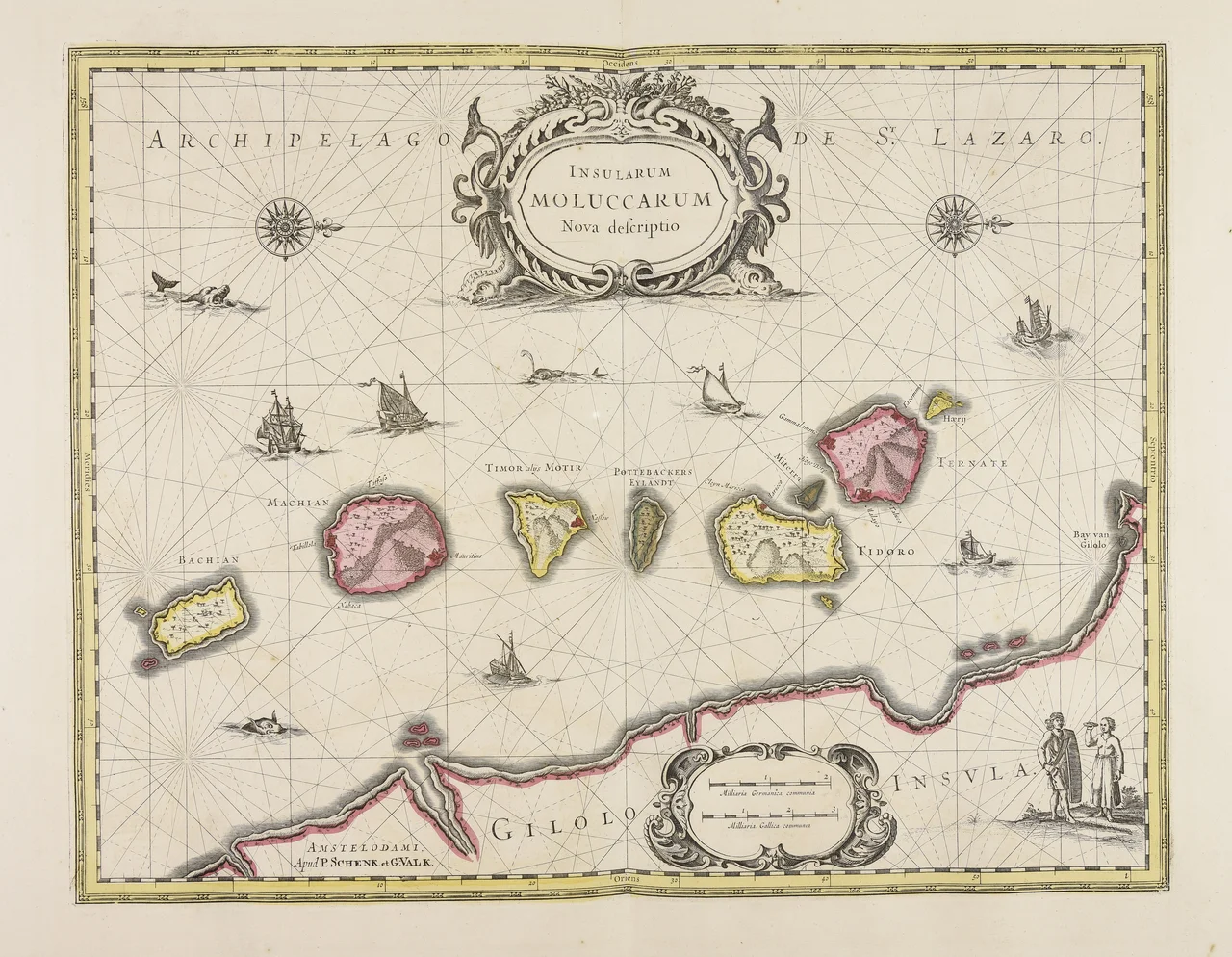
Ambon is where most journeys begin. Known locally as Ambon Manise, meaning 'beautiful Ambon,' the provincial capital sits on the southern coast of Ambon Island with a natural harbor that has served as eastern Indonesia's principal port for centuries. Pattimura Airport receives flights from Makassar and Jakarta, and the city offers the best selection of hotels, restaurants, and dive operators in Maluku. In the north, Ternate serves as the gateway to North Maluku Province, its Sultan Babullah Airport connecting to Manado, Makassar, and Jakarta. Ternate itself is worth several days: the island is essentially a single perfect volcanic cone rising from the sea, ringed by the ruins of Portuguese and Dutch forts that tell the story of the spice wars in crumbling stone.
Diving the Coral Frontier
Maluku sits within the Coral Triangle, the most biodiverse marine region on Earth, and the diving here ranks among Indonesia's finest. The waters around Ambon have become famous for muck diving, where divers search sandy slopes for bizarre creatures like frogfish, blue-ringed octopus, and flamboyant cuttlefish. The Banda Islands offer wall diving along volcanic drop-offs where schools of hammerhead sharks patrol the deep blue. Halmahera's west coast has pristine reef systems that see only a handful of divers each year. For snorkelers, the Kei Islands in the southeast offer white sand beaches and shallow coral gardens so clear that the fish seem to float in air. Water temperatures hover around 27 to 29 degrees Celsius year-round, and visibility routinely exceeds 30 meters outside the rainy season.
Forts and Forgotten Empires
No region of Indonesia carries more visible colonial history. The Portuguese built their first fort in Maluku on Ternate in 1511, and over the following centuries the Spanish, Dutch, and English each left their marks in stone. Fort Oranje on Ternate, built by the Dutch in 1607, still stands above the harbor. Fort Belgica on Banda Naira, a pentagonal Dutch fortress completed in 1611, is the best-preserved colonial fort in eastern Indonesia and commands views across the Banda archipelago. On Saparua, Fort Duurstede witnessed the 1817 uprising of Thomas Matulessy, known as Pattimura, whose resistance to Dutch rule made him a national hero. These forts are not polished museum pieces. Vines grow through the ramparts, trees push through the flagstones, and local children play in the courtyards. The decay makes them more honest about what they represent: monuments to a trade that enriched Europe and devastated the people who lived among the spice trees.
Volcanoes, Forests, and National Parks
Maluku sits astride one of the planet's most active volcanic zones, and the landscape reflects it. Gamalama volcano on Ternate rises 1,715 meters directly from the sea, its summit often wreathed in cloud. On Seram, Manusela National Park protects forests that climb from coastal mangroves to the 3,027-meter peak of Mount Binaiya, the highest point in Maluku. The park is home to the Salmon-crested Cockatoo, one of the region's many endemic bird species. In North Maluku, Aketajawe-Lolobata National Park, established in 2004, shelters the Togutil, one of Indonesia's last semi-nomadic forest peoples, along with birds found nowhere else on Earth. Birdwatchers come specifically for Maluku's endemics: the Lazuli Kingfisher, the Purple-naped Lory, Wallace's Standardwing. Alfred Russel Wallace spent years in these forests during the 1850s, and the biodiversity that inspired his evolutionary theories remains largely intact.
Navigating the Practical Realities
Travel in Maluku requires patience and planning. Ferries connect major islands but schedules shift with weather and demand. A trip from Ambon to Ternate takes roughly eighteen hours by fast ferry. Smaller islands may see boats only once or twice a week. Flights from Jakarta usually require a stopover in Makassar, and booking through to smaller airports like Pitu on Morotai or Langgur in the Kei Islands often means connecting through Ambon. Roads are decent on Ambon and parts of Seram but deteriorate quickly elsewhere. The best months to visit are October through April, when seas are calmer and visibility is best for diving, though Maluku's equatorial position means rain is always possible. Accommodations range from comfortable hotels in Ambon and Ternate to basic guesthouses on the outer islands. Bring cash: ATMs are scarce beyond the provincial capitals, and the warmth of Maluku's hospitality more than compensates for the simplicity of its infrastructure.
From the Air
Maluku's main airports are Pattimura (WAPP) on Ambon Island and Sultan Babullah (WAEE) on Ternate. Both receive domestic flights from Makassar (WAAA) and Jakarta (WIII). Smaller airstrips include Pitu Airport on Morotai and Karel Sadsuitubun Airport in the Kei Islands. From altitude, the archipelago appears as a constellation of volcanic islands set in deep blue sea between Sulawesi to the west and Papua to the east. Ternate and Tidore are the most visually striking from the air, twin volcanic cones separated by a narrow strait. The Banda Islands cluster is visible far to the south, surrounded by the deep Banda Sea. Expect tropical conditions with frequent afternoon cumulus buildups.
Nearby Stories
- Where the Spice Routes Converged 29 km away
- The Amazon of the Seas 36 km away
- The Island Nobody Is From 48 km away
- The Witch That Walks Among the Living 114 km away
- Twenty-Five Thousand Islands Between Two Worlds 119 km away
- Seram's Last Wilderness 120 km away
- The Islands That Made Wallace Faint 128 km away
- The Nutmeg Wars of Banda Neira 148 km away