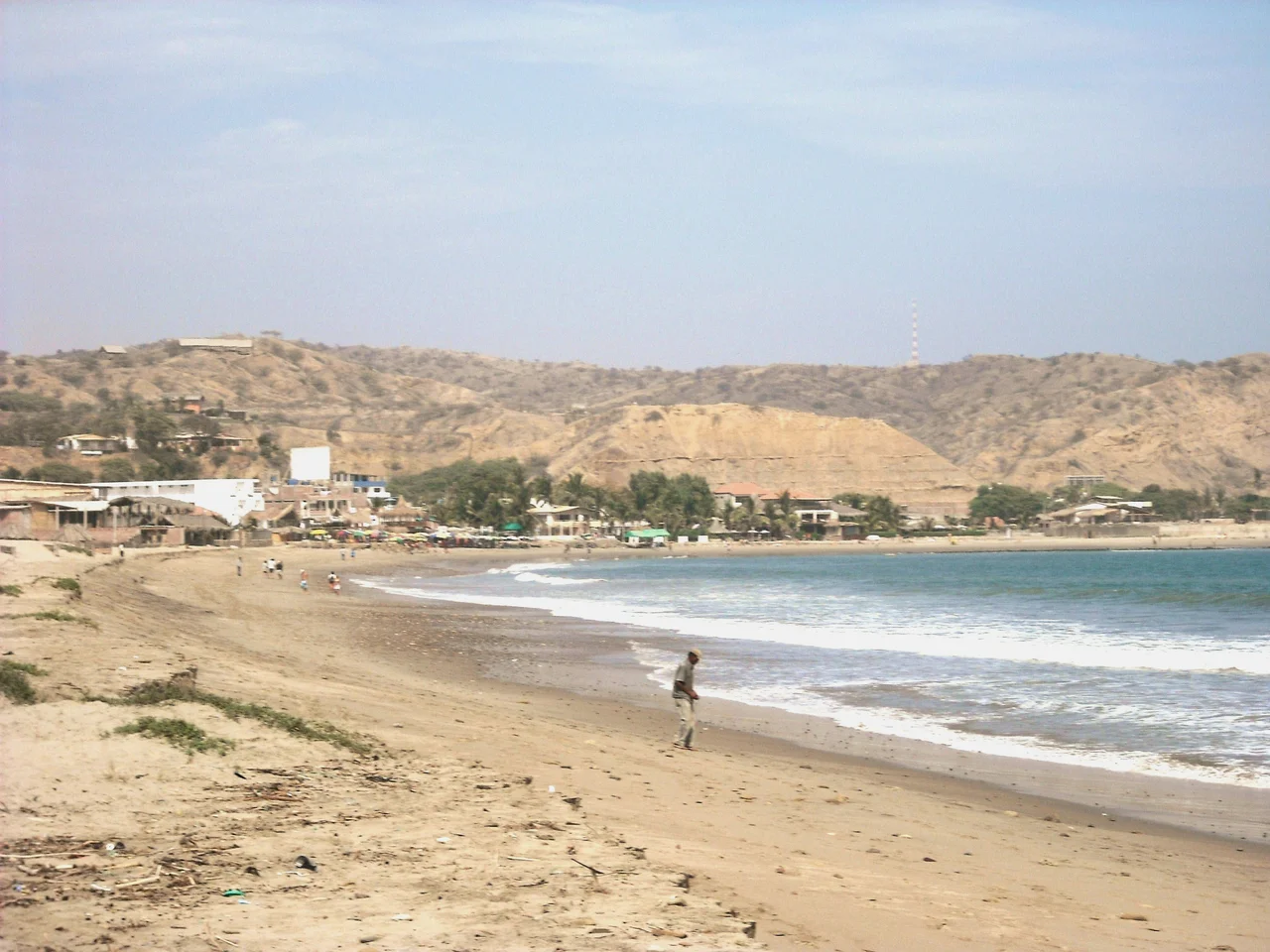

Máncora
December in Mancora means two things: the waves get big, and the buses get full. Limenos drive 1,100 kilometers north along the Panamericana to claim hostel beds in this small beach town, where competing sound systems ramp up in the early afternoon and keep going until dawn. The town sits on the Costanera Norte, the northern coastal highway, about 170 kilometers south of the Ecuadorian border. It is not the prettiest beach in Peru, nor the cleanest, nor the best preserved. It is, however, where Peru goes to party when Peru has time off, and the scene has grown international enough that signs read in Spanish, English, Portuguese, and the approximate language of whoever is dancing.
Where the Surf Breaks
The December and January swell is what built Mancora's reputation in surfing circles. Waves break along the main beach with enough power that some surf shops refuse to rent boards during peak season, wary of getting their equipment back in pieces. The breaks range from beginner-friendly closer to town to intermediate and advanced reef waves out on the points. Kitesurfing has caught on as a second discipline, with the steady cross-shore winds making Mancora one of the better South American spots for the sport. Three-day courses get beginners up and riding before the week is out. For most visitors, however, the main activity is lying on the sand and watching pelicans trade places with passing fishermen on the horizon.
The Whale Months
From roughly August through October, humpback whales pass within view of the beach, migrating north along the Pacific coast. They appear as distant spouts at first, then as dark backs breaking the water, sometimes close enough that a walker on the sand can hear the exhalations. Dolphins show up year-round. Crabs skitter across the wet sand at the waterline. Closer inspection of the shore reveals the usual Pacific tidal community: sea stars in shallow pools, small fish darting through the shallows, the occasional pelican stalking breakfast. The water is warmer here than farther south because the Peruvian northern coast sits above the strongest influence of the Humboldt Current, which keeps the rest of Peru's coastline cold.
A Night Built on Volume
The town's bars compete for customers through the medium of loudness. On a busy December night, the main street is a collision of sound systems, each pumping dance music from open doorways toward the beach. This is part of Mancora's reputation and part of why some visitors love it and others flee after one evening. Seafood restaurants along the main road serve ceviche and grilled fish at prices that seem designed to overwhelm any resistance, and the beach itself has restaurants that will bring a mini-tent, table, chairs, and menus down to the sand for you. The busiest nightclubs do not get going until midnight, which is roughly when the ocean breeze drops and the heat inverts the usual logic of beach towns.
The Long Bus North
Getting here is its own experience. Cruz del Sur runs nightly buses from Lima that cover the 1,100 kilometers in about twenty hours. EPPO runs shorter routes from the regional hubs of Piura, Sullana, and Talara roughly twenty times a day. From Ecuador, CIFA and other operators run cross-border services from Guayaquil, though CIFA's buses have a reputation for not waiting at the immigration checkpoint, a fact travelers generally learn by having to sprint. The Cuenca to Mancora route runs direct through Super Semeria and Azuay, departing around 22:00 and handling border paperwork for passengers. The whole trip takes about seven hours including customs, meaning most arrivals are dazed, hungry, and looking for the nearest shower before they look for anything else.
A Reputation and a Reckoning
Mancora's reputation as a party town has carried some consequences. Pickpocketing and drink-spiking have both been reported, and the drug trade operates openly enough that local guidebooks explicitly warn travelers away from buying illegal substances, noting that dealers and police have been known to work together to extort bribes. Calm seas can hide dangerous currents, especially for swimmers who have been drinking. The Buena Vista, a beach hotel slightly north of the main beach, is one of the quieter options and one that Mario Vargas Llosa's daughter Morgana chose for her wedding. For visitors looking for peace, Los Organos lies fifteen minutes south with fewer bars and longer stretches of empty beach. Most people, though, come to Mancora precisely because it is loud, and they leave with a sunburn, a hangover, and at least one story worth telling.
From the Air
Mancora is located at 4.11 degrees south, 81.05 degrees west, on Peru's northern Pacific coast in the Piura region. The nearest commercial airport is Captain Victor Montes Arias Airport at Talara (ICAO: SPYL), about 70 kilometers south. From altitude the town appears as a small coastal cluster with the distinctive Panamericana Highway (Route 1) threading north-south along the shore. Recommended viewing altitude 5,000 to 8,000 feet to see the beach curve and the dry coastal desert extending inland.
Nearby Stories
- Poechos Reservoir 31 km away
- Tumbes 34 km away
- Talara Refinery 35 km away
- Alamor 56 km away
- Battle of Punta Malpelo 73 km away
- Malpelo Island 875 km away
- San Cristóbal (Galápagos) 946 km away
- Easter Island: The Mystery of Rise and Collapse 3882 km away