
Mandalika: The Racetrack That Summoned a Shaman
The rain was winning. On March 20, 2022, the first Indonesian motorcycle Grand Prix in twenty-five years was in danger of cancellation as a tropical downpour hammered the brand-new Mandalika circuit on Lombok's southern coast. Officials delayed the MotoGP race. Then the rain stopped -- coinciding, as Indonesian press gleefully reported, with the arrival of a shaman flown in specifically to repel the weather. Whether credit belonged to meteorology or the supernatural, the rain was the least of Mandalika's problems. The circuit's asphalt was already falling apart. New holes had appeared in a surface that had been repaved barely eleven days earlier, pelting riders with flying stones and forcing both the Moto2 and MotoGP races to be shortened. It was a fitting introduction to a venue that has, since its inception, seemed determined to generate as much drama off the track as on it.
A Circuit Born of Ambition
Indonesia last hosted World Championship motorcycle racing at the Sentul International Circuit near Jakarta, in 1996 and 1997. The 1997 Asian financial crisis shut the program down, and for two decades, the world's fourth-most-populous nation was absent from the global motorsport calendar. The idea for Mandalika emerged from tourism strategy rather than racing tradition. The Indonesia Tourism Development Corporation obtained land rights in late 2016 to build a circuit within the Mandalika Special Economic Zone, a resort development area on Lombok's southern coast. In January 2017, Mark Hughes of Mrk1 Consulting sketched the initial track layout -- later revealing he had first configured it at a beachside hotel during a visit to Lombok. By November 2017, French construction firm Vinci had signed a contract valued at 6.5 trillion Rupiah. The circuit would be 4.301 kilometers long with 17 corners, and it was designed to anchor a 120-hectare sports and entertainment complex that would include hotels, conference facilities, and a 3,000-hectare conservation area.
The Asphalt Problem
From the moment professional riders first turned laps at Mandalika, the surface was a concern. During the World Superbike round in November 2021 -- the circuit's competitive debut -- Jonathan Rea noted the track was dirty, especially off the racing line. Other riders dismissed it as typical for a new venue. But three months later, at the 2022 MotoGP pre-season test, the issue proved far worse. Riders complained of dust and loose gravel; Jorge Martin of Pramac Racing called the gravel runoff areas "too sharp" and "painful" after a crash between Turns 10 and 11. The first day's testing was suspended for hours while crews cleaned the track. The culprit, according to The Race, was not rainfall but substandard aggregate -- asphalt material finer than specifications, improperly prepared. Sections of the circuit were repaved in a rush job completed just seven days before the March Grand Prix. It was not enough. During race weekend practice, new holes appeared in the resurfaced sections, and riders reported being struck by flying stones.
Displaced Lives at Turn Nine
The controversy that drew international attention to Mandalika had nothing to do with asphalt. In April 2019, the United Nations Human Rights Council released a report documenting human rights violations during the circuit's construction, citing reports of local residents forced from their homes and land. The Indonesian government dismissed the findings as a "false and hyperbolic narrative." But individual cases told a more granular story. Gema Lazuardi's 60 acres were promised for purchase by ITDC in 2016. By 2020, he was being sued by ITDC for using his own land without permission, and was sentenced to two months in prison before winning on appeal. Another resident, Masrup, lost 1.6 hectares despite being found innocent in court of charges that he had encroached on his own property. In September 2019, dozens of residents from two hamlets blocked construction equipment. By October 2021, a small community remained trapped in the middle of the circuit between Turns 5 and 8, accessible only through tunnels that flooded chest-deep during rains, cutting off access for a week.
Presidents and Pit Lanes
Despite the difficulties, the circuit launched with presidential fanfare. On November 12, 2021, President Joko Widodo inaugurated the Mandalika International Circuit and personally drove a lap around the track. The Mandalika Grand Prix Association was formed four days later to manage operations, and Pertamina, the state oil company, paid seven million dollars for naming rights. The circuit achieved FIM Grade A homologation in March 2022, clearing it for MotoGP events. Riders praised the layout even as they criticized the surface. Marc Marquez called it "simple" but predicted entertaining racing, noting "there is only one line to overtake." Pol Espargaro said it had "its own character" and "a little bit of everything." The pit building, spanning 350 meters with 50 garages across two and three floors, was designed to double as a conference center between race weekends -- a reminder that the circuit was always meant to serve tourism as much as motorsport.
Racing on the Edge
Mandalika's event calendar has expanded steadily despite the rocky start. The circuit hosts the Indonesian motorcycle Grand Prix as part of the MotoGP World Championship, and has added GT World Challenge Asia, endurance racing, and regional series to its annual schedule. The Superbike World Championship ran there from 2021 through 2023 before departing. Not all the news has been competition results. In 2023, Japanese rider Haruki Noguchi was killed during an Asia Road Racing Championship round at the circuit, a tragedy that underscored the stakes of racing on any track, let alone one with Mandalika's troubled construction history. The circuit remains a work in progress -- a venue where ambition has consistently outpaced execution, but where the racing itself has delivered on the promise of speed, heat, and unpredictability. Whether the shaman deserves credit for that is a question best left to the riders.
From the Air
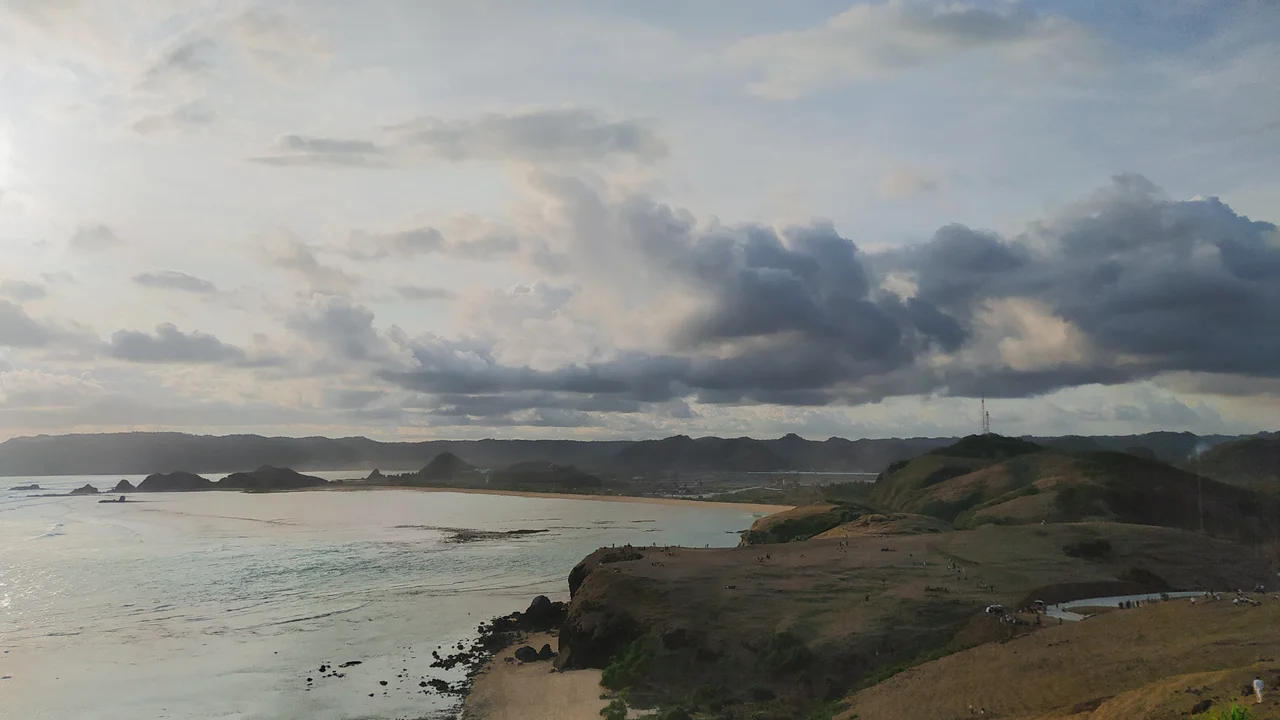
The Mandalika International Street Circuit (8.895S, 116.304E) is located on the southern coast of Lombok island, Indonesia, in the Mandalika resort area facing the Indian Ocean. From altitude, the circuit is visible as a looping road complex near the coast, with the resort development and conservation areas surrounding it. Lombok International Airport (WADL/LOP) is approximately 25km to the northwest. Mount Rinjani (3,726m), Lombok's dominant volcano, rises to the north-northeast. The Lombok Strait is visible to the west, with Bali beyond it. Ngurah Rai International Airport (WADD/DPS) on Bali is roughly 90km to the west-southwest. Best viewed from 5,000-8,000 feet to see the circuit layout and its coastal setting. Tropical climate; dry season April-October offers the best visibility, though the circuit's race weekends in the wet season are notorious for sudden downpours.
Nearby Stories
- Pura Lingsar 4.3 km away
- Ujung Water Palace: The Garden at the Edge 17 km away
- Nusa Penida: Bandit Island Turned Bali's Last Refuge 22 km away
- The Island Diana Chose 102 km away
- The Island That Shook the World 136 km away
- When the Towers Fell: The Waru Wora Fire 295 km away
- The Silent Wave: Java's 1994 Tsunami Earthquake 344 km away
- Sumba's Hidden Kingdom of Wings 389 km away