
Mar's Wark
The carved inscription on the south tower of Mar's Wark addresses you directly, in middle Scots, in the voice of the building itself. *I PRAY AL LVIKARIS ON THIS LVGING, VITH GENTILE E TO GIF THAIR IVGING.* I pray all lookers on this lodging, with gentle eye to give their judging. The Earl of Mar built this house in Stirling between 1570 and 1572 to be the principal Erskine residence at the head of Broad Street, and four and a half centuries later most of it has fallen down. What survives is the front: the great gatehouse with its two polygonal towers, the carved royal heraldry, and three inscriptions that gently dare the viewer to think well of the man who put them there.
The Regent Who Ran Out of Time
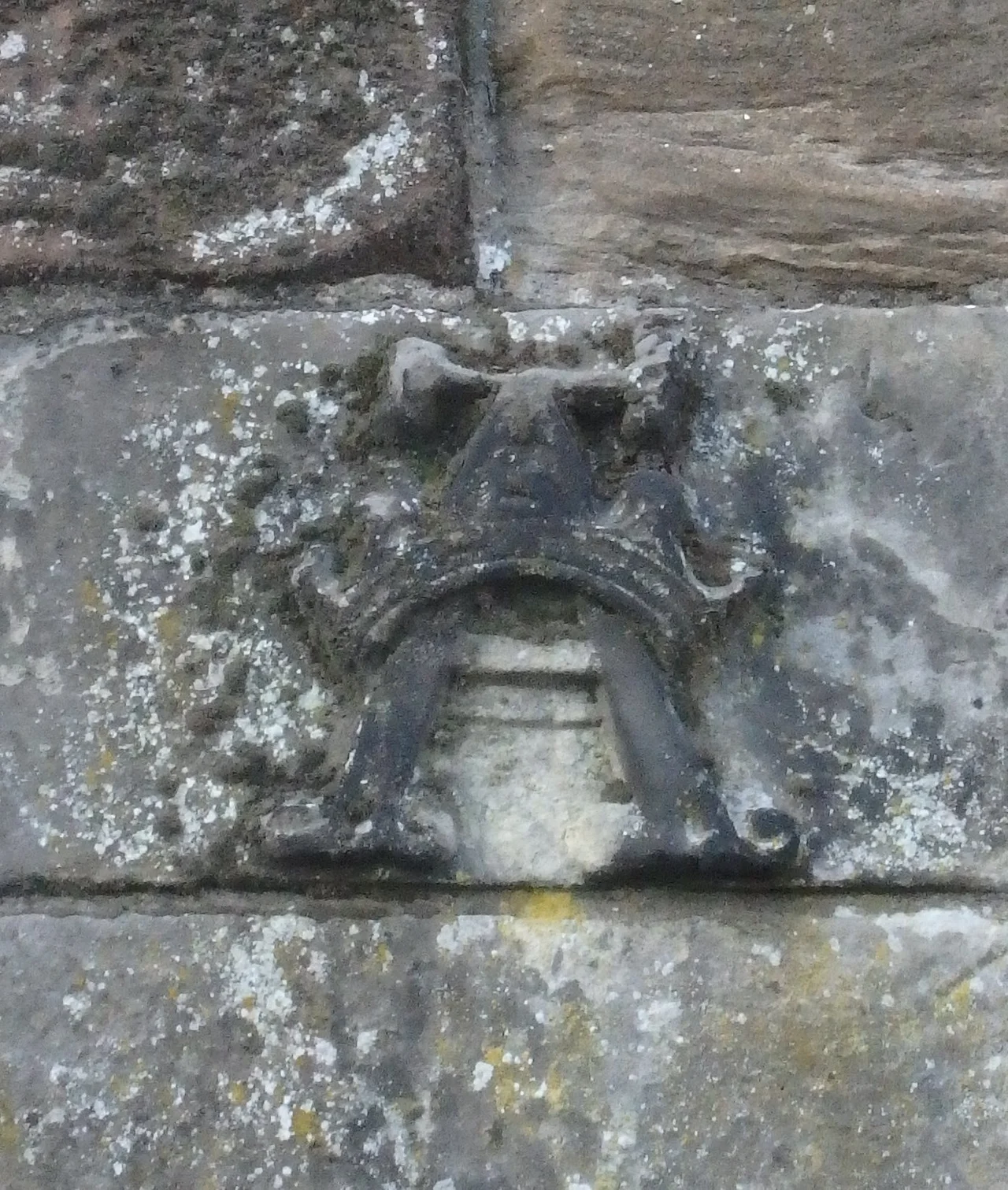
John Erskine, Earl of Mar, was a careful, austere man who briefly held the highest office in Scotland. In September 1571 he was elected Regent of Scotland for the infant King James VI, whose education he had personally overseen at Stirling Castle. The Erskine family had held the hereditary keepership of the castle for generations; their job was to keep the princes of Scotland safe and to teach them how to be kings. Mar lasted just over a year. He died in October 1572, before his great house at the foot of the castle was complete. *Wark* is the Scots word for *work*, in the sense of *building*; locals still call the ruin Mar's Lodging. The datestones say 1570 and 1572. Some sources claim it was never finished, but there is little hard evidence either way. His widow Annabella Murray, the *A* possibly hidden in the carved crowned letter on the facade, certainly continued to use it.
A House in the King's Voice
The facade is one of the finest pieces of Scottish Renaissance domestic architecture left in the country. It is nearly symmetrical, organised around the gatehouse frontispiece with its two polygonal turrets. The stone carvings draw on European pattern books, displaying royal heraldry beside the Erskine arms in a deliberate echo of the palace at Stirling Castle just above. The general articulation and architectural mouldings are so close to the royal palace that the Earl probably commissioned William MacDowall, the Master of Work to the Crown of Scotland, to design it. Tradition holds that some of the stones were salvaged from the dissolution of Cambuskenneth Abbey across the Forth. The carved inscriptions on the gatehouse are inscriptions of nervous pride. The north tower reads: *THE MOIR I STAND ON OPPIN HITHT, MY FAVLTIS MOIR SVBIECT AR TO SITHT.* The more I stand on open height, my faults more subject are to sight. The exit arch is brusquer: *ESSPY SPEIK FVRTH AND SPAIR NOTHT, CONSIDDIR VEIL I CAIR NOTHT.* See, speak forth and spare not. Consider well, I care not.
The Lady's House
After the Regent's death, Mar's Wark belonged to his widow. Burgh records refer to it as Lady Mar's House and place it at the centre of court life in late-sixteenth-century Stirling. In April 1584 supporters of the Earl of Angus were ordered to surrender the castle and the town gates and the lodging of Annabella, Countess of Mar, all in the same breath, suggesting it was already considered a place of fortification. The captive Earl of Gowrie was brought here for his trial the following month. In December 1593 Anne of Denmark, pregnant with the future Prince Henry, was first lodged at the Earl of Argyll's house and then at Lady Mar's lodging until her rooms in the castle were ready. In May 1595 a banquet for the marriage of the king's mistress Anne Murray and Lord Glamis was held here. In 1602 a French ambassador, the Baron de Tour, had a quiet word with the Countess in these rooms.
Open to the Sky
Time was harder on Mar's Wark than on the church beside it or the castle above. Because the lodging commanded Broad Street and the town, it was later used to mount artillery during civil unrest, an indignity for what had been a residence. The upper storey is gone. The roof is gone. The windowless front facade is what survives, with the basement vaults at street level, originally fitted with doors and windows that suggest they were meant to be let as shops. You can still climb to the first floor. The Scottish Government protects the ruin as a scheduled monument; Historic Environment Scotland keeps it open to anyone walking up Broad Street to the castle gates. The Wark is the first great building you pass on the processional route to the palace. It addresses you, frankly, in its own voice. *I pray all lookers on this lodging, with gentle eye to give their judging.* Four hundred and fifty years on, the request still seems fair.
From the Air
Mar's Wark sits at 56.121N, 3.944W at the head of Broad Street in Stirling's old town, immediately adjacent to the Church of the Holy Rude and on the approach to Stirling Castle. From altitude the castle rock is the obvious landmark; Mar's Wark is on the ridge below. Best viewed at 2,000 to 4,000 feet for the detail of the old town layout. Nearest airports: Edinburgh (EGPH) 30 nm east-southeast, Glasgow (EGPF) 25 nm south-southwest. Expect typical lowland weather; cloud often hangs against the Ochil Hills to the east.
Nearby Stories
- Murder of Alesha MacPhail 3.1 km away
- Ben Lomond 5 km away
- Lochleven Castle 8.8 km away
- Battle of Dunsinane 15 km away
- Pentland Hills 16 km away
- Breadalbane Hydro-Electric Scheme 17 km away
- Beith 17 km away
- Rannoch Moor 24 km away