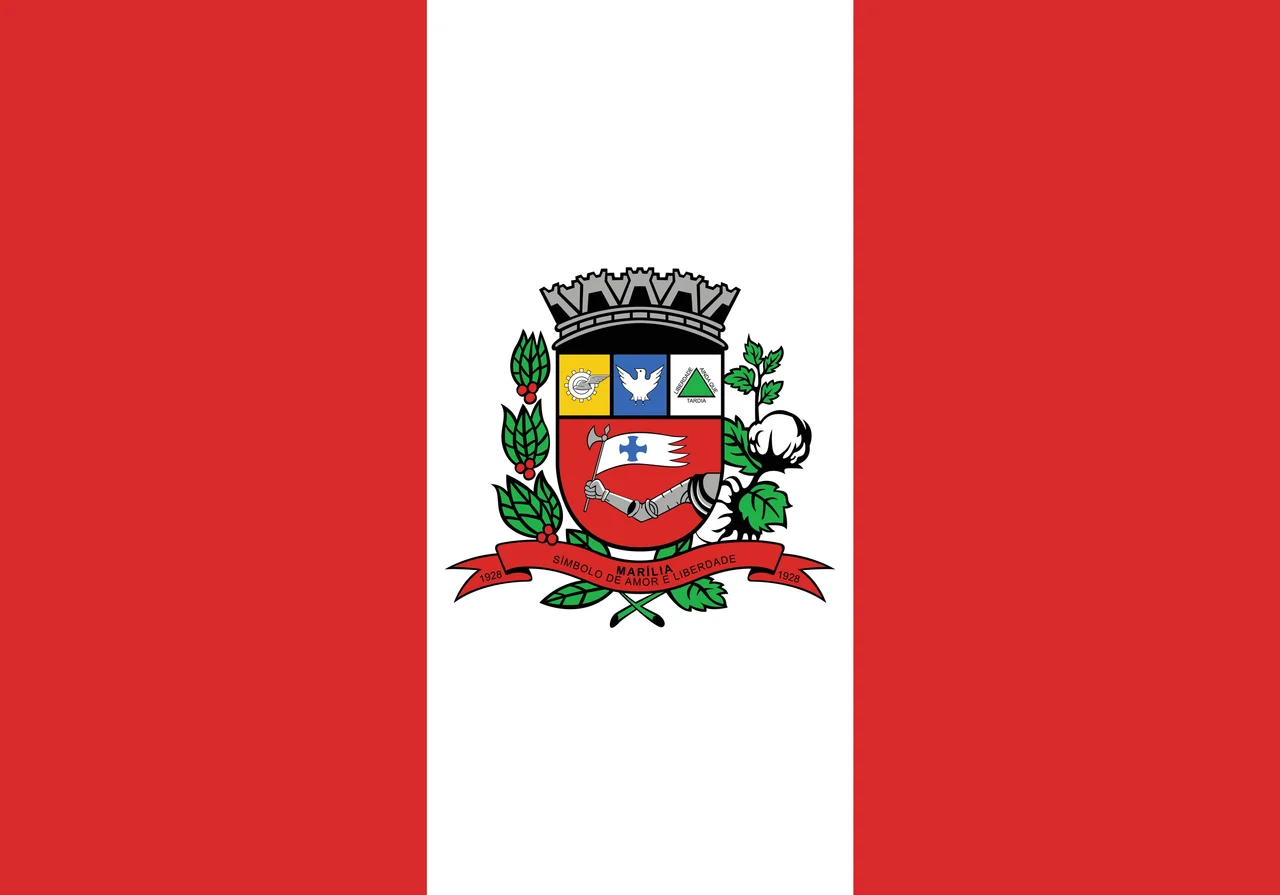

Marília
A railway executive was reading on a ship. The Companhia Paulista Railway was extending its tracks across São Paulo state in the 1920s, and its engineers had a naming convention: each new branch took a name beginning with the next letter of the alphabet. When they reached the letter M, the suggestions were rough — Maratona, Mogúncio, Macau — and Bento de Abreu Sampaio Vidal, the deputy from Araraquara region who held authority over the branch, found all of them ugly. On one of his trips to Europe by ocean liner, he opened Tomás Antônio Gonzaga's eighteenth-century poem Marília de Dirceu, the famous lyric collection addressed to the poet's beloved, and the name Marília leapt off the page. That was how a São Paulo railway town got its name — from a love poem read somewhere in the middle of the Atlantic Ocean, by a man trying to decide what to call a stop on a freight line.
The Coffee That Came First
Before there was a railway, there was coffee. In 1923, Antônio Pereira da Silva and his son José cleared land between the Feio and Peixe rivers and called their plot Alto Cafezal — High Coffee Plantation. Other pioneers followed, most notably Colonel José Brás da Silva Nogueira, whose family held forty percent of a neighboring farm called Bonfim. When those farms began to be subdivided in 1927, the village that emerged took the form of an urban grid. State Law No. 2161, passed on December 22, 1926, created the city of Marília as a borough of Cafelândia. Two years later, on December 24, 1928, State Law No. 2320 elevated Marília to municipality status. Its anniversary is celebrated on April 4, 1929 — the day the first formal government took office. Coffee built the town. Cotton later took coffee's place, driving the installation of the first two industries in the mid-1930s, both cottonseed oil mills.
The National Capital of Food Processing
The 1970s brought a new industrial cycle, and this one stuck. Food processing moved in with force, joined by welding plants and other light manufacturing. The combination proved catalytic. Today, Marília hosts approximately fifty food industries in its metropolitan area and carries the official designation as Brazil's "National Capital of Food Processing" — a nickname earned particularly through the city's production of cookies, crackers, bakery goods, and bakery-industry supplies. Global brands and local names share space in industrial districts. The concentration is dense enough that regional bakers across Brazil trace their ingredients back to Marília shipping labels. The city did not set out to become the cookie capital. It did set out to host industry when the coffee and cotton economy faltered, and food processing was what arrived with staying power.
First Medal, and a Meteorite
On July 31, 1952, at the Helsinki Summer Olympics, a swimmer from Marília named Tetsuo Okamoto completed the 1,500-meter freestyle in the medal positions. When the times were confirmed, Okamoto had won bronze — and had become the first Brazilian ever to win an Olympic medal in swimming. His hometown has never forgotten. Marília also produced Thiago Braz, the pole vaulter who won Olympic gold at Rio 2016 with a record-setting leap, and Augusto Dutra, another elite pole vaulter. A different kind of landing made the city's news nineteen years after Okamoto's medal: on October 5, 1971, at approximately 5:00 in the afternoon, a meteorite fell directly onto Marília. Seven fragments were recovered, totaling about 2.5 kilograms. The rock was classified as a chondrite H4 — a common but scientifically valuable type of stony meteorite. It was the last meteorite fall registered anywhere in São Paulo state, and a fragment still sits in the city's collections.
The Airline and the Bank
Two businesses born in Marília grew into national institutions. In 1961, an aviation startup calling itself Táxi Aéreo Marília — TAM — began running regional charter flights from the town. That modest operation became TAM Brazilian Airlines, which for decades ranked as the largest carrier in the Southern Hemisphere before merging with Chile's LAN in 2012 to form LATAM Airlines Group. The acronym still references the original town name. Earlier, on March 10, 1943, Amador Aguiar founded Banco Bradesco in Marília. From that local beginning, Bradesco grew into the second-largest private bank in Brazil and one of the largest financial institutions in Latin America. Both companies long ago outgrew their origins. Neither forgot them. A provincial São Paulo town of 240,000 people had, almost incidentally, incubated two of the country's most important enterprises.
The Ancient Crocodile and the Modern Sister Cities
Paleontologists working in the Marília region discovered a pre-historic crocodilian species they named Mariliasuchus amarali — a tribute to the city in its very taxonomy, from the Bauru Group rocks of the Late Cretaceous. The region's ancient sediments have yielded important dinosaur and crocodyliform fossils. In the present day, Marília maintains three sister-city relationships: Buffalo, New York in the United States, and two Japanese cities, Higashihiroshima in Hiroshima Prefecture and Izumisano in Osaka Prefecture. The Japanese connections reflect the city's significant Nikkei population — descendants of the Japanese immigrants who arrived in São Paulo state from 1908 onward seeking farmland, then built a cultural presence strong enough to support an annual Japanese cultural festival that now ranks among the largest in the interior. The Unesp campus here includes research in agriculture, medicine, and mathematics; the Frank Miloye Milenkowichi Airport keeps the city connected for regional flights; and the Bauru-Marília highway network ties it into São Paulo state's industrial corridor.
From the Air
Coordinates: 22.21°S, 49.95°W. Recommended viewing altitude: 5,000-7,000 feet AGL for views of the city at 675 meters elevation and the surrounding mid-western São Paulo agricultural country. Nearest airports: Marília Airport (SBML) for regional scheduled service; Bauru (SBBU) approximately 110 km east for additional commercial options. Notable landmark from altitude: the crisscross pattern of SP-294 and SP-333 highways converging on the city, and the clusters of food-processing industrial districts on the urban periphery.
Nearby Stories
- Adamantina Formation 41 km away
- Bauru Station (NOB) 52 km away
- Presidente Prudente 80 km away
- São José do Rio Preto 130 km away
- Lagoa São Paulo Reserve 141 km away
- Captaincy of São Paulo 172 km away
- Atlantic Forest Biosphere Reserve 283 km away
- Guaira Falls 413 km away