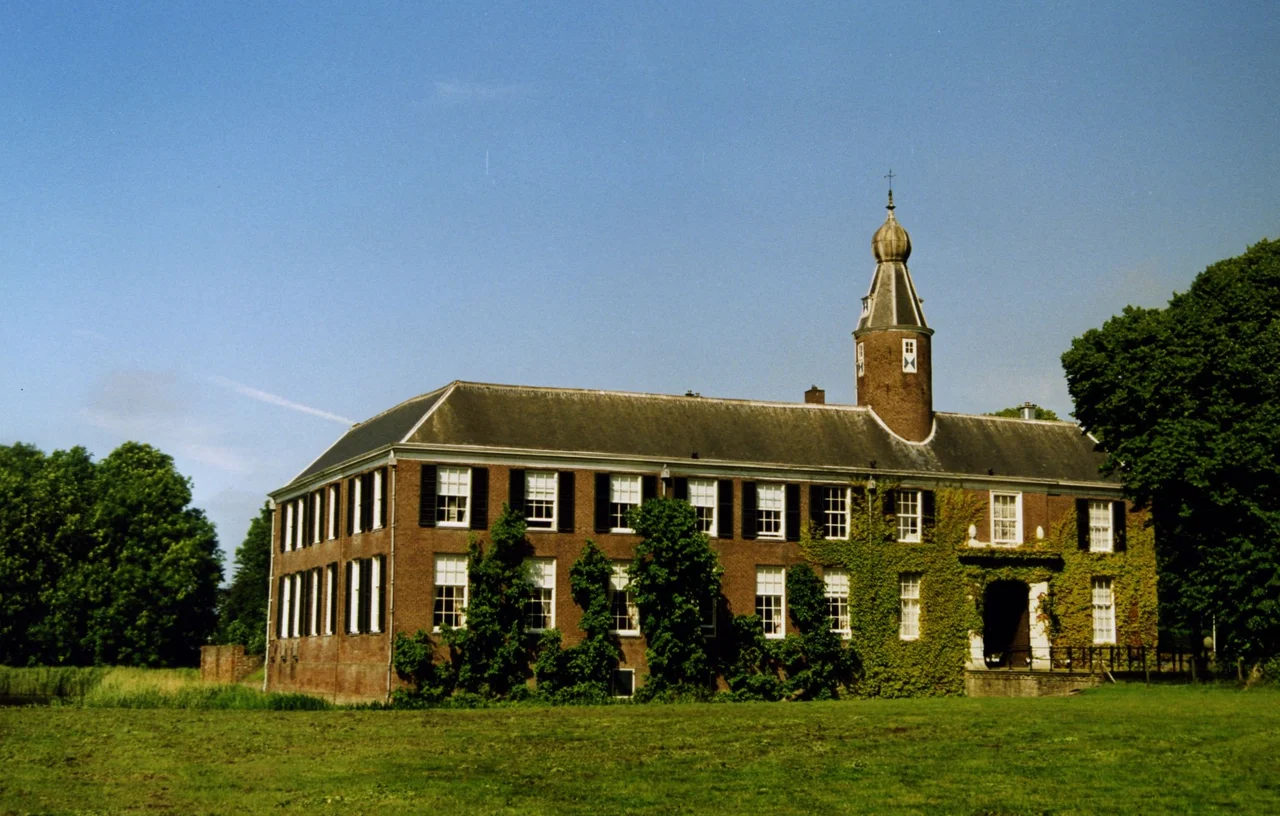

Marquette Castle
In October 1358, a young nobleman named Wouter van Heemskerk tried to murder the bailiff of Kennemerland and missed. The bailiff, Reinoud van Brederode, escaped. Within weeks the regent of Holland - Count Albert - had brought troops north and was besieging Wouter's home: a round water castle ringed by wide moats, set in the marshy ground of Heemskerk. By March 1359 the walls broke. Wouter and his wife were allowed to walk out with what they could carry. The castle was confiscated, and Wouter eventually had to pay 7,000 shield-shields - a fortune - in reconciliation. He died in 1380 without legitimate heirs, and the medieval round water castle slowly faded out of use, its walls dismantled, its moats turned into the borders of an ornamental garden. What stands at the site today is something different - and yet, beneath the floor of an 18th-century manor's cellar, the thirteenth-century brick is still there.
A Ring of Water
The first castle was built sometime in the 13th century at the orders of Count William II of Holland, who ruled from 1247 to 1256 and was determined to subdue the rebellious West Frisians. He scattered new strongholds across the region, and Heemskerk - then called huys te Eemskercke - ended up at the centre of an unusually dense cluster of castles. The structure was a round water castle, a fortified ring perhaps forty metres in outer diameter, surrounded by a moat. Old drawings show at least one building rising along the inner wall. Egmond Castle's similar round keep nearby was smaller by ten metres. In 2021, archaeologists scanned the grounds with ground-penetrating radar and confirmed the buried footprint: the circular foundation and its long-vanished gatehouse, still legible underground after seven centuries.
A Castle Changes Names
Through the 14th and 15th centuries the castle passed by inheritance and marriage through the Van Heemskerk family, who were entangled in the Hook and Cod wars - the long, vicious civil conflict that defined late-medieval Holland. Gerard III van Heemskerk led the Cod faction in his lifetime and once held a Brederode prisoner within these walls. After Wouter's downfall, the ring castle declined and the buildings on its outer bailey - the working courtyard outside the main fortification - were enlarged into something more like a country house. In 1610 a Flemish nobleman named Daniël de Hertaing, Lord of Marquette-en-Ostrevant, bought the estate. He had been governor of Ostend during its famous three-year siege at the start of the century. Two years later, in 1612, he received permission from the States of Holland to give the castle his own lost lordship's name. Heemskerk Castle became Marquette.
The Rendorp Vision
In 1717 an Amsterdam brewer and former mayor, Joachim Rendorp, bought the estate. His son Pieter Rendorp was an amateur architect with ambition. Between 1738 and 1741 he designed the stately eastern wing that still defines the building: a long block with a double roof, a projecting avant-corps, and slender stone pilasters running its full height. The west wing followed around 1780 under his son, the politician Joachim Rendorp the younger, who pushed the castle to its greatest extent. The interiors filled with the styles of three reigns: a corridor in Louis XIV stucco; a summer dining room in Louis XV; a Chinese room papered in hand-painted scenes. In 1911 the early 18th-century ballroom carpentry from nearby Assumburg Castle was lifted out and reinstalled at Marquette. Beneath all of it, in one of the three vaulted basements, a wall of 13th-century brick still anchors the building to its first foundation.
Centuries of Owners
Wars and economic collapse trimmed the castle back. The French Period at the turn of the 19th century impoverished the Dutch aristocracy and led to the demolition of large parts of Marquette, including the entire northern section. Jacob van Rendorp van Marquette, born in 1795, fought as a volunteer in 1813 and was wounded at the Battle of Quatre Bras in 1815, two days before Waterloo. He later served as mayor of both Heemskerk and Castricum. In 1855 his daughter Paulina married into the Gevers family, who kept the castle for another century and produced three more mayors of Heemskerk between them. After Hugo Gevers died in 1921 the house stood empty for decades. His son Abraham finally moved back in after the Second World War with his wife, Christine baroness de Vos van Steenwijk. They were the last family to live at Marquette.
Conferences and Crowdfunding
In 1977 the Gevers family sold the 61.5-hectare estate. Three years later the province of North Holland bought the surrounding land for 2.75 million guilders, leaving the castle itself in private hands. A six-million-guilder renovation in the early 1980s turned it into a conference and party venue, but the project failed within two years - it lacked a parking lot, of all things. In 1985 a Swiss hotel group reopened it with a separate hotel building 650 metres away, and the combination worked better. The EU foreign ministers conferred here in 1986. The current owner, Erik Kuiper-van den Berg, took over in 2018 - and financed the purchase by crowdfunding, an oddly modern epilogue for a castle that began as a count's instrument of conquest seven and a half centuries ago.
From the Air
Coordinates 52.521°N, 4.668°E, on the eastern edge of Heemskerk in North Holland. From 1,500-3,000 ft AGL the castle's two parallel wings and surrounding wooded estate stand out against the open polder farmland to the east, with the dunes of the North Sea coast about 3 nm west. The cluster of medieval castles around Heemskerk (Assumburg lies just to the south, Oud Haerlem nearby) makes this a rich area for low-altitude heritage spotting. Schiphol (EHAM) is roughly 18 nm south; Texel International (EHTX) lies further north. The North Sea Canal at IJmuiden, immediately south, is a clear navigation reference.
Nearby Stories
- Battle of Camperdown 2.1 km away
- Randstad 6.4 km away
- Oostvaardersplassen 6.7 km away
- Luchterduinen Offshore Wind Farm 7 km away
- HMS Prince George (1895) 7.2 km away
- Amersfoort 9.6 km away
- Ockenburg 16 km away
- Stavoren 18 km away