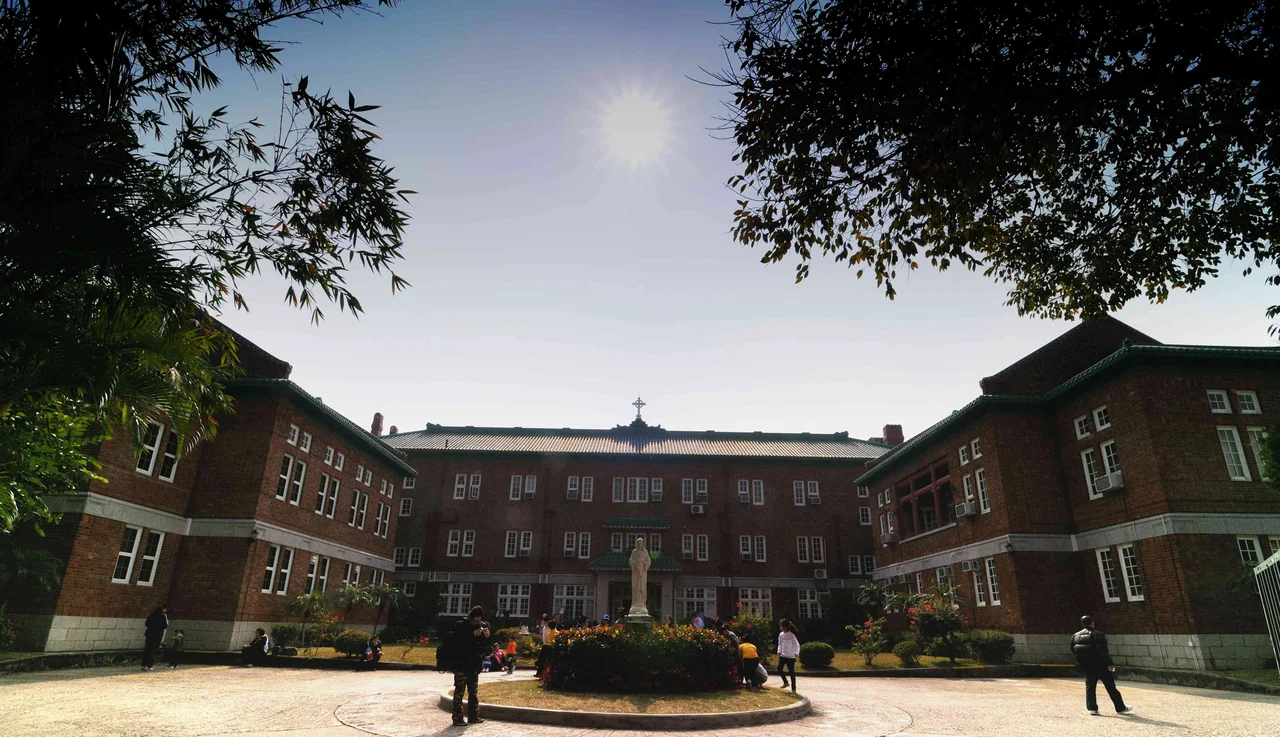

Maryknoll House (Stanley)
Father Patrick Byrne described it without sentimentality: after months in the Chinese interior, navigating bandits and bad food and the particular discomforts of remote mission work, two weeks at the Stanley rest house looked, as he put it, like a million dollars. The house was not glamorous. But it offered what the mission circuit could not: stillness, decent food, and the knowledge that the next stretch of road would not involve fleas. Built in 1935 on the southern peninsula of Hong Kong Island, Maryknoll House served a practical purpose that its Grade I historic building status does not quite capture.
Why Stanley
The Maryknoll Fathers and Brothers—the Catholic Foreign Mission Society of America, founded in 1911—had been operating in southern China since the 1920s, establishing missions across Guangdong Province and beyond. Hong Kong was the logical base: accessible, relatively stable under British administration, and close enough to the Chinese interior to function as a staging point. Stanley, on the southern side of Hong Kong Island, offered what Central and Kowloon could not—space, quiet, and some separation from the busy harbor. In 1935, Maryknoll completed their headquarters here, a building that combined the practical functions of administration with the restorative ones of a rest house.
A School for Languages, a Refuge from the Road
The dual character of Maryknoll House shaped everything about it. On one side, it functioned as a language school where newly arrived priests preparing to preach in China studied Cantonese and Mandarin before crossing into the mainland. Language immersion here was not optional—working in Chinese communities required genuine fluency, and the school took that seriously. On the other side, the house served as a place of recovery for missionaries returning from extended time in the field. Father Byrne's vivid account of what those returns meant—the relief after months of difficult travel, the restoration of morale that made continued work possible—suggests that the rest house function was not a secondary one. It kept people in the field who might otherwise have burned out.
War and After
The Japanese occupation of Hong Kong, which began on 25 December 1941 and lasted until August 1945, transformed every institution on the island. Maryknoll House's wartime experience is part of a larger story about what happened to foreign mission infrastructure during the occupation, when many religious institutions were shuttered, seized, or repurposed. The house survived the war, which puts it in a different category from many colonial-era structures that did not. After the occupation ended and the British returned, Maryknoll resumed operations in Hong Kong and China, continuing until the political transformations of the mainland in the late 1940s and 1950s reshaped where Catholic mission work could operate.
The Fight Over Its Future
In 2016, the property was purchased by CSI Properties, a Hong Kong developer. The plan was to redevelop it for residential use—which on the Stanley peninsula means high-value apartments with sea views—while retaining some of the building's historical architectural elements. The proposal set off a familiar Hong Kong contest between heritage preservation and development pressure. The Antiquities Advisory Board had graded Maryknoll House as Grade I, the highest classification in Hong Kong's historic building grading system, meaning it holds exceptional historic interest. Grade I status does not legally prevent demolition, though, and in 2019 town planners gave the developer's demolition proposal the green light. The building's future remained uncertain. What the Grade I designation preserved, at minimum, was the record: what Maryknoll House was, why it existed, and what was lost if it went.
From the Air
Maryknoll House sits at approximately 22.221°N, 114.210°E on the Stanley Peninsula, on the southern side of Hong Kong Island. From VHHH (Hong Kong International Airport, approximately 15 nautical miles to the northwest), approaching the southern shore at 1,500–2,500 feet, the Stanley area appears as a relatively low-density residential zone wrapped around Stanley Bay on the island's southeastern coast. Stanley Main Street and the market are visible at lower altitudes. The peninsula juts south into the South China Sea, with Clear Water Bay and the Sai Kung Peninsula visible to the east in clear conditions. The nearest ICAO airport is VHHH; the site is approximately 7 nautical miles southeast of Aberdeen and 10 nautical miles south of the city center.
Nearby Stories
- Lok Ma Chau Loop 2.3 km away
- Portas do Cerco 2.3 km away
- Kweilin Incident 17 km away
- Wanshan Archipelago Campaign 34 km away
- Nanxiong Formation 115 km away
- Battle of Nanpeng Island 148 km away
- Heyuan 169 km away
- Cape Maobitou 632 km away