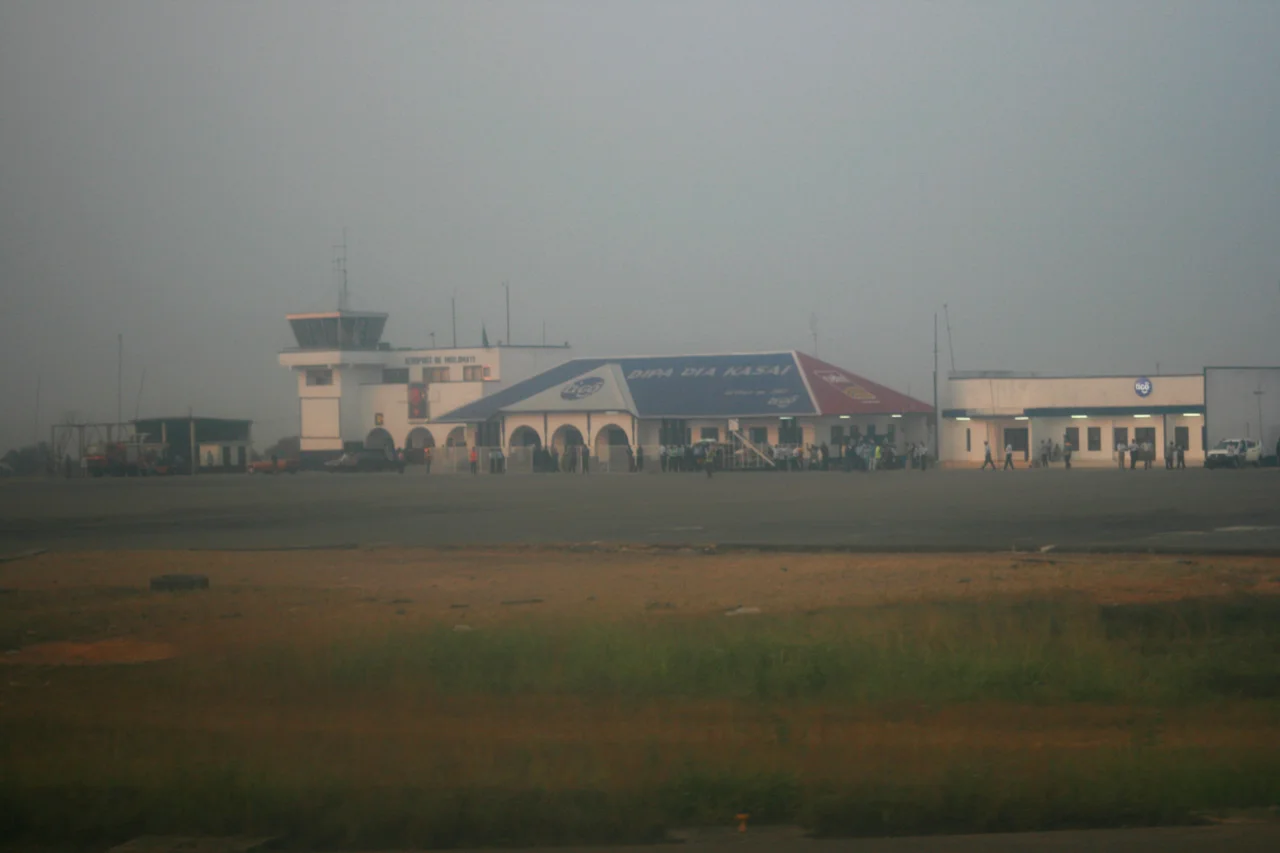

Mbuji Mayi Airport
On December 24, 2015, a Services Air Cargo Airbus A310 came down at Mbuji Mayi Airport in heavy rain and could not stop. The runway surface was poor and wet; the plane exited the runway. Eight people died - all of them on the ground. Nine more were injured. No crew or passengers were counted among the casualties, because the victims were people who lived or worked near the airport perimeter, caught in the path of an aircraft that ran out of pavement. An accident report names what happened on the runway. What it does not say is why Mbuji Mayi's runway was in such shape at the main airport for one of the world's great diamond cities.
The Airport and Its City
Mbuji Mayi International Airport - in French, Aeroport international de Mbuji-Mayi - serves the city of Mbuji Mayi, the capital of Kasai-Oriental Province in the central Democratic Republic of the Congo. Its ICAO code is FZWA; its IATA code is MJM. The airport's navigational aids include the Mbuji Mayi non-directional beacon (Ident: MN), located 1 nautical mile north-northwest of the field, and the VOR/DME (Ident: MBY), located on the airport itself. Mbuji Mayi the city is the third largest in the DRC, with a metropolitan population in the millions - a scale of urban life most of the world has never heard of. It exists because of the diamonds. The Kasai region is one of Africa's richest diamond-producing zones, and Mbuji Mayi grew up as the city where those diamonds were aggregated, sorted, and exported. A substantial portion of the world's industrial diamonds has, at one time or another, passed through this place. The airport is the gateway. Without it, the city loses its main connection to Kinshasa and to the world.
A History of Diamonds and Labor
The diamonds did not arrive peacefully into global markets. For a century, the Kasai fields were worked by Belgian colonial firms, by the successor company Miniere de Bakwanga (MIBA) after independence, and by thousands upon thousands of small-scale miners - many of them children and young men from the surrounding villages. Diamond work in Kasai has often meant working in pits for little pay, under conditions that have drawn criticism from labor and human rights groups for generations. The industry has also made fortunes - for company executives, for traders who buy rough stones, for officials who extract fees and permits along the chain. What the industry has not consistently done is build up Mbuji Mayi's infrastructure to match the wealth that has flowed out of it. The state of the airport runway in 2015 is one kind of monument to that imbalance. The city's economy runs on diamonds; the runway that handles the cargo flights serving the city has been allowed to deteriorate to the point where planes cannot reliably land on it. Any honest account of Mbuji Mayi's aviation has to acknowledge this.
The 2015 Accidents
August 19, 2015: a Brussels Airlines Boeing 737 operating for Korongo Airlines landed at Mbuji Mayi and sustained damage to its horizontal stabilizer when dislodged runway pavement struck the aircraft. No one was injured, but the airframe was damaged. The pavement had come up off the runway surface - which tells you what condition the surface was in. Just four months later came the Airbus A310 accident. Services Air Cargo, the Airbus A310, the wet runway, the poor pavement, the overrun, the eight dead on the ground. The two accidents in one year, at one airport, point at the same problem: a runway that needs serious rehabilitation and has not received it. Aviation safety in central Africa is a chronic challenge. Many African airports have been on EU flight blacklists because of concerns about aircraft safety, regulatory oversight, and airport infrastructure. Mbuji Mayi in 2015 was a case study in what happens when a city that is economically essential to its country is served by aviation infrastructure that cannot keep pace.
The Runway and the Rain
Runways are more specialized than they look. The asphalt or concrete surface must flex slightly under heavy loads without cracking, shed water quickly so that braking aircraft do not aquaplane, resist rutting from the tonnage of passing landings, and survive the central African climate with its drying dry season and its drenching rain season. When maintenance lags, problems compound. Small cracks become larger. Water gets in. Freeze-thaw is not the issue here, but tropical rain is unforgiving in its own way. Pavement edges crumble. Friction drops. A pilot landing with a normally adequate margin of safety loses that margin on a wet, broken surface. The December 2015 A310 was carrying cargo, not passengers - but the people on the ground, who are unaccounted for in most aviation risk models, paid the price. Their eight deaths are a line item that no improvement program could retroactively address. After the two accidents in 2015, attention turned to the condition of the runway. The airport continues to operate, with airlines including Congo Airways and Air Kasai serving Mbuji Mayi in various configurations over the years since.
What the Airport Means
Mbuji Mayi Airport is not just a runway. It is the practical link between a city of millions and the rest of the country - a lifeline for medical supplies, for commerce beyond diamonds, for people who need to reach Kinshasa for government business, family reasons, or medical care. When the airport falters, the city does too. The accidents of 2015 are part of the story. So is every safe flight that brings a teacher home, moves a patient to a hospital, carries a family to a wedding. The airport has its ICAO code and its instrument landing procedures, but it is also the physical expression of whether the Congolese state and the global economy that profits from Congolese minerals will invest in the infrastructure that makes places like Mbuji Mayi livable. That question has not been answered yet. The people who live here, including the eight who died on a rainy December day in 2015, have been asking it for a long time.
From the Air
Coordinates: 6.12°S, 23.57°E. ICAO: FZWA. IATA: MJM. Located at the edge of Mbuji Mayi city in Kasai-Oriental Province, central DRC. Elevation approximately 655 meters. Single runway. Navigational aids: MN non-directional beacon 1 nmi north-northwest; MBY VOR/DME on field. Pilots have historically reported variable runway condition - check current NOTAMs. Weather is tropical wet/dry; severe convective buildups common in the November-March rainy season. Alternate airports include Kananga (FZUA) and Kinshasa N'djili (FZAA).
Nearby Stories
- Lomami Province 26 km away
- Luba Empire 194 km away
- Lulenge 255 km away
- Lukuga River 295 km away
- Kisenge 484 km away
- Kipupu Massacre 601 km away
- Congo Basin 659 km away
- Chinyingi 829 km away