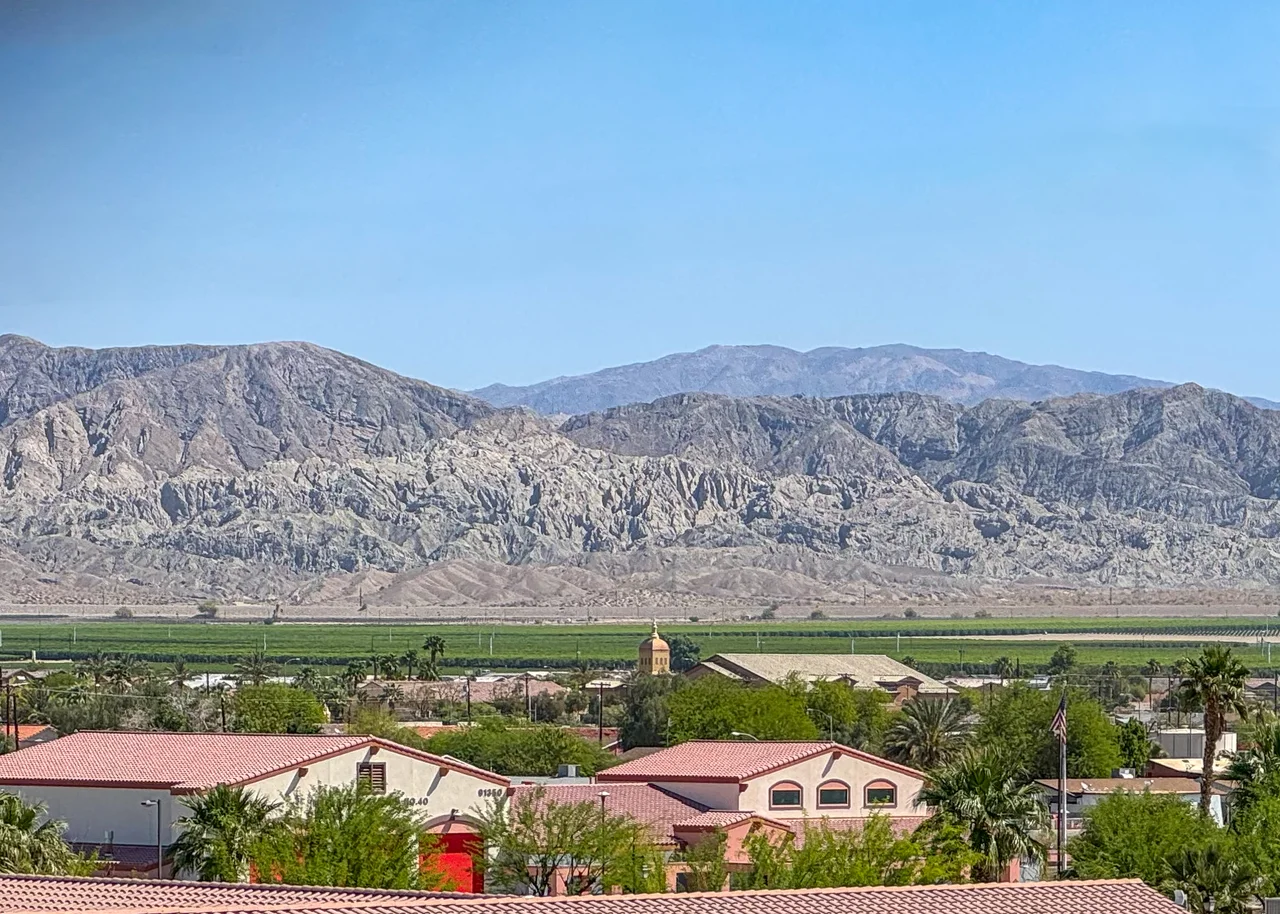

Mecca, California
Mecca, California, is 150 feet below sea level — lower than most of the Salton Sea's shoreline — and on September 2, 1950, it recorded 126°F. The same temperature was recorded again on June 26, 1990. For over three decades, these readings made Mecca the holder of California's September heat record, until Death Valley reached 127°F in 2022. In a state where superlative heat is spread across a wide geography, holding the record twice, forty years apart, means something about what it is like to live and work in Mecca.
Before the Railroad and the Date Palm
The Cahuilla people were the original inhabitants of the land where Mecca now sits, using the area as part of their territory in the Colorado Desert. The De Anza expedition passed through in 1774, one of the earliest documented contacts between Cahuilla people and Spanish colonial forces moving through the region. The Southern Pacific Railroad arrived in 1869, establishing the infrastructure that would eventually make commercial agriculture possible. Date palms were introduced to the area in the late 1890s, when growers recognized that the Coachella Valley's extreme heat, reliable sunshine, and alkaline soil could support the same crop that sustained communities in North Africa and the Middle East. The palm groves that line the roads east of Mecca today are the descendants of those early plantings.
Hollywood in the Heat
In 1966, director Roger Corman brought his camera crew to Mecca to film The Wild Angels — a biker film starring Peter Fonda and Nancy Sinatra that became a landmark of American exploitation cinema. Corman was drawn by the landscape and the economics of filming in a place that offered authentic settings at low cost. The film's opening sequences used the Mecca area's heat-bleached roads and desert margins to establish a tone of social marginality that matched its subject matter. It was a brief, specific kind of fame — the kind that comes from a place being useful rather than celebrated — but it left a documented mark on the town's history.
Infrastructure Delayed, Community Built
The Farmworker Service Center that opened in Mecca in 2005 came after federal investigators at the Department of Housing and Urban Development found a pattern of discrimination in how the region's farmworker communities had been treated by service providers. The center was a response to documented failure. In 2011, the largest Boys and Girls Club unit in California opened in Mecca — a scale that reflected the depth of need in a community where children had historically had few institutional resources. These facilities arrived late, after decades of inadequate investment, in a community whose labor had been fundamental to the regional economy throughout that same period.
From the Air
Mecca, California, is located at approximately 33.57°N, 116.08°W in the eastern Coachella Valley, at roughly 150 feet below sea level. From the air, the community is visible as a cluster of settlement and date palm groves in the flat agricultural land north of the Salton Sea. The date palm groves — identifiable by their distinctive dark, feathery canopies in geometric rows — are the dominant visual feature of the surrounding agricultural landscape. Jacqueline Cochran Regional Airport (KTRM, Thermal Airport) is approximately 8 miles to the west at 33.63°N, 116.16°W and is the nearest aviation facility. The Salton Sea is visible approximately 5 miles to the south, its blue surface and white salt margins distinctive from altitude.
Nearby Stories
- Borrego Valley Groundwater Basin 6.7 km away
- Chocolate Mountains 7.8 km away
- Imperial Valley Geothermal Project 7.9 km away
- Coachella Valley National Wildlife Refuge 13 km away
- Kumeyaay 15 km away
- Coxcomb Mountains 18 km away
- Cabazon Dinosaurs 20 km away
- Mountain Fire (2013) 24 km away