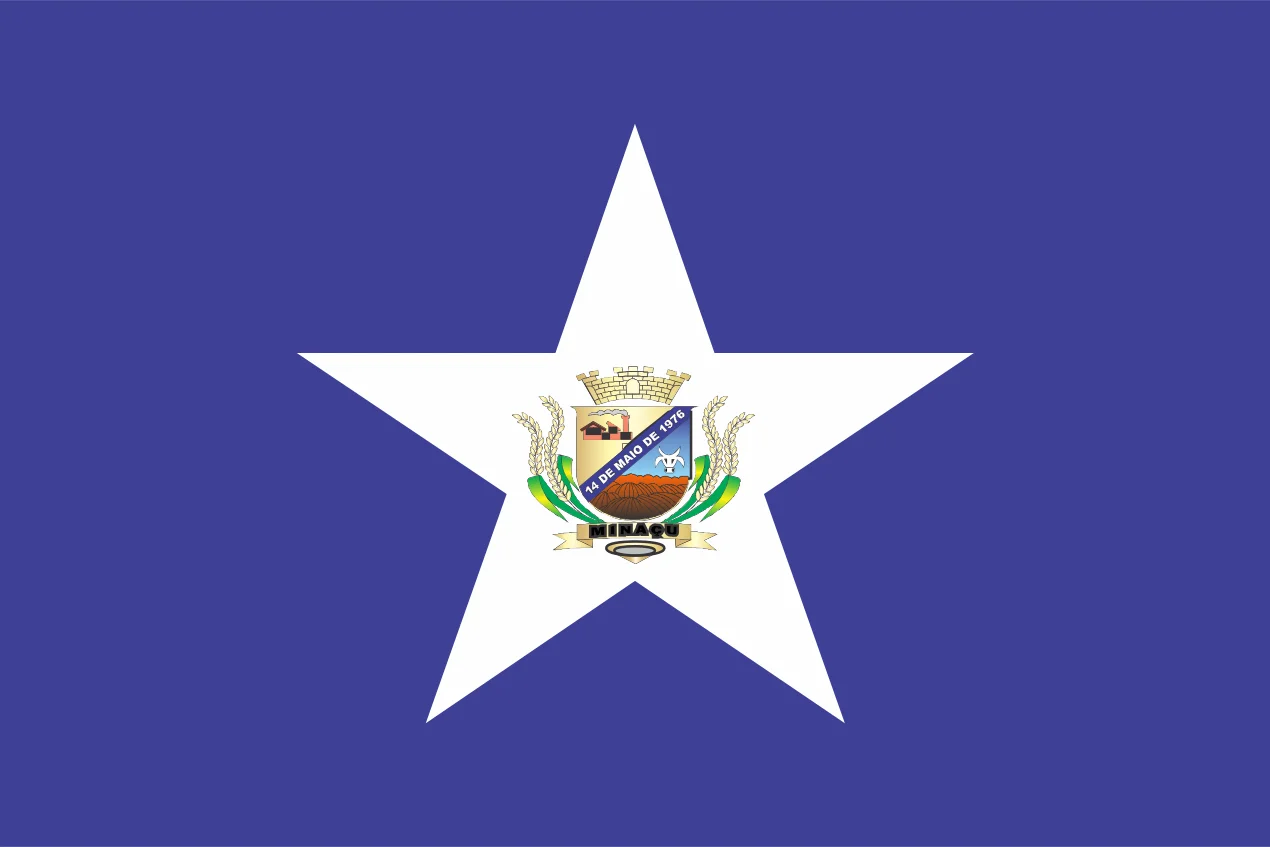

Minaçu
Minacu exists because of what lies underneath it. Cut into the hills on the left bank of the Tocantins River is the Cana Brava mine, one of the world's largest chrysotile asbestos operations, a single working pit that by itself has shipped around ten percent of the asbestos fiber sold globally. At the edge of town the Tocantins backs up into an artificial lake, the Cana Brava reservoir, held there by a dam that powers a slice of southern Goias. A mine the world has learned to fear, a dam that drowned the old river valley - Minacu was built on both, and both are running down.
Mining the Mineral Nobody Wants
Chrysotile is the white asbestos, a fibrous form of serpentine rock that was for a century the wonder material of construction - fireproof, cheap, woven into roofing, pipes, brake pads, insulation. At Cana Brava the seams run deep. The mine spreads across 45 square kilometers on the left bank of the Tocantins and the industrial plant that processes the ore sits alongside it. At its peak, the operation produced around ten percent of the chrysotile on the world market - second only to mines in Russia and Kazakhstan, and for years the third-largest single source on the planet. The revenue made Minacu one of the wealthiest municipalities in Goias; on one state economic index from 2000, it ranked thirteenth out of 146 municipalities. But asbestos kills. Lung cancer, mesothelioma, asbestosis - the medical literature is unambiguous. Most of Europe banned it decades ago. Brazil, after years of legal argument, prohibited its use domestically in 2017, and while Cana Brava still ships fiber overseas to countries that have not banned it, the industry the town was built on is running out of customers.
A Lake Where a River Was
The Tocantins is one of the great Amazonian tributaries, a tropical river that drains a basin half the size of Western Europe. At Cana Brava the river was stopped. The dam built here, completed at the turn of the millennium, created an artificial lake that now wraps around the edge of the town and hides the old river channel beneath thirty meters of water. The hydroelectric plant feeds power south toward the cities of Goias and pays taxes to the municipality. Where there was whitewater there is flat water; where there were riverside fields there are drowned stumps. The dam, like the mine, provides - and like the mine, it has changed what the landscape is for.
The Terrain Behind the Town
Beyond the lake the land folds upward into the Serra Dourada, a range of hills that runs north-south through this part of Goias and gives the municipality its irregular, knobbed terrain. Agriculture here is limited by the topography - the slopes will not flatten out for plows. What the land permits is cattle, and Minacu has 107,000 head on the slopes and bottoms, along with modest rice and corn plantings and scattered fruit. The climate is tropical humid, two seasons: rainy, and dry, with an average annual temperature of 26.6 degrees Celsius. In the dry months the serra looks scorched; in the rainy months the creeks run brown with topsoil.
A Town Between Booms
Minacu's population tells the story of a town arriving at an inflection point. It grew from 28,371 in 1980 as the mine and the dam project drew workers, and for two decades it was a place of arrival. Now the trend has reversed. With the dam long since completed, the engineering jobs gone, and the asbestos industry constrained by international phaseouts, the population has begun to shrink. Rural population halved between 1980 and 2007 - from 9,762 to 4,404. The streets still carry 259 retail units and 43 small industries, three banks, 577 teachers. There is a campus of the State University of Goias. But the question everyone in Minacu must eventually answer is what comes next, when neither the mine nor the dam is hiring.
The Weight of Two Legacies
To stand in Minacu is to stand at the edge of two Brazilian bets - the bet on infrastructure, and the bet on extraction - and to see both in their late chapters. The dam works quietly and will keep working until its turbines wear out. The mine still produces, still ships, still taxes, but the world is moving past its product. Paved road connects the town to BR-153, the Belem-Brasilia artery, and from there out to the rest of the country. For now, Minacu keeps on, a town of around 30,000 people that once supplied a slice of the world with a mineral and a current. What comes after asbestos, what fills the space when the last shipment leaves the last pier - Minacu does not yet know, and neither, quite, does Brazil.
From the Air
Located at 13.53 S, 48.22 W in northern Goias, Brazil, 513 km from state capital Goiania. The Cana Brava reservoir is visible from cruising altitude - a long sinuous lake along the Tocantins River. The open pit of the asbestos mine shows as a large excavation south of town. Nearest major airport is Goiania (SBGO); Minacu has its own smaller airfield (SWIQ). Best viewed in clear dry-season conditions (May-September).
Nearby Stories
- Porangatu 31 km away
- Cerrado 36 km away
- Mutunópolis 44 km away
- Cavalcante 55 km away
- Chapada dos Veadeiros National Park 84 km away
- Campos Belos 114 km away
- Luís Eduardo Magalhães, Bahia 301 km away
- Araguaia National Park 330 km away