
Ministry of Migration and Asylum
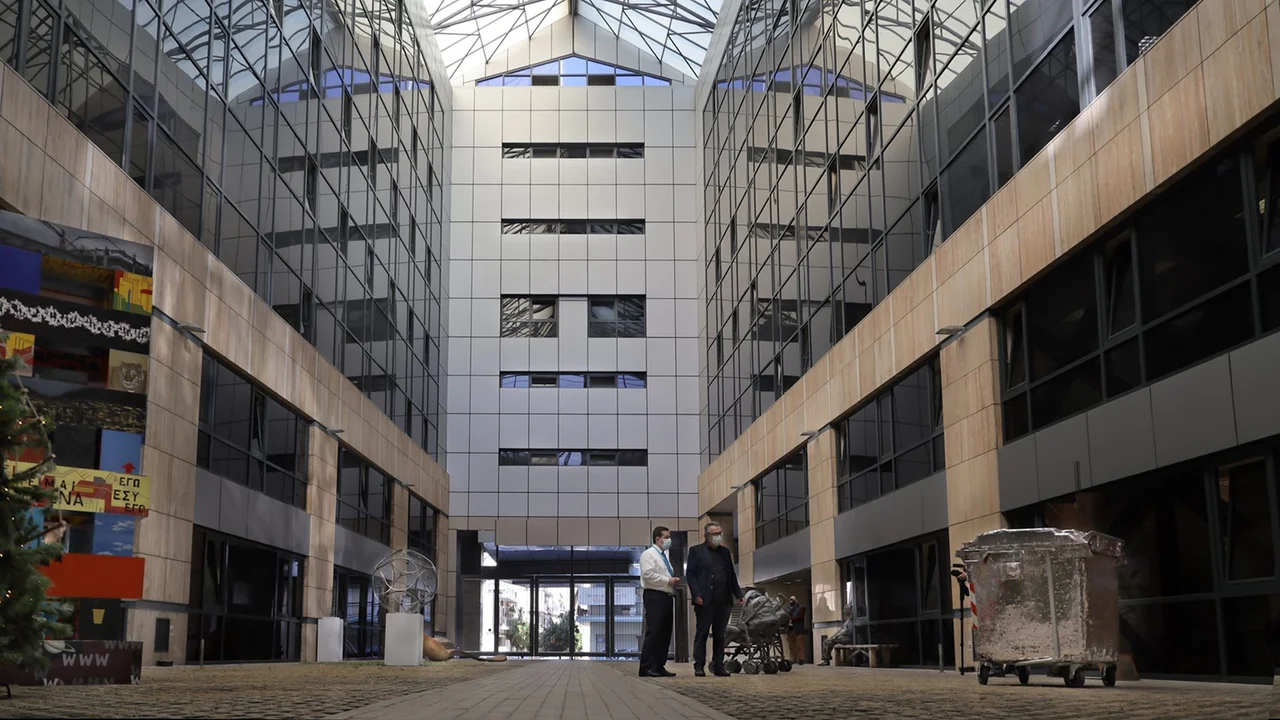
The address is Thivon 196-198, in the Agios Ioannis Rentis district of western Athens — an industrial-zone neighbourhood between the city and the port of Piraeus where the building sits without ceremony, doing one of the most consequential jobs in Greek public administration. The Ministry of Migration and Asylum came into existence on 15 January 2020, carved from an older ministry by a Presidential Decree at a moment when Greece was processing hundreds of thousands of arrivals per year. The building does not look like a place where history is being made. The history is being made there anyway.
At the Edge of Europe
Greece occupies a particular position in Europe's migration geography. It sits at the southeastern corner of the European Union, with more than 6,000 islands and a long coastline facing Turkey, where many people making the journey toward Europe first arrive. For years, migration policy in Greece was managed as a subset of interior affairs. The pressure of numbers — and the political pressure from European partners to formalise and systematise the response — eventually forced the creation of a dedicated ministry. The Ministry of Migration Policy was first established by Presidential Decree 123/2016 in November 2016, drawn from the existing Ministry of the Interior and Administrative Reorganization. It was briefly absorbed back into the Ministry of Citizen Protection in July 2019, then re-established in its current form, as the Ministry of Migration and Asylum, in January 2020.
What the Ministry Actually Does
Three secretariats divide the ministry's work. The Secretariat-General of Migration Policy handles the policy and legal architecture: planning Greece's implementation of EU directives, overseeing the Asylum Service, managing the Appeals Authority for rejected applications, and coordinating with the European Union Agency for Asylum and the International Organization for Migration. The Secretariat-General for Reception of Asylum Seekers manages the physical receiving of people: the Reception and Identification Service is responsible for processing third-country nationals who arrive without documentation. A third secretariat, established in June 2023, specifically covers vulnerable individuals and institutional protection — including, most critically, unaccompanied children who arrive in Greece alone. The ministry funds its operations partly from the EU's Asylum, Migration and Integration Fund and partly from the European Recovery and Resilience Fund.
A Ministry That Keeps Changing Shape
The institutional history of Greek migration policy is unusually compressed. Between 2016 and 2020, the ministry was created, abolished, absorbed into another department, and then reconstituted — four significant structural changes in four years. Each change reflected a different political assessment of how migration should be handled and where it belonged within the architecture of government. The organizational structure that currently governs the ministry was drawn up by Presidential Decree 106/2020, issued just eight days after the ministry's re-establishment. Building stable institutions in a fast-moving policy area while managing day-to-day crises simultaneously is the permanent condition of everyone who works there. Since 30 June 2025, the minister responsible has been Thanos Plevris.
The Children Who Arrive Alone
One dimension of the ministry's work carries particular weight. Among the people who arrive in Greece seeking asylum are children travelling without parents or guardians — unaccompanied minors whose protection requires specific legal frameworks and specific services. The Greek state's formal responsibility for these children was organised through the Secretariat Special for the Protection of Unaccompanied Minors, established in 2020. In June 2023 this was absorbed into the larger Secretariat-General for Vulnerable Individuals and Institutional Protection, broadening its mandate while retaining the core commitment. Greece is not the only EU country that deals with this challenge, but it is among those where the numbers are highest and the stakes most visible. The building on Thivon Street is where those decisions get made.
A Ministry at the Intersection
The Ministry of Migration and Asylum does not operate in isolation. It works within the architecture of the EU's Common European Asylum System, alongside the European Union Agency for Asylum and the United Nations High Commissioner for Refugees. It implements European directives while managing a national situation that does not always fit the European template — Greece's geography, its island communities, its proximity to conflict zones, all create conditions that a policy designed in Brussels for an average member state cannot fully anticipate. The building at Agios Ioannis Rentis, grey and functional, sits between a port and a city, between bureaucracy and the sea, doing the work that that position requires.
From the Air
The Ministry of Migration and Asylum is located at approximately 37.967°N, 23.662°E, in the Agios Ioannis Rentis district of western Athens — near the industrial corridor between central Athens and the port of Piraeus. From the air at 3,000–5,000 feet, the area is identifiable by the dense industrial and commercial zone west of the Kifissos River, just south of the Egaleo metro stations. Athens International Airport (LGAV / Eleftherios Venizelos) lies approximately 28 km to the east.
Nearby Stories
- Parnitha 3.4 km away
- Kea (island) 7.3 km away
- Sanctuary of Apollo Maleatas 11 km away
- Sousaki Volcano 12 km away
- Battle of Leuctra 14 km away
- Great Sand Beach 18 km away
- Agios Georgios (island) 23 km away
- Skyros 84 km away