
Minsk World
In 1998, a decommissioned Soviet aircraft carrier crossed the Pacific Ocean to become a tourist attraction in a Chinese boomtown. The Minsk — once a symbol of Soviet naval ambition, a carrier that patrolled the Indian Ocean and Western Pacific during the Cold War — arrived in Shenzhen and was transformed, flight deck and all, into a military theme park. For fifteen years it worked. Then it didn't.
From Soviet Fleet to Pearl River Delta
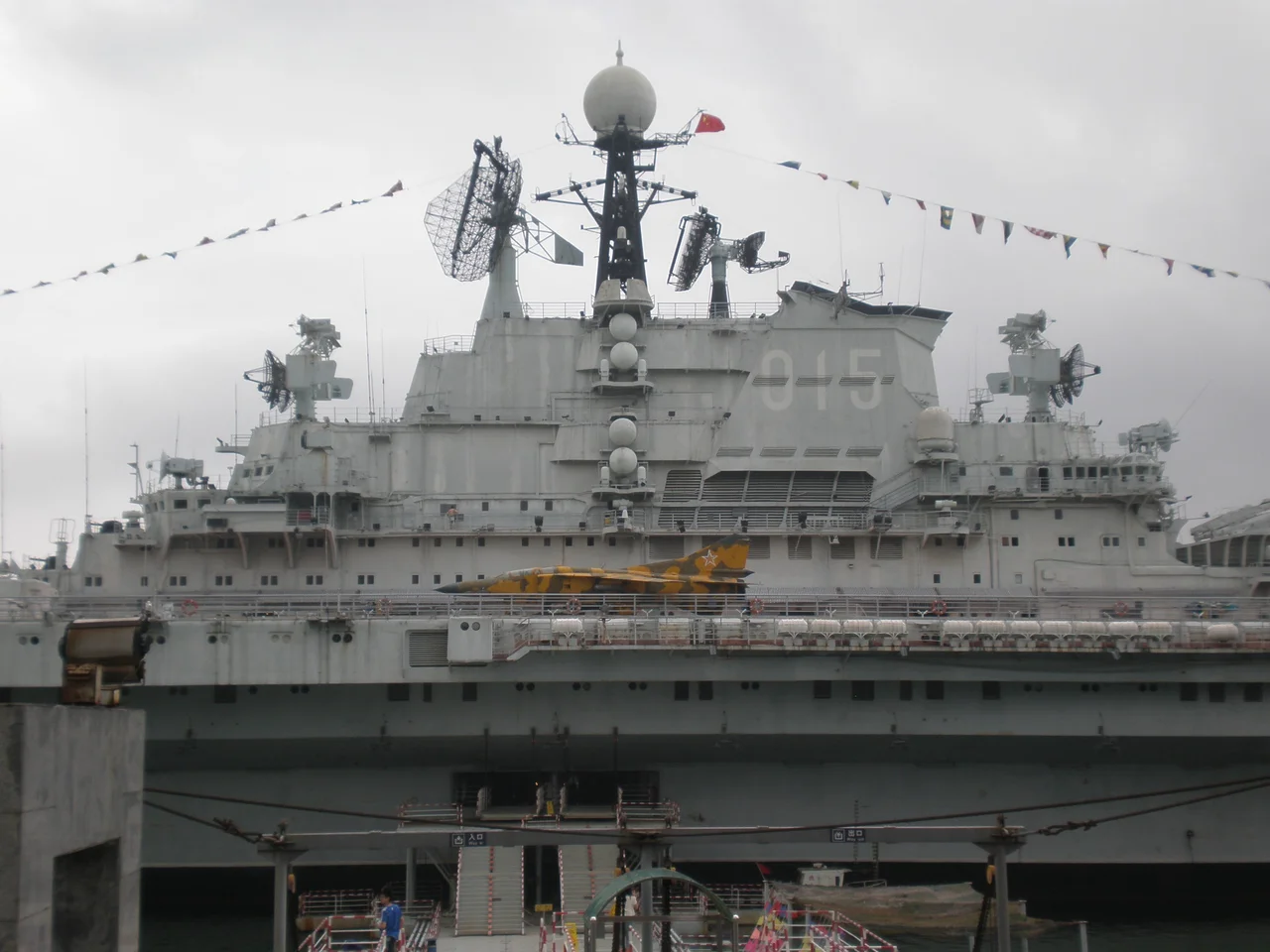
The Minsk was a Kiev-class aircraft-carrying cruiser, commissioned by the Soviet Navy in 1978. It carried Yakovlev Yak-38 VTOL aircraft, helicopters, and an array of missiles and guns — a serious weapons platform designed for power projection. After the Soviet Union dissolved, Russia sold the Minsk to a South Korean company in 1995, which in turn sold it to Chinese investors who saw commercial potential in the hulk. Towed to Shenzhen, the ship was stripped of sensitive equipment, repainted, and reimagined. Minsk World opened on 10 May 2000 in Dapeng Bay near Shatoujiao. The carrier was moored as the centerpiece, with four of its decks — including the flight deck and hangar deck — opened to visitors.
What Visitors Found on Deck
Stepping aboard the Minsk meant walking through a version of Cold War military life curated for family entertainment. The ship's living quarters were preserved as exhibits. Armament displays showed the M-11 Shtorm missile system and the AK-630 close-in weapon system. On the flight deck and hangar deck, staff dressed in mock military uniforms performed regular choreographed musical shows. Beyond the carrier itself, the surrounding park displayed a collection of Soviet and Chinese military aircraft on the mainland area, including MiG-23 and MiG-27 fighters, a Mi-24 attack helicopter, and a Yakovlev Yak-38 — the same type of aircraft that once actually flew from the Minsk's deck. Visitors could also take motorboat rides around the ship's starboard side. By 2005, the park had attracted more than five million visitors and generated 450 million yuan in revenue.
Documenting a Strange Spectacle
The park attracted attention beyond its paying visitors. In 2006, Chinese filmmaker Cheng Xiaoxing made a documentary about Minsk World that was broadcast on Arte TV in Europe. The film captured the layered oddness of the attraction: a vessel built to intimidate the West, now providing a backdrop for birthday parties and school excursions. The incongruity was part of the appeal — here was genuine Cold War hardware, not a replica, moored in a subtropical bay and staffed by performers in theatrical uniforms. Visitor numbers peaked in the early years and then began to decline, as competing entertainment options multiplied across Shenzhen's rapidly developing tourism economy.
Closure and an Uncertain Future
Minsk World closed in February 2016 when the local government decided to reclaim the land in the area. The carrier was towed to Zhoushan for repairs, with plans to move it to a new theme park under development in Nantong, Jiangsu. Those plans stalled. On 16 August 2024, the Minsk caught fire during refit work in Nantong — the blaze was extinguished, but the ship sustained further damage. What becomes of a decommissioned Soviet aircraft carrier in the twenty-first century is, apparently, not a straightforward question. The Minsk has now outlasted the Soviet Union, survived the Chinese theme park era, and endured a fire. Its final chapter remains unwritten.
Dapeng Bay Today
The waters of Dapeng Bay where the Minsk once floated are now part of a broader coastal area in Yantian District, east of Shenzhen's main urban core. The bay faces across to the eastern New Territories of Hong Kong. Where the theme park once operated, land reclamation has reshaped the shoreline. The surrounding Shatoujiao area is better known today for its role as a border crossing zone between Hong Kong and mainland China. The Minsk World site is gone — but the fact of what it was, a genuine aircraft carrier repurposed for entertainment in the midst of China's economic transformation, makes it an unlikely chapter in Shenzhen's improbable modern history.
From the Air
Minsk World was located at approximately 22.55°N, 114.24°E in the Shatoujiao area of Yantian District, Shenzhen, on the shore of Dapeng Bay (Mirs Bay). From low altitude on approach from the south or southwest, the distinctive profile of a Kiev-class carrier would have been visible in the bay. The nearest airport is Shenzhen Bao'an International (ZGSZ), approximately 35 nautical miles to the west-northwest. Hong Kong International (VHHH) is approximately 30 nautical miles to the southwest. The border between Hong Kong and mainland China runs through the bay to the south, and on clear days the hills of Hong Kong's northeastern New Territories are visible from the flight path.
Nearby Stories
- Hong Kong Disneyland 4.1 km away
- Mount Guanyin (Dongguan) 7 km away
- 2024 Lixinsha Bridge Collapse 7.4 km away
- Portas do Cerco 12 km away
- Lotus Hill 15 km away
- Nanxiong Formation 78 km away
- Heyuan 130 km away
- Checheng Fu'an Temple 629 km away