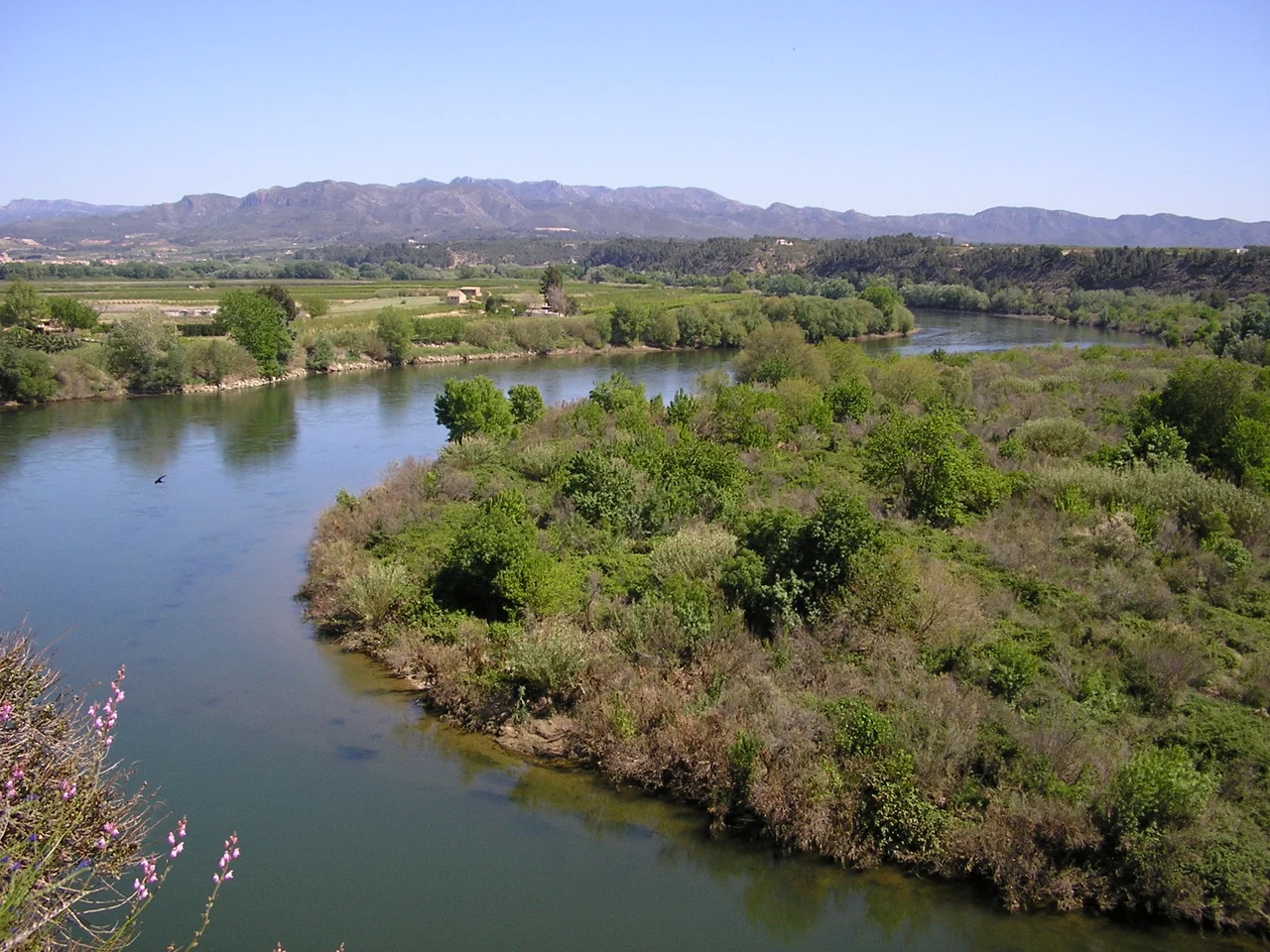

Miravet
When the Knights Templar were destroyed, they made their last stand here. In 1307 the king of France moved to crush the order across Europe, and one by one its castles fell or surrendered. But on a limestone height above a bend in the Ebro, the Templars of Catalonia shut the gates of Miravet and refused to yield. They held out against the king of Aragon's siege for more than a year, from 1307 into December 1308—among the last Templar strongholds to fall in the Crown of Aragon. When Miravet at last surrendered, the order that had guarded this stretch of river for a century and a half was finished here.
The Last Stronghold
The fall of the Templars was swift and merciless. In October 1307, on a single coordinated day, King Philip IV of France had the order's members across his realm arrested, and the pressure spread through Christendom. In the Crown of Aragon, the knights did not go quietly. They gathered at their strongest castles, and Miravet—headquarters of their province of Catalonia and Aragon—became the heart of the resistance. Behind its Romanesque walls a garrison of warrior-monks endured a siege that dragged on for more than a year while the fate of the order was decided far away. Cut off, condemned, and knowing how the story would end, they held. Only in December 1308 did Miravet give in—one of the last Templar strongholds in Aragon to fall, just months before the order's final Iberian holdout, Monzón castle, surrendered too. With its surrender, the Templars' hold on this stretch of the river they had helped to conquer was broken—an ending as dramatic as anything in their legend.
A Fortress-Monastery on the River
The castle they defended had already lived several lives. The Moors founded the stronghold, choosing a commanding height above the Ebro, and it passed to Christian hands in 1153 when Count Ramon Berenguer IV of Barcelona took it from the Almoravids—the same campaign that had lately won him Tortosa and Lleida downstream. He granted Miravet to the Templars, who rebuilt it into something rare: a fortress and a monastery in one, its chapel, refectory, and cloister enclosed within massive defensive walls. It is reckoned the largest fortified complex in Catalonia and one of the finest surviving examples of Templar architecture anywhere in the Western world—at once military and religious, in the austere Romanesque style. From its ramparts the river valley opens in both directions, which is precisely why every power that came here wanted this hill.
The Village That Climbs to the Castle
Below the fortress, the village of Miravet spills down toward the water in tiers of pale houses, so that from the far bank the whole settlement seems to climb from the river to the castle in a single sweep. To reach that far bank the traditional way, you take the Pas de Barca—a river ferry that has carried people and carts across the Ebro here for generations and offers the classic view of the castle looming above. Miravet is known, too, for its craftspeople: this is a village of potters, with a ceramic tradition worked in local clay, and its orchards yield cherries of real local fame. The potters' workshops still cluster in the lower streets near the water, where clay drawn from the riverbanks has been shaped and fired for generations. It is an unhurried place, shaped as much by the river and the potter's wheel as by the knights who once ruled it—a working village that happens to live in the shadow of a legend.
War Returns to the Ebro
Centuries after the Templars, the river made Miravet strategic once more. During the Spanish Civil War, the village lay in the path of the Battle of the Ebro, the vast 1938 struggle that raged up and down this valley. On 4 November 1938, Franco's Nationalist forces occupied Miravet and pushed on east across the Ebro, part of the offensive that would finally break the Republican lines. The same heights that had commanded the river for the Moors and the Templars commanded it again for twentieth-century armies. Today the guns are long silent, and the castle stands restored above its village—a monument to the warrior-monks who made their last stand on this rock, and to a river that has watched empires arrive and pass.
From the Air
Miravet stands at 41.04°N, 0.60°E on the lower Ebro in the Ribera d'Ebre, its castle crowning a limestone spur on the river's bank. From 3,500–5,500 ft AGL the fortress and the tiers of pale village houses beneath it are the unmistakable landmark, set against a sharp bend of the Ebro amid dry hills and orchards. Reus (LERS) lies about 40 km to the southeast and Lleida-Alguaire (LEDA) to the north-northwest, with Barcelona (LEBL) the main coastal gateway; Tortosa is a short way downstream. The river and castle show best in the clear, low light of winter mornings, before summer haze fills the valley.
Nearby Stories
- Poblet Natural Park 5.2 km away
- Amposta 9.1 km away
- Reus 13 km away
- Morella 20 km away
- Mequinenza 20 km away
- Battle of Morella 48 km away
- Zaragoza Barracks Bombing 82 km away
- Banyalbufar 174 km away