
Reus
For a stretch of the nineteenth century, three cities were said to set the price of aiguardent, the fiery grape spirit that Europe could not get enough of, and they were named together in a single breath: Reus, Paris, London. Two were imperial capitals. The third was a Catalan market town of a few tens of thousands, twelve kilometres inland from the Mediterranean. That a place this size could stand beside Paris and London tells you almost everything about how much wine, spirits, and sheer commercial nerve once flowed through Reus.
The Spirit Trade
Reus grew rich on distillation. By the eighteenth century it was the great eau-de-vie exporting center of southern Europe, shipping barrels of grape spirit north through the nearby port of Salou to buyers who craved it. Then came disaster elsewhere that turned into opportunity here. As the phylloxera blight chewed through the vineyards of France, demand for Catalan wine and spirits surged, and Reus, already built for the trade, boomed. When the plague finally reached Catalonia's own vines, the town's distillers pivoted rather than folded. They had brandy and a long habit of steeping herbs and botanicals, and out of that came vermouth. Reus became, and remains, the vermouth capital of Spain; "Vermut de Reus" is still a mark of origin. Walk the old center on a Sunday and you will find locals doing what their great-grandparents did, taking a vermouth before lunch.
A City Built to Show Off
Money that flows for generations wants to be seen, and Reus poured its wealth into architecture. When Catalan Modernisme swept the region around 1900, the town's merchants commissioned some of its finest buildings, many of them not from Gaudi but from Lluis Domenech i Montaner, the movement's other titan. His Casa Navas, built between 1901 and 1908 on the central Placa del Mercadal, is one of the very few Modernista mansions in Europe to survive with its interiors intact, so lush that locals nicknamed it the beauty of the Mercadal. On the edge of town stands his Institut Pere Mata, a psychiatric hospital laid out as a series of ornate pavilions between 1898 and 1912, a plan he would later refine in his celebrated work in Barcelona. Casa Rull and Casa Gasull, two more of his commissions, stand nearby. A marked route threads twenty-six Modernista buildings through the streets, each set into the pavement with a bronze plaque. Few towns this size carry an architectural pedigree so dense.
The Question of Gaudi
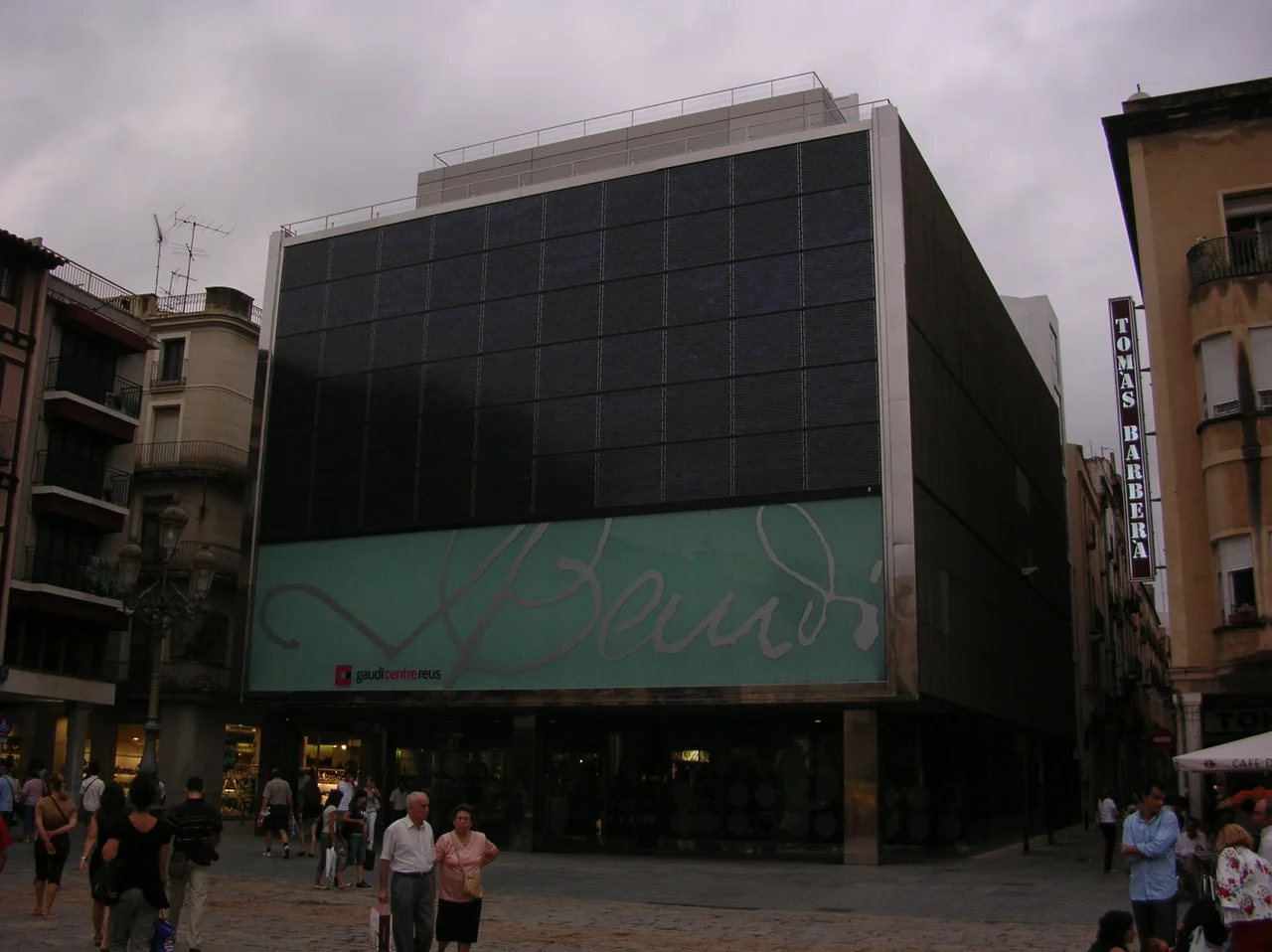
And then there is the matter of Antoni Gaudi, whom Reus proudly claims as its own. The greatest architect Catalonia ever produced spent his childhood in and around the town before Barcelona made him immortal, and the city has built much of its modern identity on the connection. The Gaudi Centre on the Placa del Mercadal tells his story, even though not one of his buildings actually stands in Reus, an irony the town wears lightly. The claim matters less as fact than as inheritance. Reus was the world Gaudi came from, a place obsessed with craft, ornament, and the marriage of commerce and beauty. You can see, standing in the Mercadal, how such a city might have shaped such an eye.
The Town at the Foot of the Cliffs
There is a wilder side to Reus, too. The town sits at the gateway to the climbing country of inland Tarragona, and it has become a hub for rock climbers heading into the limestone crags of the Prades mountains and the celebrated walls of Siurana and Margalef nearby. Tarragona and its Roman ruins lie just twelve kilometres down the road toward the coast, close enough for an afternoon. On weekends the streets fill with shoppers, a commercial role the town has never stopped playing. But Reus rewards those who linger in its own center most of all, in the shaded arcades of the Mercadal, over a glass of the vermouth it perfected, beneath facades built by people who believed a provincial town had every right to dazzle.
From the Air
Reus lies at 41.15 N, 1.11 E in inland Tarragona, and its own airport, Reus (LERS), sits just southeast of the town center, one of Catalonia's busiest holiday gateways. Barcelona-El Prat (LEBL) is about 90 km up the coast to the northeast, and Lleida-Alguaire (LEDA) roughly 75 km to the northwest. From the air Reus reads as a dense, compact town about 12 km back from the Mediterranean beaches of Salou and Cambrils, its old core marked by the Placa del Mercadal and a tall church bell tower. The limestone Prades mountains rise inland to the northwest; visibility is typically excellent in the dry Costa Daurada climate.
Nearby Stories
- Autódromo de Sitges-Terramar 2.7 km away
- Battles of El Bruch 11 km away
- Vallbona Abbey 13 km away
- L'Aplec del Caragol 16 km away
- Tortosa Cathedral 22 km away
- Miravet 22 km away
- Vandellòs I nuclear incident 31 km away
- Sa Calobra 152 km away