
Monkey Selfie Copyright Dispute
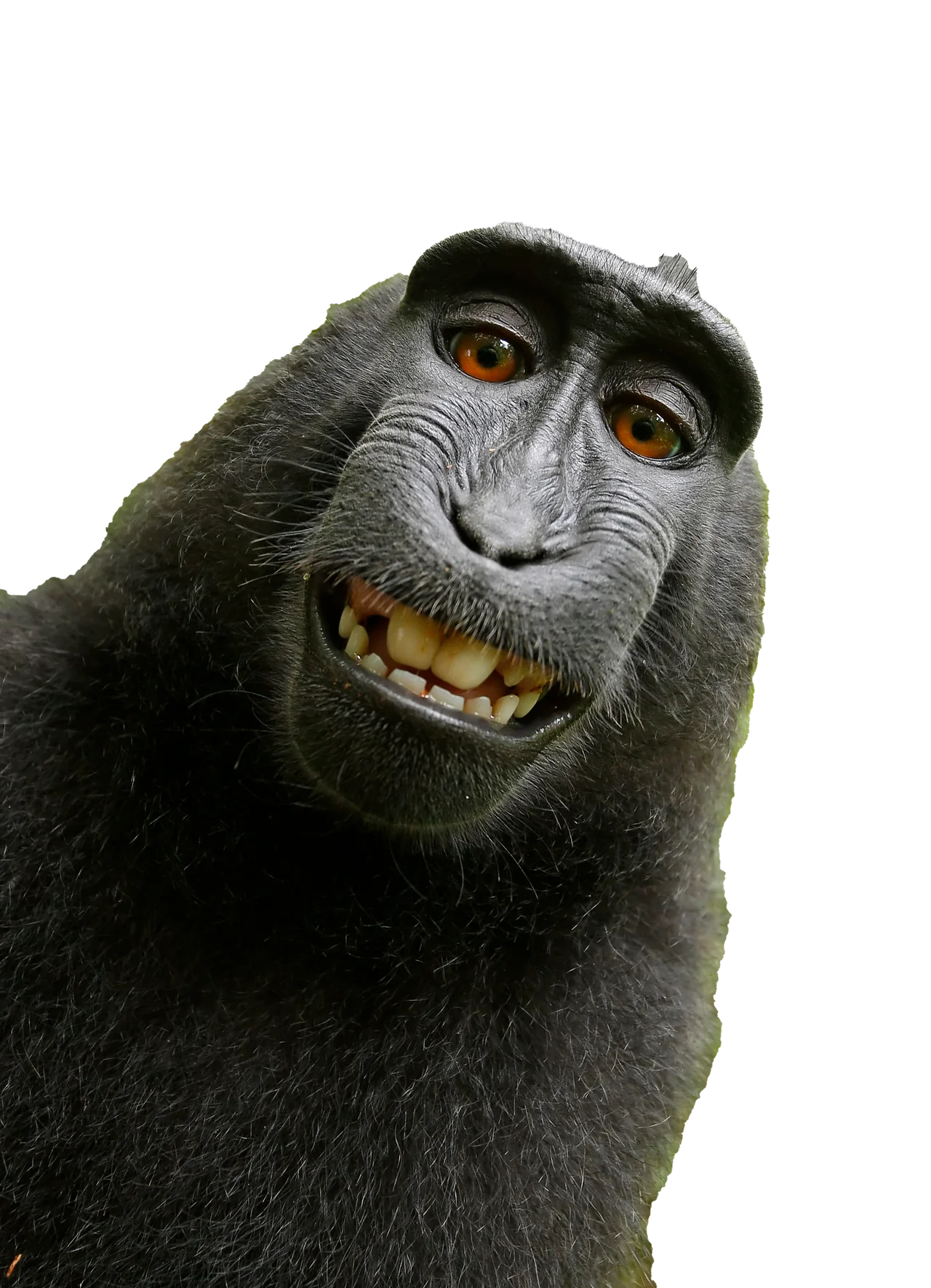
The photograph is impossible to forget. A crested black macaque stares directly into the lens, grinning with an expression so recognizably delighted that it looks like a selfie because, in every way that matters, it is one. British wildlife photographer David Slater set up the shot in 2011 at the Tangkoko Nature Reserve on Sulawesi's northeastern tip. The monkey pressed the button. And that single mechanical act triggered a legal, philosophical, and financial catastrophe that wound through courts on two continents, pitted an animal rights organization against a struggling photographer, and forced the United States legal system to answer a question it had never seriously considered: can an animal own a copyright?
Three Days with the Macaques
Slater had been traveling to Indonesia since 2008 to photograph the critically endangered Celebes crested macaques. In 2011, he and a local guide spent three days following a troop through the forest, gaining their trust on the second day. On the third, Slater mounted his camera on a tripod with a wide-angle lens, configured the settings for predictive autofocus and motor drive, attached a flashgun, and placed a remote shutter trigger beside the camera. Then he waited. The macaques spent thirty minutes investigating the equipment, peering into the lens, and triggering the shutter hundreds of times. Slater held the tripod while juveniles climbed on him and adults prodded him. One image emerged that would change his life: a sharp, well-lit, perfectly composed close-up of a grinning female macaque.
The Copyright Void
When British newspapers published the images in July 2011, the story was lighthearted: monkey steals camera, takes selfie. The trouble started five days later. An editor on Wikimedia Commons uploaded the photograph, arguing it was in the public domain because a non-human creator cannot hold copyright. Slater demanded removal. The Wikimedia Foundation refused. The blog Techdirt republished the image under the same logic. Slater was trapped in a paradox: he had engineered every condition that produced the photograph, but he had not pressed the button. In August 2014, the U.S. Copyright Office published guidance clarifying that only works created by humans can be copyrighted, specifically citing a photograph taken by a monkey as an example of what cannot be protected. Slater estimated he had already lost at least 10,000 pounds in income.
Naruto Goes to Court
In September 2015, People for the Ethical Treatment of Animals filed suit in a San Francisco federal court on behalf of the macaque, whom they named Naruto. PETA argued that Naruto should hold the copyright and that PETA should administer the proceeds for the benefit of crested macaques in the Tangkoko reserve. The case, Naruto v. David Slater et al., became an international spectacle. Blurb, the attorney for the publisher of Slater's book Wildlife Personalities, noted that PETA might be suing on behalf of the wrong monkey. In January 2016, U.S. District Judge William Orrick III dismissed the case, ruling that copyright law does not extend its protection to animals. PETA appealed to the Ninth Circuit.
Settlement and Ruling
The appeals court held oral arguments in July 2017. By then, Slater was broke. He told reporters he could no longer afford his attorney, that his income from the images had dwindled to roughly 100 pounds every few months, and that he had become depressed and lost his motivation to photograph. In September 2017, Slater and PETA reached a settlement: he would donate 25 percent of future revenues to wildlife charities. But the court declined to accept the agreement and continued toward a ruling. In April 2018, the Ninth Circuit ruled against PETA, confirming that animals cannot hold copyrights under U.S. law. The judges went further, expressing concern that PETA's motivations had been to promote its own interests rather than to protect Naruto.
A Precedent for the Age of AI
The monkey selfie case outlived its own absurdity. In 2023, the U.S. Copyright Office cited Naruto v. Slater in its guidance on registering works containing AI-generated material, using the case as a precedent for the principle that non-human creators cannot hold copyright. The macaque's grin, captured in a Sulawesi forest by a creature that had no concept of intellectual property, became a foundational reference point in the legal framework governing artificial intelligence. Slater, who had traveled to Indonesia hoping to photograph endangered primates, instead produced the most consequential wildlife photograph of the twenty-first century. The macaque, presumably, is unbothered.
From the Air
The events took place at approximately 1.517N, 125.183E in the Tangkoko Batuangus Nature Reserve, at the northeastern tip of Sulawesi near Bitung. Sam Ratulangi International Airport (ICAO: WAMM) in Manado is approximately 70 km to the west. The reserve is visible as dense forest at the base of Mount Tongkoko along the coast. Look for the distinctive forested peninsula jutting into the Molucca Sea. Best viewed at 3,000-5,000 ft. Tropical climate with frequent cloud cover.
Nearby Stories
- Maesa Tompaso Racecourse 5.5 km away
- Bunaken 15 km away
- Bangka Island (North Sulawesi) 21 km away
- Battle of Kendari 53 km away
- USS Shark (SS-174) 157 km away
- Fort Kastela 170 km away
- Japanese Minelayer Tsugaru 241 km away
- Indonesia-Malaysia Border 614 km away