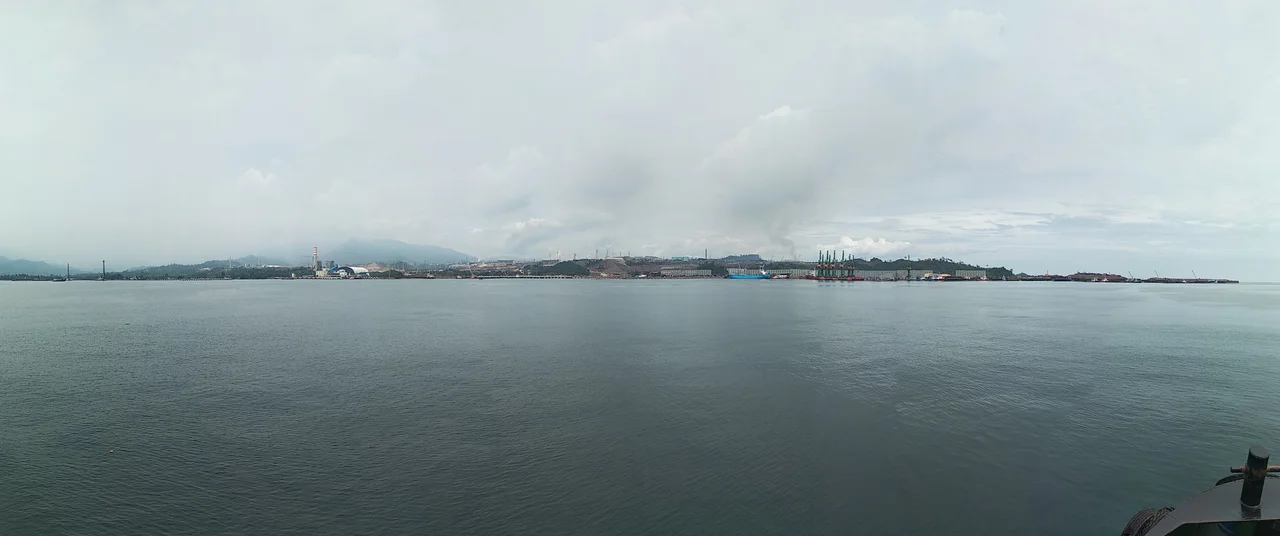

The Nickel Furnace of the Electric Future
Land in Bahodopi cost 12,000 rupiah per square meter in 2010 - less than a dollar for a patch of ground in a fishing district most Indonesians could not find on a map. By 2025, the same land fetched over 2 million rupiah per square meter, a 160-fold increase that tracks the arrival and metastasis of the Indonesia Morowali Industrial Park. IMIP is now the largest nickel processing complex in a country that holds the world's largest nickel reserves, and its 2,000 hectares of smelters, ports, and coal-fired power generation have become the unlikely fulcrum on which the global electric vehicle revolution balances.
From Ore Ban to Industrial Colossus
The story begins with a policy decision. Around 2013, Indonesia banned the export of unprocessed nickel ore, forcing the world to come to Indonesia if it wanted the metal. In August 2013, the Ministry of Industry announced plans for a 1,500-hectare nickel-oriented industrial park in Morowali Regency, Central Sulawesi. Two months later, China's Tsingshan Holding Group and Indonesia's Bintang Delapan Group signed a memorandum of understanding for a $1.5 billion project. By February 2014, Tsingshan had secured a ten-year, $384 million loan from China Development Bank. The first stone was laid on December 5, 2014. Companies began operating by April 2015, and President Joko Widodo personally inaugurated a smelter on May 28 of that year. The pace was relentless. What had been a quiet coastal district was, within months, a construction site of continental ambition.
The Supply Chain the World Drives On
Nickel is the mineral that makes lithium-ion batteries viable for electric vehicles, and IMIP has positioned itself at the center of that supply chain. In September 2018, a $700 million joint venture brought together Chinese battery giant CATL, Tsingshan, GEM Co Ltd, Japanese trading house Hanwa, and PT Bintangdelapan Group to produce battery-grade nickel chemicals, targeting at least 50,000 tonnes of nickel and 4,000 tonnes of cobalt smelting capacity per year. By 2021, Tsingshan had become Indonesia's top nickel producer. The park's stainless steel cluster alone reached an estimated capacity of 3 million metric tonnes per year. In 2019, IMIP generated $6.6 billion in exports. By December 2024, approximately 50 companies were operating, under construction, or in planning stages, with total investment reaching $34.3 billion. At least 11 smelters of various metals were running as of 2025, served by a dedicated seaport, airport, and 2-gigawatt coal power plant.
The Price Paid in Smoke and Water
The industrial transformation has extracted a toll that no GDP statistic captures. Environmentalists report that pollution from the park has destroyed fish populations and degraded the surrounding forests - the same Sulawesi lowland rain forests that are among the most biodiverse on Earth. Local residents face frequent disruptions to electricity, phone, and internet services from the sheer demand the park places on infrastructure. Rapid population growth driven by the workforce has overwhelmed sanitation systems, producing open sewers in a district that had none a decade ago. On paper, Morowali Regency's GDP per capita became the highest in Indonesia in 2023, reaching approximately $60,000. Activists note that around 95 percent of that income is remitted to other regions of Indonesia or abroad. The wealth flows through Morowali without settling.
Twenty-One Lives on Christmas Eve
On December 24, 2023, a major fire erupted at a Tsingshan-owned nickel smelter inside IMIP, killing 21 workers. The disaster brought international scrutiny to conditions that workers and advocacy organizations had been documenting for years - unsafe smelter operations, industrial accidents resulting in injuries and fatalities, and a government official's admission that authorities had little power to enforce safety regulations in the industry. Workers from both Indonesia and China reported conditions that investigative journalists described as inhumane. In the fire's aftermath, at least 25 tenant companies within the park obtained SMK3 occupational health and safety certification, mandated by the Indonesian government. Between 2021 and 2025, the municipal government estimated that 3,000 new businesses registered in Bahodopi district alone, creating over 16,000 additional jobs - growth that simultaneously represents opportunity for local contractors and a deepening dependency on an industry that has yet to demonstrate it can operate safely.
Eighty-Five Thousand Workers and the Question That Follows
IMIP employs approximately 85,000 workers, a population large enough to constitute a small city embedded within the park's perimeter fencing. Local farmers report that half their harvests are purchased by IMIP companies, integrating even the surrounding agricultural economy into the park's gravitational pull. The question hovering over Morowali is one that recurs wherever extractive industry arrives at scale: whether the wealth generated by a globally critical resource can be made to benefit the community that hosts it, or whether the district will be left with depleted ores, degraded forests, and polluted waters once the nickel economics shift. For now, the smelters glow through the night on Sulawesi's eastern coast, feeding a supply chain that stretches from the Coral Triangle to the electric vehicles humming along highways on the other side of the world.
From the Air
Located at approximately 2.83S, 122.16E on the eastern coast of Central Sulawesi, Indonesia. The industrial park covers 2,000 hectares and is visible from altitude as a large cleared and developed coastal area with port infrastructure, smokestacks, and coal power plant. IMIP has its own small airport; the nearest major commercial airport is Syukuran Aminuddin Amir Airport (WAWU) in Luwuk, approximately 200 km to the northeast. The park's seaport accommodates bulk cargo vessels. At 15,000-20,000 feet, the contrast between the industrial complex and the surrounding forest and coastal waters is stark.
Nearby Stories
- Wallace's Dreampond: Lake Towuti and Its Living Archive 20 km away
- The Nickel Heart of Sulawesi 34 km away
- The Town the Lake Made Twice 91 km away
- The Island That Evolution Forgot to Connect 93 km away
- The Ninety Minutes of MV Marina Baru 2B 129 km away
- The Coral Archipelago Spelled Out in Islands 260 km away
- Wakatobi: Four Islands, One Name 316 km away
- Otanaha Fortress 356 km away