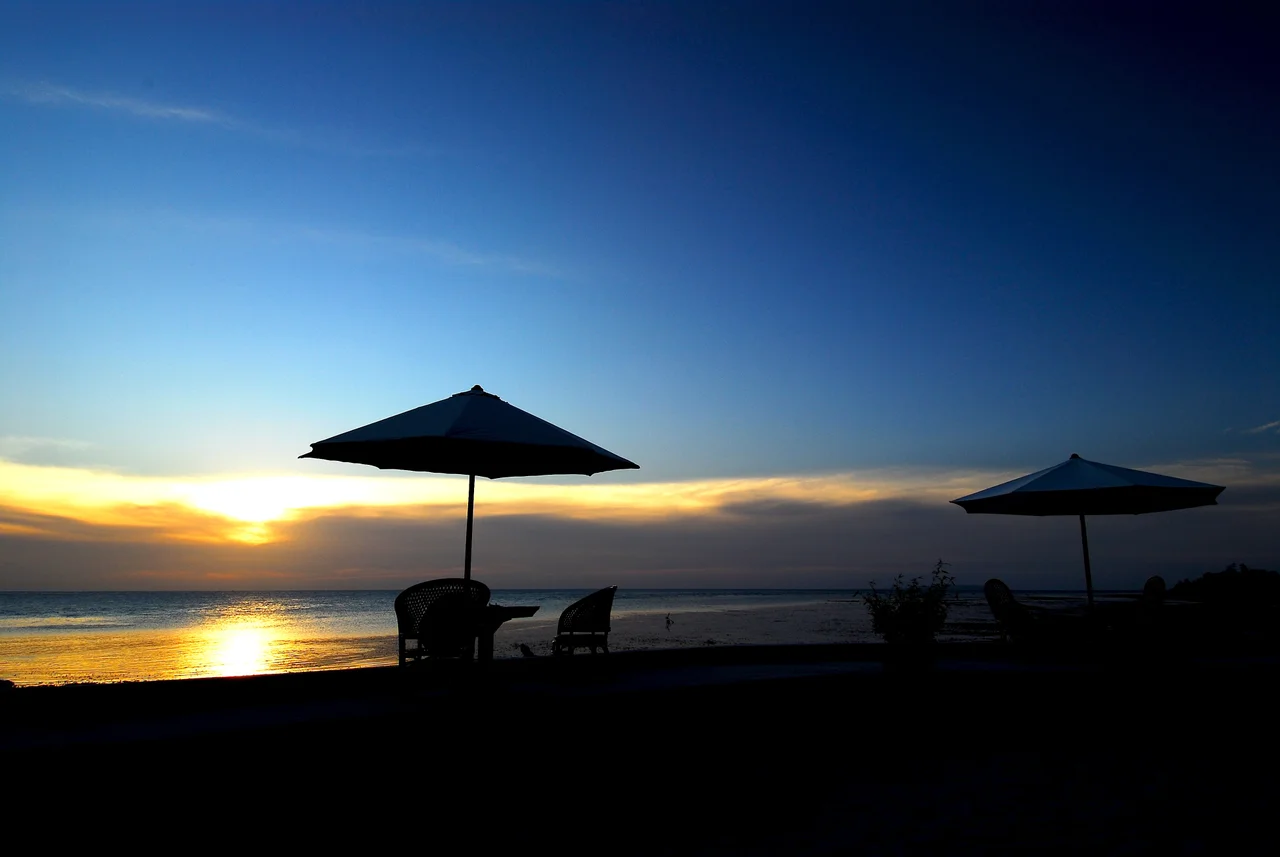

Wakatobi: Four Islands, One Name
The name is a riddle solved in syllables. Take the first two letters of Wangi-Wangi, Kaledupa, Tomea, and Binongko, press them together, and you get Wakatobi -- a word that didn't exist until Indonesian administrators needed a name for this regency in Southeast Sulawesi. The acronym stuck, and it now identifies not just a chain of islands but a national park recognized as one of the finest dive destinations on the planet. Yet Wakatobi remains a place where the airport has no public transport, petrol comes in roadside bottles, and getting from one island to the next depends on which boat captain you can find.
The Coral Triangle's Quiet Crown
Wakatobi sits within the Coral Triangle, the roughly 5.7-million-square-kilometer zone spanning Indonesia, the Philippines, Malaysia, Papua New Guinea, Timor-Leste, and the Solomon Islands that contains the highest marine biodiversity on Earth. Within that vast territory, Wakatobi's reefs stand out. The national park protects waters around all four major islands, and the coral diversity here rivals more famous sites like Komodo and Bunaken but with a fraction of the dive traffic. Around Pulau Tomia, the best diving offers steep walls encrusted with gorgonian fans, barrel sponges the size of bathtubs, and reef fish in densities that make the water shimmer with color. Pulau Hoga, a small island near Kaledupa, hosts a marine research station where scientists have documented coral species counts that rank among the highest ever recorded at a single site.
Kingdoms and Cannonades
Long before the acronym, these islands belonged to the Buton Kingdom, a sultanate that controlled much of Southeast Sulawesi's maritime trade for centuries. The kingdom's legacy endures in the stone forts scattered across the islands, particularly on Tomia. Fort Patua, on the island's western side, is the larger of two surviving complexes, its walls enclosing a compound where two abandoned cannons still point toward the sea from what doubles as a viewpoint over the strait. On the eastern coast, the smaller Fort Suo-Suo -- also called Fort Nata -- guards an old well and a solitary grave, its story now largely oral, passed between generations without the aid of plaques or guided tours. These are not polished heritage sites. Vegetation pushes through the stonework, and interpretation depends on whether a local resident happens to be nearby and willing to explain.
Getting There Is the Story
Reaching Wakatobi is an exercise in layered transportation. Most visitors begin in Kendari, the capital of Southeast Sulawesi, from which two flights per week serve Wangi-Wangi's small airstrip. The alternative is a ten-hour ferry crossing from Kendari's Wanci port, with several operators running different boats on different days at different prices. From Bau-Bau on Buton Island, the journey requires a taxi to the port at Pasarwajo or Lasalimu -- no boats depart from the city itself anymore -- followed by a two- to three-hour sea crossing. Once in the archipelago, the Cantika fast boat connects Wangi-Wangi, Kaledupa, and Tomia on a rolling schedule, departing every two to three days. For everything else, there are ojeks -- motorcycle taxis flagged down on harbor roads -- and the universal Indonesian advice to just ask around.
Life Between the Tides
Wakatobi's four islands each have their own character, shaped by geography and by the communities that live on them. Wangi-Wangi, the most developed, is home to the capital Wangiwangi and the airstrip. Kaledupa is quieter, its villages strung along the coast with Hoga Island's research station just offshore. Tomia draws the divers, its reefs considered the archipelago's finest, and its interior roads leading past forts and viewpoints accessible by rented scooter. Binongko, the most remote, is known for its blacksmithing tradition, the metalworkers producing knives and tools that are traded throughout the region. Across all four islands, warungs serve fresh fish and rice, accommodations range from bare-bones homestays to a handful of comfortable resorts, and the pace of life follows the tides and the weather rather than any tourist schedule. Strong currents make some snorkeling spots genuinely dangerous, and local dive shops serve as both equipment suppliers and safety advisors.
The Rhythm of an Acronym
Wakatobi will never compete with Bali for visitor numbers, and its residents seem largely content with that. The ride-hailing apps that define transportation in Indonesian cities have not yet arrived on most of the islands. Storms can strand travelers for days, making flexibility not just advisable but mandatory. Yet this is precisely the landscape that produces the reefs -- undisturbed water, minimal coastal development, fishing communities whose practices have coexisted with marine ecosystems for centuries. The four syllables of the acronym each represent an island with its own history, its own coral gardens, its own fort or forge or fishing fleet. Together they spell a name that most of the world has never heard, protecting a marine environment that the world cannot afford to lose.
From the Air
Coordinates: 5.54S, 123.76E. Wakatobi is a chain of four main islands (Wangi-Wangi, Kaledupa, Tomia, Binongko) in the Banda Sea southeast of Sulawesi. From altitude, the islands appear as elongated green shapes surrounded by extensive shallow reef systems in vivid turquoise. Nearest airport: Matahora/Wangi-Wangi (WAWW/WNI). Kendari (WAWW/KDI) on mainland Sulawesi is the regional hub. Recommended viewing altitude: 5,000-8,000 ft to see the reef outlines and inter-island channels. Currents between islands are visible as color changes in the water.
Nearby Stories
- The Fortress That Swallowed a Hilltop 89 km away
- Kendari: The Bay That Built a City 170 km away
- Southeast Sulawesi: The Province That Ferries Built 216 km away
- Coral Over the Sands 267 km away
- Mount Ile Lewotolok: The Fire Mountain on Its Own Peninsula 279 km away
- The Banda Sea: Where Continents Collide 306 km away
- The Island That Imprisoned a Nation's Greatest Writer 316 km away
- Montara Oil Spill 774 km away