
Moyobamba
Every June 24, Moyobamba makes a dish called juane and eats it in quantity. A ball of sticky rice turned green with spices and aromatic leaves, stuffed with chicken and wrapped into a tight bundle inside a bijao leaf, steamed until the whole thing holds its spherical shape. It is, quite deliberately, shaped to resemble the head of John the Baptist on a platter. That is the saint's day the town celebrates, and that is the dish the Moyobambinos serve on it - a half-serious, half-grisly memory of Herod's feast, eaten with beer by the plaza while bamboo castles of fireworks light the cloud-forest night.
The Circle Plain
The name Moyobamba comes from the Quechua muyupampa - muyu meaning circle, pampa meaning plain - the circle plain, for the loop-like shape of the land the city sits on. In the Chachapoyas era it was a pre-Columbian settlement. In 1540, Juan Pérez de Guevara founded a Spanish town here and called it Santiago de los Ocho Valles de Moyobamba - Santiago of the Eight Valleys of Moyobamba - making it the first Spanish town founded in the Peruvian Amazon and the second oldest Spanish town east of the Andes. The Spanish used it as a base for incursions into surrounding territory, and Catholic missions used it as the headquarters for conversion efforts across the upper Amazon.
City of Orchids
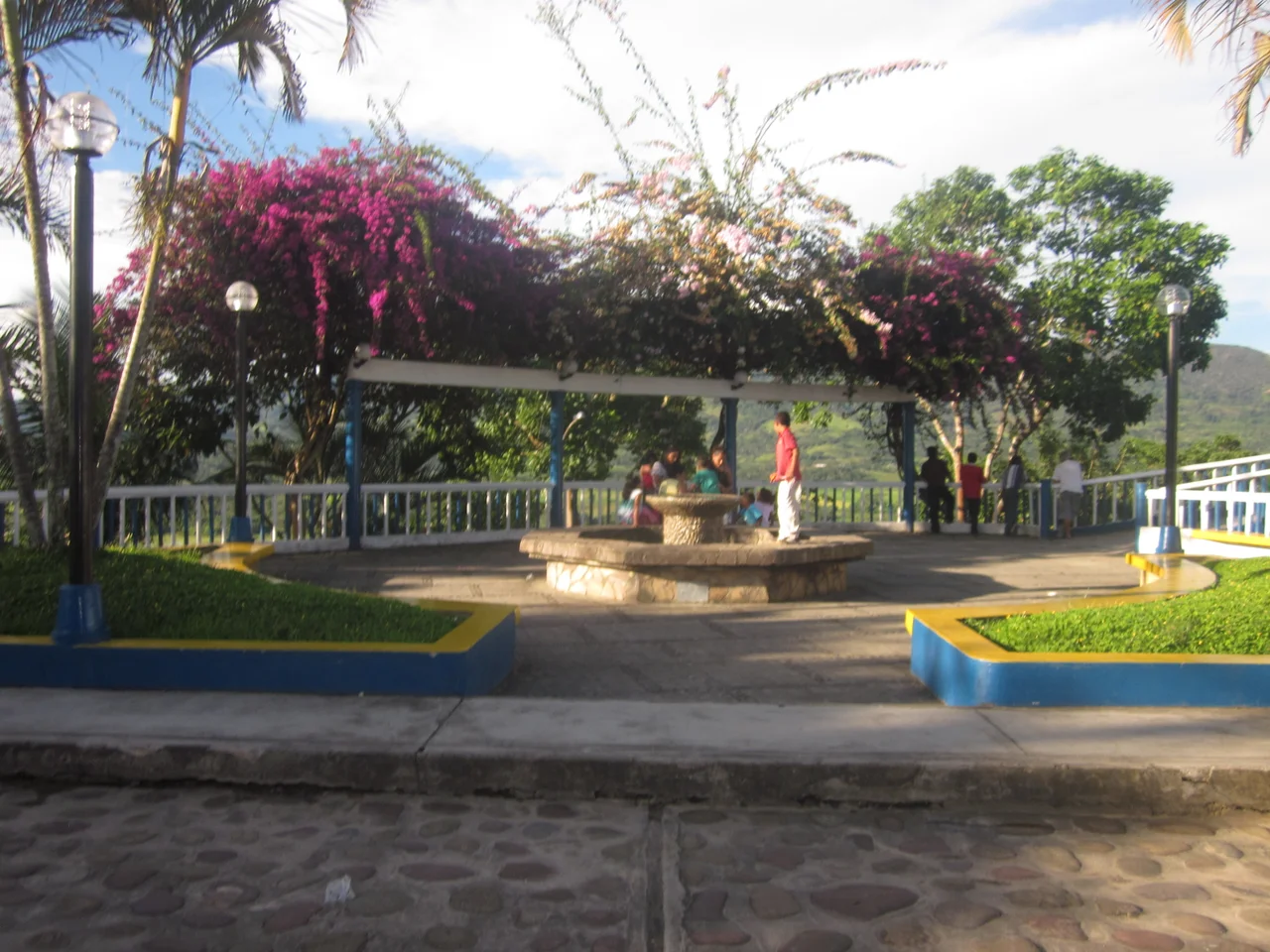
Moyobamba sits on a bluff 860 meters above sea level, overlooking the Mayo River, in the humid tropical region called ceja de selva - the eyebrow of the jungle - where the Andes descend into the Amazon basin. Around 3,500 orchid species are native to the surrounding area. Not 3,500 individual plants. 3,500 species. The count includes the strange Coryanthes bucket orchids that drown their pollinators in a pool of nectar, the whispering Cattleyas that perfume dusk, and an astonishing diversity of small epiphytes that drape every high tree branch. The region now hosts an annual orchid festival, and the nickname has stuck: Moyobamba is the City of Orchids.
Water Everywhere
The surrounding landscape is one of the reasons the orchid count gets so high. The area is a tangle of rivers, caves, waterfalls, hot springs, and lakes. The Tioyacu River rises crystalline from the forest floor and tumbles over mossy ledges. The Cueva de los Huacharos hides a subterranean river running under limestone. The San Mateo thermal springs steam in the early morning. Laguna Azul reflects the sky. The Ahuashiyacu and Gera waterfalls draw visitors and locals alike. Rainfall supports all of it: Moyobamba averages temperatures between 14 and 30 degrees Celsius year-round, with plenty of humidity. The savanna-tropical climate makes everything grow, fast.
A Capital That Moves
Administratively, Moyobamba has been many things. It was an important commercial center through the long colonial era, achieving official city status in 1857. On June 7, 1897, it became the capital of the then-Loreto Region. On September 4, 1906, it was transferred to become the capital of the newly created San Martín Region, where it remains. In 1948 it was named the seat of the Territorial Prelature of Moyobamba. The old river port Puerto de Tahuishco, once the beating commercial heart along the Mayo River, has faded as roads replaced river trade. On September 25, 2005, an earthquake struck northern Peru and caused significant damage to the city.
A Mix of Origins
The demographics reflect the waves of immigration that have shaped Moyobamba. According to local accounts, roughly 70 percent of the population traces European ancestry - Spanish, Italian, smaller groups from Armenia, Syria, Germany, and Poland. Another 25 percent are mestizo, of mixed European and indigenous descent. The remaining 5 percent includes Chinese, Japanese, Quechua speakers, and Amazonian indigenous peoples. A small but historically prominent group of families descended from Armenian, Jewish, and German settlers contributed outsized numbers of professionals to Peruvian civic life, and many of their children emigrated to Lima, Trujillo, Arequipa, Ica, and Chiclayo to become active in politics, trade, and education.
Coffee, Rice, and the Slow Fade of the Airport
Moyobamba is the center of a large agricultural region and the main trading point for the Aguaruna indigenous communities of the Upper Mayo Valley. The dominant crops are rice, coffee, and corn, with secondary production of cotton, sugarcane, tobacco, and cacao. The city also produces alcohol, liquor, wine, and straw hats. But in one of those small slow tragedies that shape South American regional fortunes, Moyobamba's airport declined, while Tarapoto further downriver grew a major commercial airfield. The result has been Tarapoto's faster development and Moyobamba's relative economic stagnation. Farmers and regional government workers clash periodically over control of markets and access, a quiet geopolitical struggle that decides which roads get paved and which crops reach Lima.
Pandilla Around the Pole
Back to San Juan. On the night of the feast, after the juane is eaten and the processions are done, Moyobambinos dance the pandilla around wooden poles driven into the ground and decorated with gifts tied to the top. The dance builds, the music accelerates, and eventually someone with an axe begins chopping at the pole's base until it comes down and the crowd falls on the prizes. It is a choreography that has outlasted conquest, earthquakes, regional capital transfers, and the rise of Tarapoto. Somewhere under the noise, in the quieter moments at the edge of the plaza, you can smell the orchids from the hills.
From the Air
Located at 6.03°S, 76.97°W in the San Martín Region of northern Peru, on a bluff overlooking the Mayo River at 860 meters elevation. Nearest airports: Moyobamba (MBP/SPBB) locally, though Tarapoto (TPP/SPST) 120 km southeast is the main commercial hub for the region. Rioja Airport (RIJ/SPJA) is closer. Recommended viewing altitude 6,000-10,000 feet AGL. Humid tropical climate means frequent afternoon cloud buildup; morning visibility is generally best.
Nearby Stories
- 2005 Northern Peru Earthquake 48 km away
- Gocta 60 km away
- Revash 61 km away
- Department of San Martín 97 km away
- Huallaga River 109 km away
- Peruvian Amazonia 134 km away
- Borja, Peru 150 km away
- Pucallpa 298 km away