
Museum of Archaeology, Tainan Branch of National Museum of Prehistory
They broke ground for a science park and found something far older than semiconductors. During the construction of Southern Taiwan Science Park in Sinshih District, workers uncovered archaeological sites holding evidence of human settlement stretching back thousands of years — dog remains, pig bones, rice seeds, the material traces of lives lived on the southwestern Taiwan plain long before any written history. Rather than clear the sites and build over them, Taiwan committed NT$1.5 billion to creating a museum directly on the ground where these discoveries were made. The Museum of Archaeology opened its doors fully in October 2019, after a soft opening in December 2018, and the Siraya people — among the descendants of the region's earliest known inhabitants — were present at the beginning.
What the Ground Gave Up
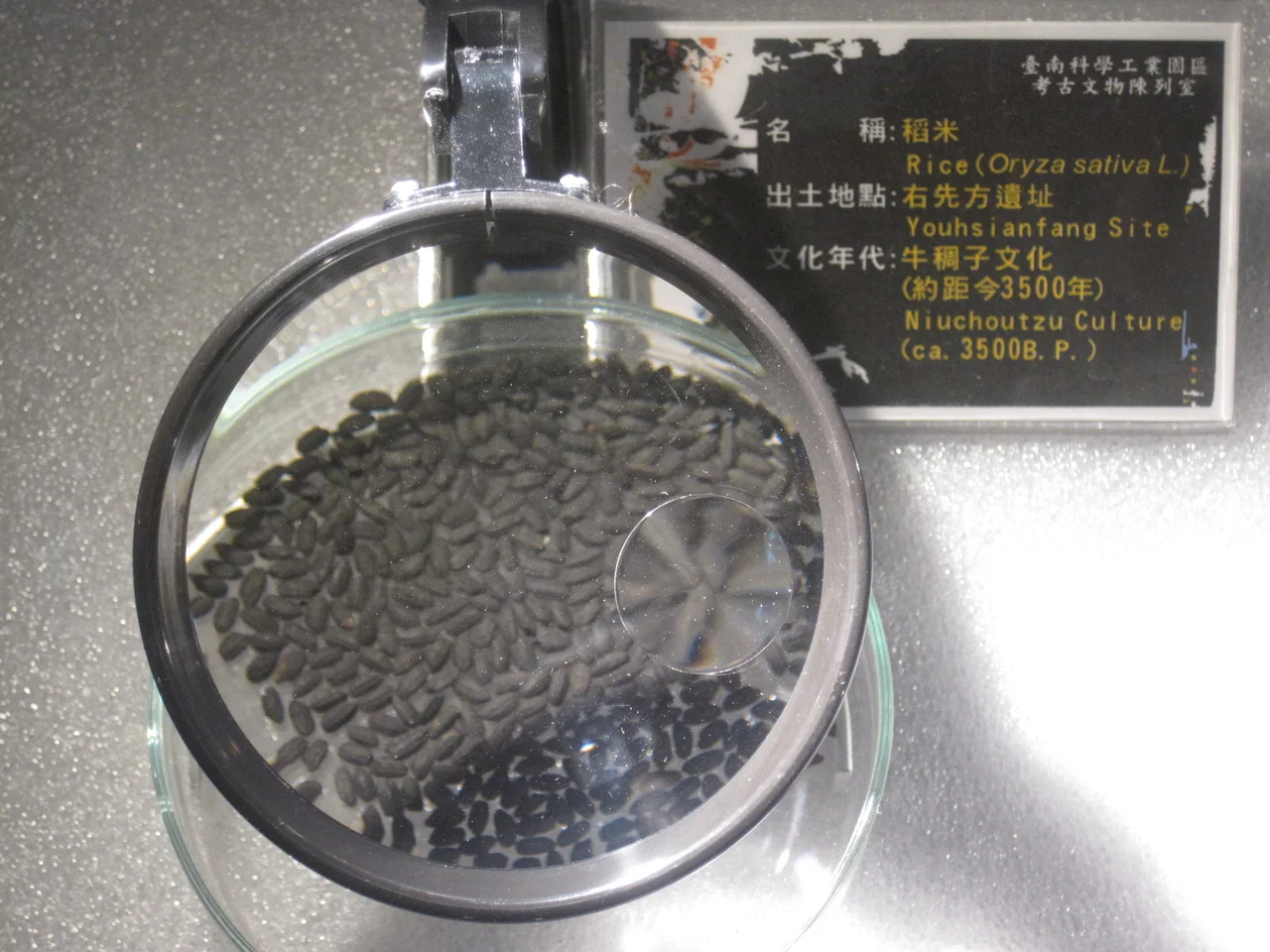
The excavations that preceded the museum's construction revealed multiple archaeological sites layered beneath the Tainan plain. Among them: the Nanguanli Site, which yielded the remains of dogs that once lived alongside prehistoric communities; the Sampauchu Site, where pig bones testified to early animal husbandry; and the Youhsianfang Site, where rice seeds — preserved across millennia — spoke to the agricultural practices of people who had been farming this ground long before the first Chinese or Dutch settlers arrived. These were not isolated finds but overlapping windows into successive cultures that called southwestern Taiwan home, each building on or alongside what came before.
A Museum Built for the Science Age
The irony of the museum's location inside a functioning science park is deliberate. The Southern Taiwan Science Park is one of Taiwan's major technology corridors, home to semiconductor fabrication and advanced manufacturing. The Museum of Archaeology, spanning 24,000 square meters, sits within this landscape as a statement: that understanding where a society comes from is not separate from what it builds next. The branch is affiliated with the National Museum of Prehistory, headquartered in Taitung on Taiwan's eastern coast, which has long been Taiwan's primary institution for Austronesian and prehistoric research. The Tainan branch extends that work directly to the southwestern plains where some of Taiwan's most significant early cultures emerged.
The Siraya and the Opening Day
When Vice Culture Minister Lee Lien-chuan attended the soft opening on 26 December 2018, he was joined by a group of Siraya people — and that presence carried weight. The Siraya are a Taiwanese Plains indigenous people whose ancestral lands cover much of the southwestern Tainan plain, the same terrain the museum's collections document. For centuries, the Siraya faced displacement, cultural suppression, and official non-recognition; Taiwan's government did not formally recognize the Siraya as an indigenous people for much of the twentieth century. Their presence at the museum's opening — at an institution dedicated to preserving the prehistoric record of their homeland — was a moment that carried both historical and political significance, acknowledging a continuity of people across the millennia the museum spans.
Six Thousand Years on the Tainan Plain
What the museum ultimately holds is not just a collection of artifacts but an argument: that the Tainan plain has been home to complex human communities for an extraordinarily long time, and that those communities matter to understanding Taiwan's identity. The artifacts displayed range from prehistoric ceramics and stone tools to the organic remains — animal bones, plant seeds — that survived in the archaeological layers. Together they chart the transition from hunter-gatherer ways to settled agriculture, from small village life to the more complex societies that eventually encountered Dutch traders and Qing settlers. The museum makes these transitions visible and tangible, in a building walkable from Nanke Station.
From the Air
The Museum of Archaeology sits at approximately 23.1010°N, 120.2838°E, within the Southern Taiwan Science Park in Sinshih District, Tainan. From the air at 4,000–6,000 feet, the science park's structured industrial layout is visible against the agricultural plain of the Tainan basin, with the Tsengwen River watershed to the north. The nearest regional airport is RCNN (Tainan Airport), approximately 15 km to the southeast. The major hub is RCKH (Kaohsiung International Airport), roughly 40 km to the south. The flat coastal plain in this area offers good visibility on clear days, with the mountains of the Central Range visible to the east.
Nearby Stories
- 1941 Chungpu Earthquake 7.5 km away
- Paiyun Lodge 9.8 km away
- Fo Guang Shan Buddha Museum 11 km away
- Yakou Mountain Pass 17 km away
- National Museum of Prehistory (Taiwan) 19 km away
- Dongji Island 26 km away
- TransAsia Airways Flight 222 33 km away
- Daya Bay 548 km away