
National Museum of Prehistory (Taiwan)
In 1980, workers laying the foundations for a new Taitung railway station broke through something unexpected. Beneath the construction site lay slate coffins — dozens, then hundreds — along with jade ornaments and stone tools belonging to people who had lived and died here three thousand years before. The South-Link Line project halted. A National Taiwan University excavation team moved in and would not leave for a decade. What they found across 10,000 square meters of ground was one of the most significant prehistoric burial sites in East Asia: over 1,500 burials and tens of thousands of artifacts from the Beinan culture, a Bronze Age civilization whose descendants are the Puyuma people living in this region today.
What the Railway Workers Found
Construction for the South-Link Line — the railway connection that would finally link the island's east and west coasts through the southern mountains — was already a major infrastructure undertaking when the Taitung station site yielded its surprise in 1980. The discovery was large enough that the Taitung City Government proposed halting construction entirely rather than destroying what lay beneath. That proposal succeeded. The station was relocated, and for ten years the site at Beinan became an active excavation, one of the largest systematic archaeological digs in Taiwan's history. The National Taiwan University team that led the work uncovered more than 1,500 burials — adults and children interred in slate box coffins, many accompanied by jade and stone objects of considerable sophistication. The cemetery represented community life extending across many generations, a population who had chosen this particular corner of the coastal plain as their resting place.
The Beinan Culture and Its Living Heirs
The civilization that left those graves behind is known as the Beinan culture, a Bronze Age society that flourished on Taiwan's southeast coast roughly 3,500 years ago. The Beinan site, now preserved as Beinan Cultural Park adjacent to the museum, is the largest known prehistoric habitation site in Taiwan. Among the artifacts recovered were jade earrings shaped like animals — a distinctive design type that appears in other Austronesian sites across the Pacific region — as well as stone reaping knives, polished slate tools, and burial goods that speak to complex social organization and long-distance exchange networks. The Puyuma people, who live in Beinan Township today, are considered the cultural heirs of this civilization. The museum's presence in their ancestral territory is not incidental: it places an institution dedicated to Taiwan's deepest human past in the community most directly connected to that past.
A Building Worthy of What It Holds
The National Museum of Prehistory opened in Taitung City in 2002, more than two decades after the initial discovery. The building was designed by the American architect Michael Graves — known for his postmodern style and for projects including the Portland Building in Oregon and the Humana Building in Louisville. The museum occupies a 10-hectare site with spaces that extend well beyond the exhibition halls: Sun Square and Mountain Square open the complex to the sky, a Scenic Garden and Bird Singing Square create breathing room between galleries, and a Sightseeing Hill gives visitors a vantage point over the surrounding landscape. The maze, water fountain show, and children's play area make the site work for multiple ages. It is an institution that takes seriously its obligation to be both intellectually substantial and physically welcoming.
What the Exhibitions Tell
Three core exhibitions anchor the museum's permanent collection. The Natural History of Taiwan, designed by MET Studio of London, traces the island's ecological formation and the environmental context in which human life here developed. The Prehistory of Taiwan brings the archaeological record into focus — including the Beinan site finds — situating Taiwan within the broader story of Austronesian migration and Pacific prehistory. The Indigenous Peoples of Taiwan exhibition, also developed with MET Studio, addresses the living cultures descended from those prehistoric communities: the sixteen officially recognized ethnic groups and their distinct languages, ceremonies, material cultures, and contemporary lives. Together the three exhibitions argue that Taiwan's human story is deeper and more complex than the recent centuries of colonial history that dominate most popular accounts — and that it is a story still being lived.
Stone, Slate, and Three Thousand Years
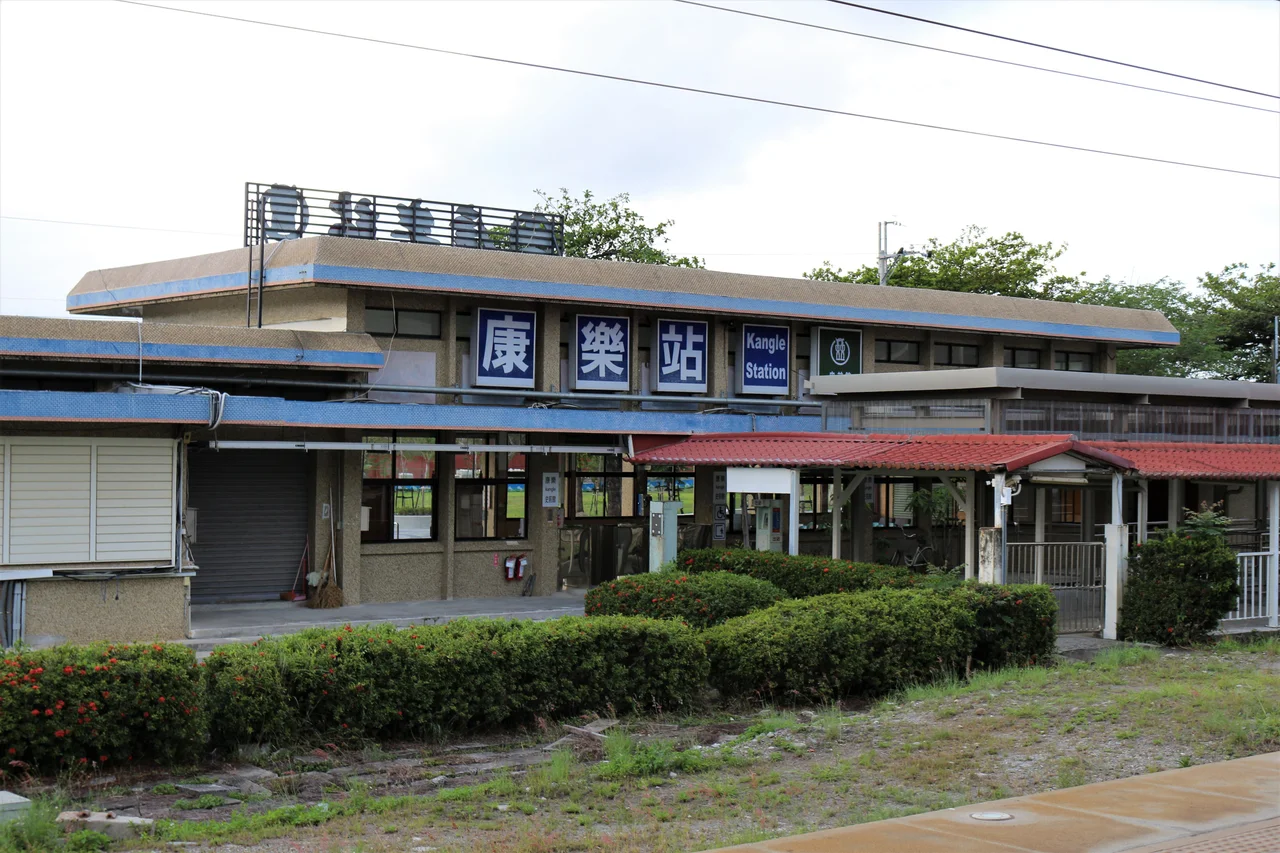
The museum is reachable on foot from Kangle Station on Taiwan Railway — a short walk from a stop that most visitors to Taitung pass through. The building underwent renovation beginning in May 2020, a sign that the institution sees its work as ongoing rather than settled. The Beinan site itself, preserved nearby, allows visitors to stand on the ground where the slate coffins were found and understand the scale of what was here before the railway came. Standing between the archaeological park and the museum's contemporary architecture, what strikes most visitors is the continuity: the people who built the Beinan culture left descendants who still speak a related language, still practice ceremonies with roots in that distant Bronze Age community, still call this part of the coast home. The museum holds their ancestors' objects. The Puyuma people hold the living thread.
From the Air
The National Museum of Prehistory sits at approximately 22.760°N, 121.092°E in Taitung City, near the southwestern edge of the city grid. The nearest airport is RCFN (Taitung Airport), approximately 6 km to the northeast. From the air, Taitung City occupies the coastal plain at the southern end of the Huatung Valley, with the Pacific Ocean visible to the east and the mountains of the southern Central Range rising dramatically to the west and south. The Beinan Cultural Park archaeological site is adjacent to the museum and visible from low altitude as a preserved open ground near the current Taitung Station. Recommended viewing altitude: 2,500–4,000 feet for city and coastal plain detail.
Nearby Stories
- Jiadong 8.7 km away
- Bunun Cultural Museum 10 km away
- Liudui Hakka Cultural Park 12 km away
- Yujing District 16 km away
- Shouka Mountain Pass 40 km away
- 1951 East Rift Valley Earthquakes 97 km away
- Mavulis Island 157 km away
- 2021 Hualien Train Derailment 162 km away