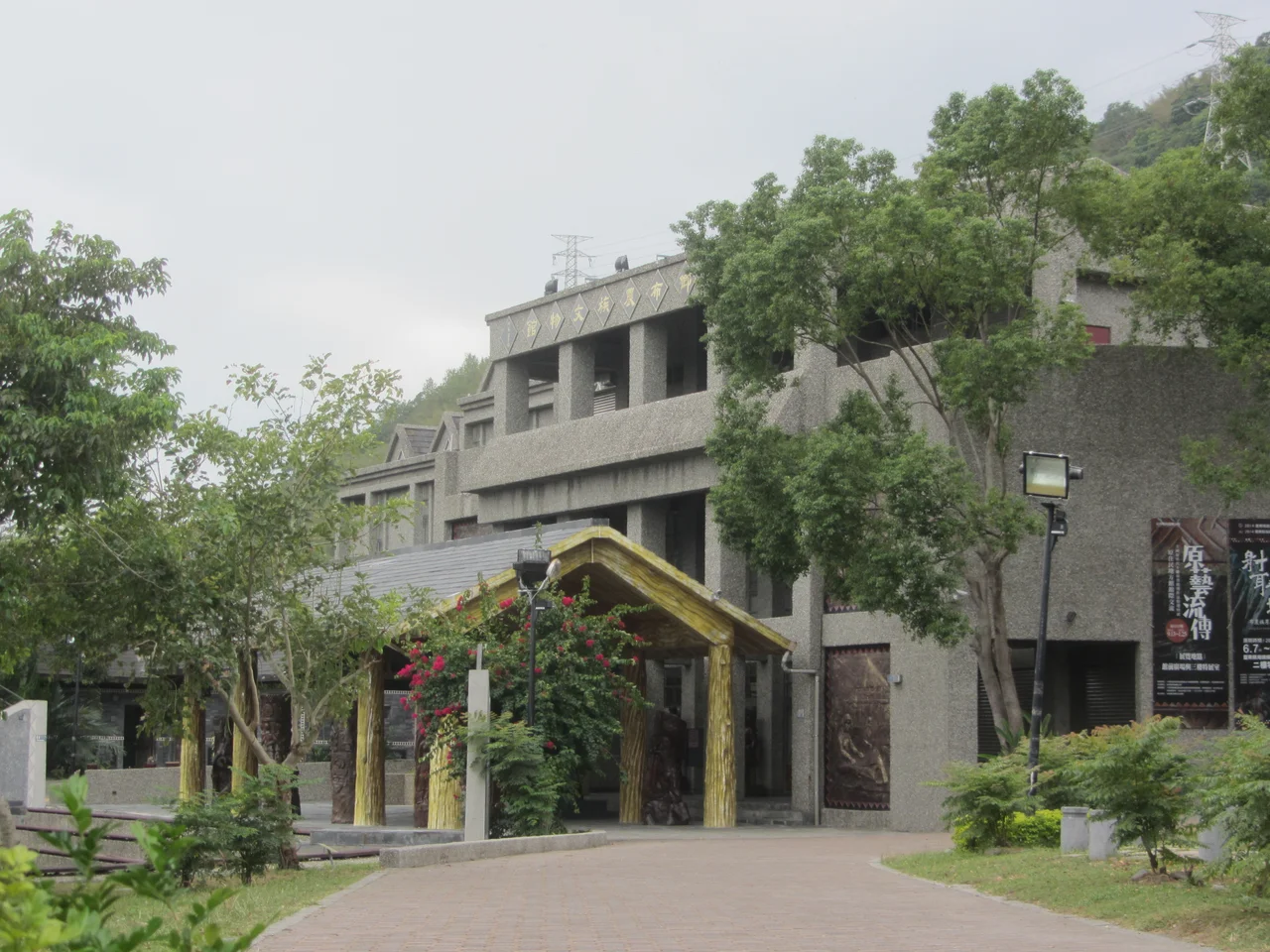

Bunun Cultural Museum
Eight-part harmony is rare in any musical tradition. Among the Bunun of Taiwan, it emerges naturally, spontaneously, from groups gathered for ritual — a form of polyphonic singing called pasibutbut that so astonished ethnomusicologists when it was first recorded in 1943 that some assumed the recording equipment had malfunctioned. No instrument produces those interlocking voices rising in parallel chords; only people, breathing together in the mountains. The Bunun Cultural Museum in Haiduan Township exists, in part, to ensure that those who built this tradition — and so much else — are not reduced to artifacts and explanatory text. It is a museum, yes, but it is also something rarer: a place where a living people tell their own story.
A People of the High Mountains
The Bunun are one of Taiwan's sixteen officially recognized indigenous peoples, and historically they have lived at some of the highest elevations of any group on the island — deep in the Central Mountain Range, in villages perched above 1,000 meters. Their territory centered on the mountains of what is now central and eastern Taiwan, and Haiduan Township sits at the foot of that highland world, where the mountains release their rivers into the East Rift Valley. The connection between Haiduan and the Bunun is not historical in the past-tense sense; the township remains home to a substantial Bunun population, which is precisely why, when planners sought a location for a museum dedicated to Bunun culture, this community was the obvious and only choice. When the museum opened in 2002, it became the first indigenous township in Taiwan to build a dedicated local museum — a distinction that reflects both civic pride and a recognition that indigenous memory needs dedicated institutional support to survive into future generations.
What the Museum Holds
The building rises two floors above the valley floor. The ground level functions as the tourist information center for the Southern Cross-Island Highway, the dramatic mountain road that climbs from Haiduan into the Central Range — one of the most challenging drives in Taiwan, linking east and west across terrain that most roads avoid entirely. Upstairs, the Bunun Story House takes over. Wax sculptures depict figures from Bunun community life: hunters, weavers, elders, children. Relief carvings in wood and stone illustrate ceremonial scenes and cosmological beliefs. Old photographs — many of them from the early twentieth century — show Bunun men and women as they were, not as they have been imagined. The photographs carry particular weight. They are evidence: of a society fully formed, with its own architecture, agriculture, textile arts, and spiritual practice, long before the colonial gaze arrived to categorize and explain it. An outdoor performance area provides space for tribal events and cultural demonstrations, where the museum opens outward into the living community it represents.
The Calendar and the Cosmos
Bunun culture is organized around a sophisticated agricultural and ceremonial calendar. The Bunun developed what researchers call the Bunun Pictorial Calendar — a carved wooden board that records the lunar months and associated ritual duties, considered one of the most significant surviving examples of indigenous record-keeping in Taiwan. Their year revolves around millet cultivation, and the ceremonies that accompany each stage of planting and harvest are not merely symbolic but understood to be essential to the crop's success. The pasibutbut singing, for instance, is traditionally performed in the first lunar month to pray for a good millet harvest — its rising harmonics thought to please the spirits and encourage abundance. These traditions are not museum pieces. They are practiced, adapted, and transmitted within Bunun communities today. The museum serves as one node in that transmission: a place where younger generations can encounter their history in organized form, and where visitors from outside can begin to understand the depth of what they are seeing.
Respect at the Foot of the Mountains
Arriving at the Bunun Cultural Museum from Haiduan Station is a short walk south through a township that still feels like itself — not a tourism showcase, but a community going about its life. The museum sits near the start of the Southern Cross-Island Highway route, and many visitors come through quickly, on their way somewhere else. Those who stay longer tend to find the experience more layered. The outdoor performance area, when a demonstration is scheduled, offers something no static exhibit can provide: Bunun voices in real time, the harmonics filling the mountain air. The museum staff, many of them Bunun community members, bring personal authority to their work here. They are not interpreting a foreign culture but their own. That distinction matters — to the accuracy of what is presented, and to the dignity with which it is held.
From the Air
The Bunun Cultural Museum sits at 23.098°N, 121.176°E in Haiduan Township, at the western edge of the East Rift Valley where the land begins to rise toward the Central Mountain Range. From the air at 4,000–6,000 feet, the township is visible in the valley floor, framed by steep forested ridgelines to the west. The nearest airport is Taitung Airport (RCFN), approximately 20 km to the south-southeast. The Southern Cross-Island Highway road corridor climbing westward from Haiduan is a distinctive visual landmark.
Nearby Stories
- Peinan Site Park 6.4 km away
- 1941 Chungpu Earthquake 11 km away
- Yujing District 12 km away
- Fo Guang Shan Buddha Museum 18 km away
- Yushan 19 km away
- 1951 East Rift Valley Earthquakes 58 km away
- 2021 Hualien Train Derailment 123 km away
- Mavulis Island 196 km away