
Museum of Occupations and Freedom Fights
The basement is the part nobody forgets. Down a narrow staircase, past padded cells designed for prisoners declared mentally unstable, past a chamber labeled 'kitchen' on the original floor plan that was actually a place of execution, the museum has preserved what the KGB tried to erase. When the Soviets left this building in 1991, they covered the bullet-marked floor with concrete. The museum took the concrete back up. Over a thousand people were shot in this basement between 1944 and the early 1960s, roughly a third of them for the crime of resisting Soviet occupation. The building above stands across from Lukiškės Square in central Vilnius, an unremarkable stone facade completed in 1890 to house a tsarist court. Almost every regime that ruled Lithuania since then has used it for the same purpose.
A Building of Many Hands
Few buildings in Europe carry such a sequence of occupants. Built as the courthouse of the Vilna Governorate in 1890, the structure was used by the German Empire during the First World War, then by the newborn Lithuanian army as a conscription center, then by Bolshevik commissars during the brief Soviet seizure of 1919. After Polish forces took Vilnius in 1920, it housed the courts of the Wilno Voivodeship. In 1940 the Soviet Union annexed Lithuania, and the basement became a prison. The next year Nazi Germany invaded, and the Gestapo moved in; inscriptions scratched into the cell walls by Gestapo prisoners are still visible. In 1944 the Red Army returned, and the KGB took the building and held it for forty-seven years.
The Cost in Numbers
Lithuania paid a steep price under Soviet rule. Mass deportations in June 1941 sent tens of thousands to Siberia, often in cattle cars in the middle of the night, and a second wave in 1944-1953 deported roughly 130,000 more. In total, around 280,000 Lithuanians were either deported or imprisoned in the gulag system; tens of thousands died in transit or in the camps. The Forest Brothers, Lithuanian partisans who fought a guerrilla war in the woodlands from 1944 into the 1950s, lost an estimated 22,000 fighters. The Holocaust in Lithuania was its own catastrophe; an estimated 195,000 Lithuanian Jews were murdered between 1941 and 1944, roughly ninety-five percent of the prewar Jewish population, the highest rate of destruction anywhere in Europe. Both occupations brought mass death.
What the Basement Holds
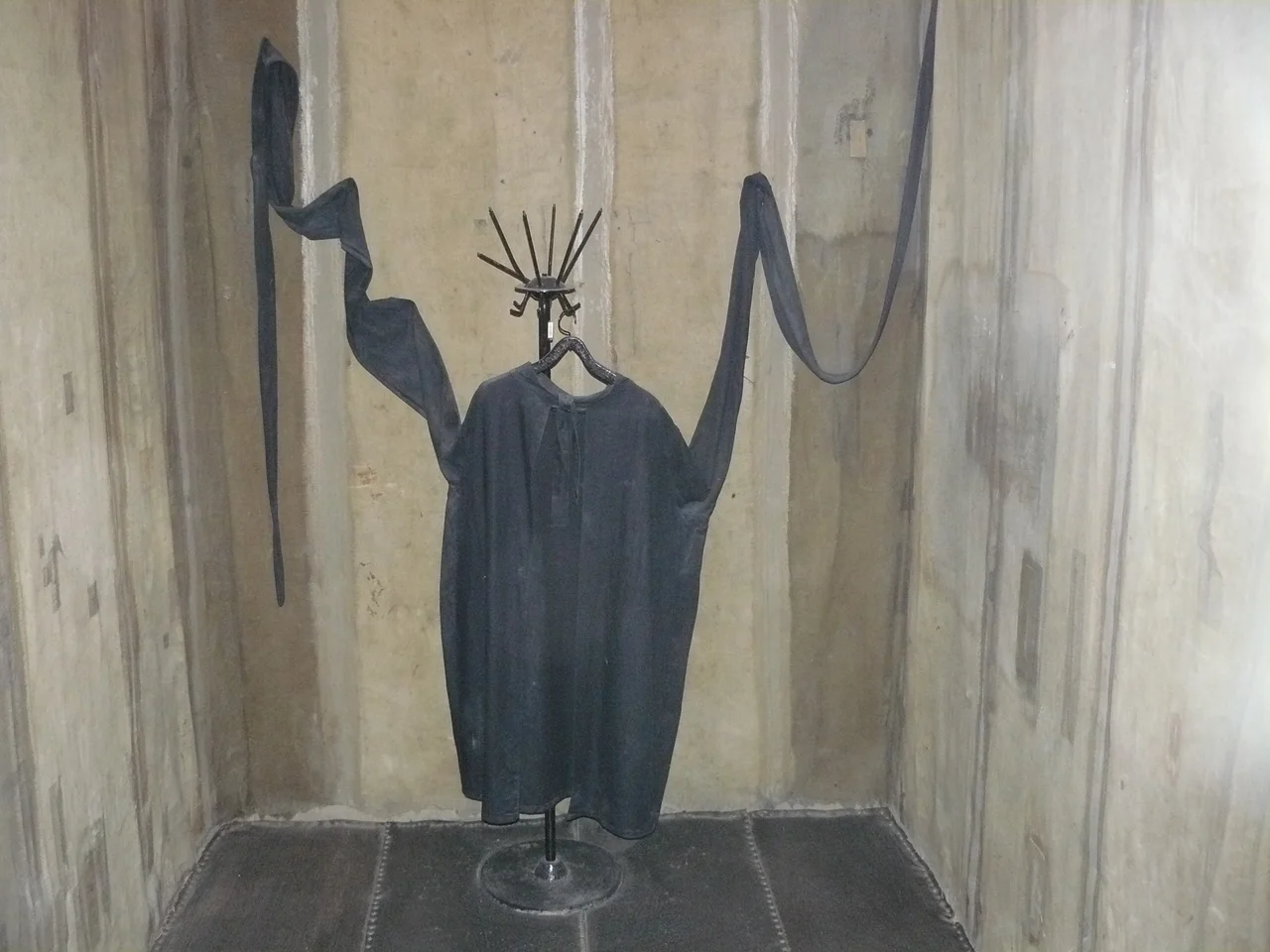
The execution chamber is preserved as it was found, walls scarred where bullets passed through bodies. A glass floor in one section displays personal objects recovered from the mass graves at Tuskulėnai Manor, north of central Vilnius, where most of the basement victims were buried. Tuskulėnai is now a branch of the museum. Upstairs, exhibits document the Forest Brothers, the deportations, the underground press that printed clandestinely throughout the occupation, and the personal belongings of the dead, donated by surviving family members who saw the museum as the safest place to keep them. The collection grows yearly; descendants still arrive with photographs, letters, and objects pulled from drawers when grandparents finally felt safe enough to speak.
The Naming Question
Until 2018 the museum was called the Museum of Genocide Victims, a name that drew sustained international criticism for two reasons. First, only a small number of historians accept the framing of Soviet repression against ethnic Lithuanians as legal genocide, though the European Court of Human Rights has accepted Lithuanian convictions on those grounds. Second, the museum carried no Holocaust exhibition until 2011, even though more Jews died in Lithuania than in Germany, both proportionally and in absolute numbers. After a 2018 New York Times piece quoted scholar Dovid Katz calling the museum 'a 21st-century version of Holocaust denial,' the name was changed and exhibits were broadened. The debate continues. The building, meanwhile, also serves as a working courthouse and as the home of the Lithuanian Special Archives, the documents the KGB left behind when it walked out the door.
From the Air
Located at 54.6879°N, 25.2706°E in central Vilnius, on the western edge of the New Town across from Lukiškės Square. The building sits at the intersection of Aukų Street (the name means 'Street of Victims') and Gedimino Avenue, the city's main thoroughfare. Vilnius International Airport (EYVI) lies 6 km south. From the air, look for Lukiškės Square's central plaza and the wide green strip of Gedimino Avenue running through the city center.
Nearby Stories
- Dubingiai Castle 20 km away
- Battle of Vilnius (1915) 35 km away
- Pažaislis Monastery 40 km away
- Lida Castle 68 km away
- Battle of Raseiniai 92 km away
- Grodno Ghetto 103 km away
- Mir Ghetto 127 km away
- Daugavpils Fortress 136 km away