
Mir Ghetto
Mir was a shtetl that the Jewish world knew the way Catholic Europe once knew Salamanca or Bologna. Its yeshiva produced rabbis whose teaching shaped religious thought across the Russian Empire and beyond. In 1939 there were over 2,000 Jews living among Mir's roughly 4,000 inhabitants, in a town small enough that almost everyone knew everyone's family. By 1942, almost all of them had been murdered. The Mir Ghetto holds about 3,000 dead in total - the prewar Jews of Mir plus refugees who had fled there from western Poland and surrounding villages, hoping to find shelter in a famously learned community. The story of those murders, and of one extraordinary act of warning that allowed several hundred to escape, is what the name Mir Ghetto carries.
A Town Known for Learning
Before World War II, Mir lay in the Second Polish Republic, near the medieval brick castle that gave the town its anchor. Like dozens of small towns across Belarus and eastern Poland, it was a shtetl - a predominantly Jewish town with markets, synagogues, schools, and the Yiddish-speaking texture of everyday life that had grown over centuries. What made Mir famous was its yeshiva. Founded in 1815, the Mir Yeshiva trained generations of Talmudic scholars and was studied at by students from across Europe and even from North America. The yeshiva operated intermittently until the Soviet invasion of Poland in 1939 dismantled the religious infrastructure of the region. By a remarkable rescue, much of the yeshiva community managed to evacuate eastward through Vilnius and Kobe, eventually reaching Shanghai - one of the very few yeshivas to survive the war as an institution. The Jews of Mir who remained, some 2,000 of them, did not have that escape route.
Occupation, Then Killing
Nazi Germany occupied Mir on 27 June 1941 - just 35 days after the launch of Operation Barbarossa. The speed left no real time to flee. Refugees arriving from villages already under German control swelled the Jewish population to roughly 3,000. A formal ghetto was established three months after occupation. The killings began before that. On 20 July 1941, German forces executed 20 Jews. On 9 November 1941, an indiscriminate mass execution killed 1,800 people in the streets of Mir and at the walls of Mir Castle - women, men, children, the old, killed without selection, buried in mass graves at the castle's perimeter. The killing was carried out by units of the Einsatzgruppen, the Wehrmacht, and the 11th Lithuanian Auxiliary Police Battalion, recruited from Lithuanian collaborators serving German command. Another mass execution on 2 March 1942 killed 750 more people. By May 1942, around 850 Jews remained alive.
The Castle, the Translator, the Forest
In May 1942 the surviving 850 Jews were transferred from the in-town ghetto into Mir Castle itself, separated from the Belarusian population by checkpoints and worked as forced laborers clearing rubble from Allied bombings. Inside that final concentration there was an underground resistance network of around 80 people, led by Oswald Rufeisen. Rufeisen was a German-born Jew who, by appearing Aryan and speaking fluent German, had managed to embed himself within the local Belarusian Auxiliary Police as a Wehrmacht translator. From inside the police apparatus he learned the date of the planned final liquidation. He warned the ghetto. Some prayed; some chose suicide rather than wait. The resistance organized an escape - 150 to 300 people slipped out on 9 August 1942, four days before the liquidation. They fled into the surrounding forests and joined the Bielski partisans and Soviet partisan units, where many survived the war. On 13 August 1942, the Mir Ghetto was liquidated. The remaining 719 Jews were murdered. Of the roughly 3,000 Jews held in the Mir Ghetto over its 13-month existence, about 2,900 were killed.
A Forest Outside Jerusalem
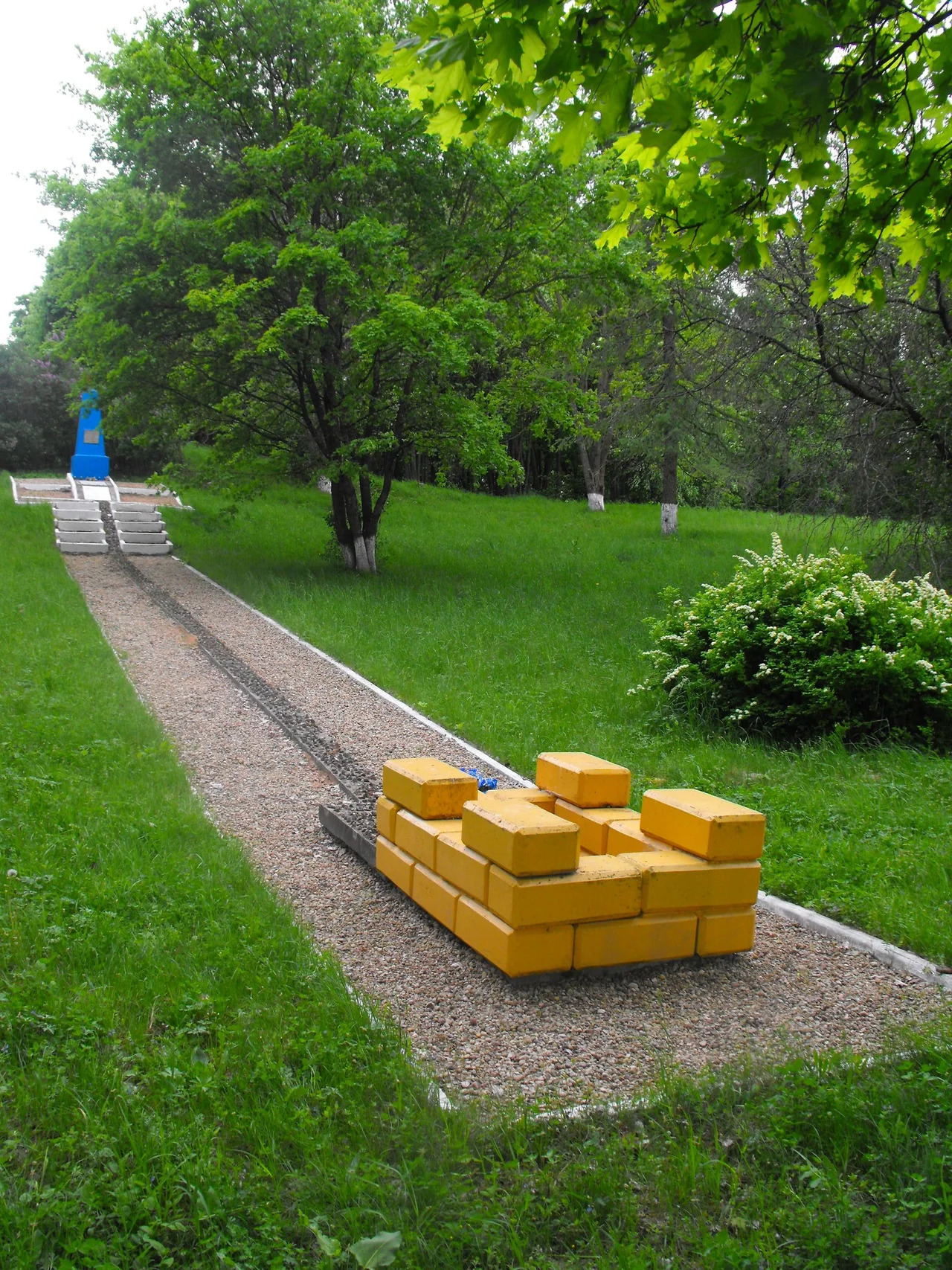
Oswald Rufeisen survived. After the war he converted to Catholicism, became a Carmelite monk known as Father Daniel, emigrated to Israel, and lived out his life as a priest serving Hebrew-speaking Catholics in Haifa. His story became the subject of Nechama Tec's biography In the Lion's Den. Four monuments to the Mir Ghetto were erected in Belarus between 1966 and 1967, named in the Soviet style as monuments to 'Soviet citizens' rather than Jews. Outside Belarus, the Jewish National Fund planted the Mir Forest near Jerusalem in memory of the dead. At Nahalat Yitzhak Cemetery in Tel Aviv, descendants and survivors gather every 9 November - the anniversary of the 1941 massacre - to read the names. In 1995 a former member of the Belarusian Auxiliary Police, Szymon Serafinowicz, was arrested at his home in Banstead, England, and charged with killing three Jews of Mir under Britain's War Crimes Act 1991. The trial, the first under that act, collapsed when he was ruled unfit to stand trial due to dementia. The brick walls of Mir Castle still stand. So do the mass graves at their base.
From the Air
53.45N, 26.47E. The Mir Ghetto was located in the town of Mir; the second-stage ghetto was inside Mir Castle itself. Recommended viewing altitude 1,500-3,000 feet AGL. Nearest major airport is Minsk International (UMMS) about 90 km northeast. The mass grave sites are commemorated at the castle walls and in the surrounding fields - quiet, agricultural, with the castle's red brick the unmistakable visual landmark.
Nearby Stories
- Nesvizh Castle 11 km away
- Minsk Ghetto 34 km away
- Lida Castle 48 km away
- Zhyrovichy Monastery 53 km away
- Church of St. Adalbert and Benedictine Monastery 53 km away
- Battle of Lida (1919) 62 km away
- Minsk Castle 68 km away
- Ovruch 246 km away