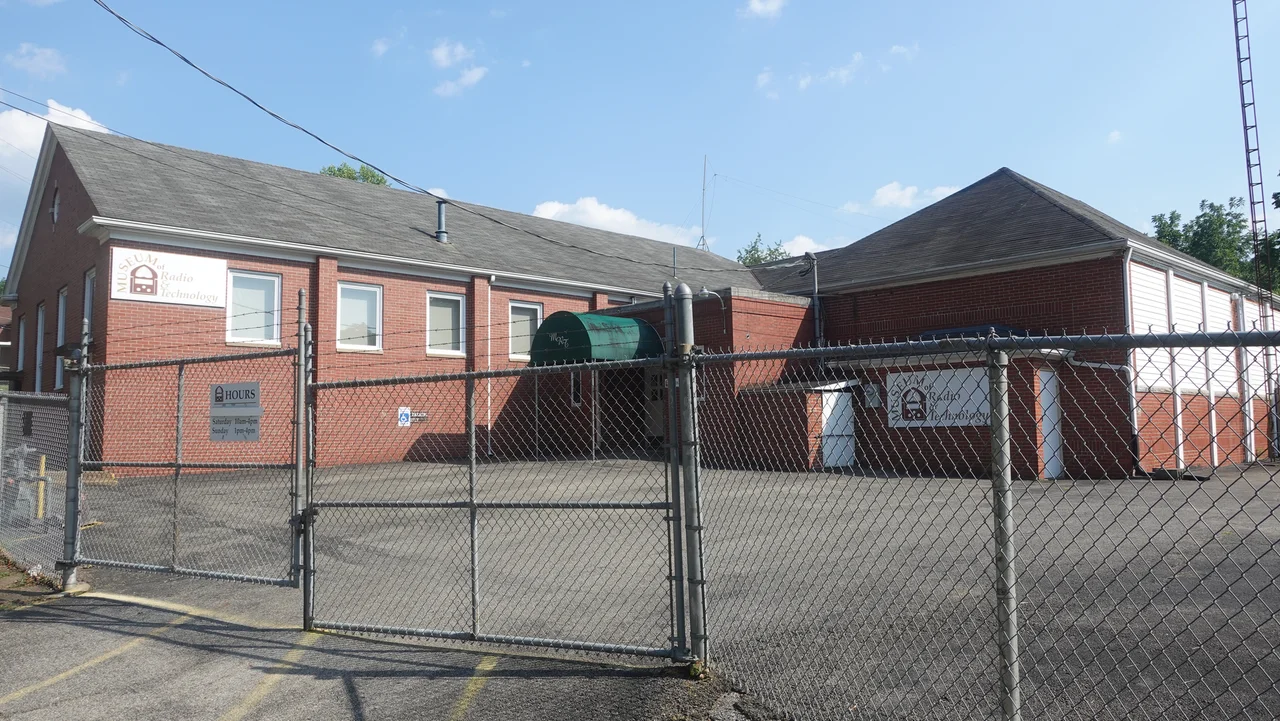

Museum of Radio and Technology
The Gilbert Atomic Energy Lab was sold to American children between 1950 and 1951. It contained actual radioactive material - small samples of uranium ore - and was marketed as the educational toy of the atomic age. The Atomic Energy Lab was a commercial failure but a cultural icon, perfectly capturing the brief moment when Americans believed atomic energy was about to become a household technology like electricity or the radio. The Gilbert kit is on display at the Museum of Radio and Technology in Huntington, West Virginia, alongside Erector sets, chemistry kits, microscopes, and the rest of the Gilbert Company's mid-century educational product line. The museum opened in 1991 in the former Harveytown Elementary School, and it has been quietly accumulating American technological memory ever since.
The 1920s Radio Shop
The museum's chronological tour begins with mechanical music reproduction in the pre-electrical era - phonographs, music boxes, and the cylinders and discs that played on them. Visitors then move into the wireless era, with a working crystal radio receiver and a rotary spark gap demonstrator that shows how the earliest radio transmitters generated the electromagnetic waves that carried sound across distances. This is the technology of Marconi, Tesla, and the amateur experimenters who built radio out of basement workshops in the years before the broadcast industry existed. The hands-on nature of the exhibits is intentional. The Museum of Radio and Technology is not a place where you stand behind a velvet rope. You can twist the dial on the crystal radio, listen to the broadcast, and feel the technology working.
The 1940s and 1950s Showroom
The 1940s and 1950s showroom recreates a typical radio and television store from the postwar consumer boom. Tube and transistor radios, television sets, wire and tape recorders, vintage turntables, and tuners line the walls. The Gilbert Company display includes Erector sets, chemistry sets, microscopes, and the famous Atomic Energy Lab. A. C. Gilbert was the dominant American maker of educational toys from the 1910s through the 1960s, and his company's products defined what middle-class American children were expected to learn at home about science and engineering. The showroom captures the moment when those toys were sold across the counter from the consumer electronics that defined adult American leisure - radio and television as the daily entertainment infrastructure of every household.
Hams, Hallicrafters, and WV8MRT
The ham radio displays form one of the museum's strongest sections. Short-wave receivers and transmitters used by amateur operators across decades are organized around what museum staff call the Big H's - Hallicrafters, Hammarlund, Heath, and National (the latter included because, as the museum notes, the N looks like an H). Modern amateur equipment fills another room, including the museum's own active amateur radio station with call sign WV8MRT, which licensed visitors are welcome to operate. Military communication equipment from World War II and after fills another display - field radios, encryption devices, and the heavy duty gear that armies depended on for command and control across continents.
The 5,000-Watt Transmitter
The broadcasting room holds equipment from the heart of the twentieth-century broadcast industry. The centerpiece is a massive 5,000-watt AM transmitter from the 1930s - the kind of cabinet-sized apparatus that filled the technical rooms of major broadcast stations and made network radio possible. Recorders, cameras, control boards, and the famous NBC chimes are also on display. The radio DJ studio recreates a working broadcast studio of the kind that disc jockeys used from the early 1950s to the late 1990s - the platter-spinning era of American radio. Visitors can sit at the console and see how it feels. The auditorium and stage host three auction sales and swap meets per year, the annual West Virginia Broadcasting Hall of Fame ceremony, and occasional Radio Dinner Theater performances.
The Harveytown School Memory
The museum building was Harveytown Elementary School from the 1920s through the 1970s. One section of the museum is dedicated to the children who sat in its classrooms across that fifty-year span - the local Harveytown history that the building itself carries. A computer display traces the timeline of desktop computers from the IMSAI 8080 of the mid-1970s through the original Apple Mac and Lisa - including a seven-megabyte hard drive the size of a suitcase. The library holds books, magazines, and a near-complete collection of H. W. Sams and Ryder service manuals - the technical literature that radio and electronics repair people depended on for decades. Admission to all of it is free. The Museum of Radio and Technology runs on volunteer effort and member support, doing serious institutional work without serious institutional resources.
From the Air
Located at 38.401 degrees north, 82.473 degrees west, in the Harveytown neighborhood of southern Huntington, West Virginia. Recommended viewing altitude 2,500 to 3,500 feet AGL for clear views of the neighborhood. Nearest airport is Tri-State (KHTS), about 5 nautical miles east. The museum building is a former elementary school, recognizable from the air by the typical mid-twentieth-century brick school architecture with surrounding playground and parking lot.
Nearby Stories
- Battle of Scary Creek 6 km away
- Portsmouth 7.2 km away
- Fred M. Vinson Museum and Welcome Center 14 km away
- Staats Mill Covered Bridge 24 km away
- Lake Tight 25 km away
- Battle of Blair Mountain 32 km away
- Lower Shawneetown 35 km away
- The Kentucky Meat Shower: When Flesh Fell From a Clear Sky 68 km away