.jpg)
Museum of the Center for the Acropolis Studies
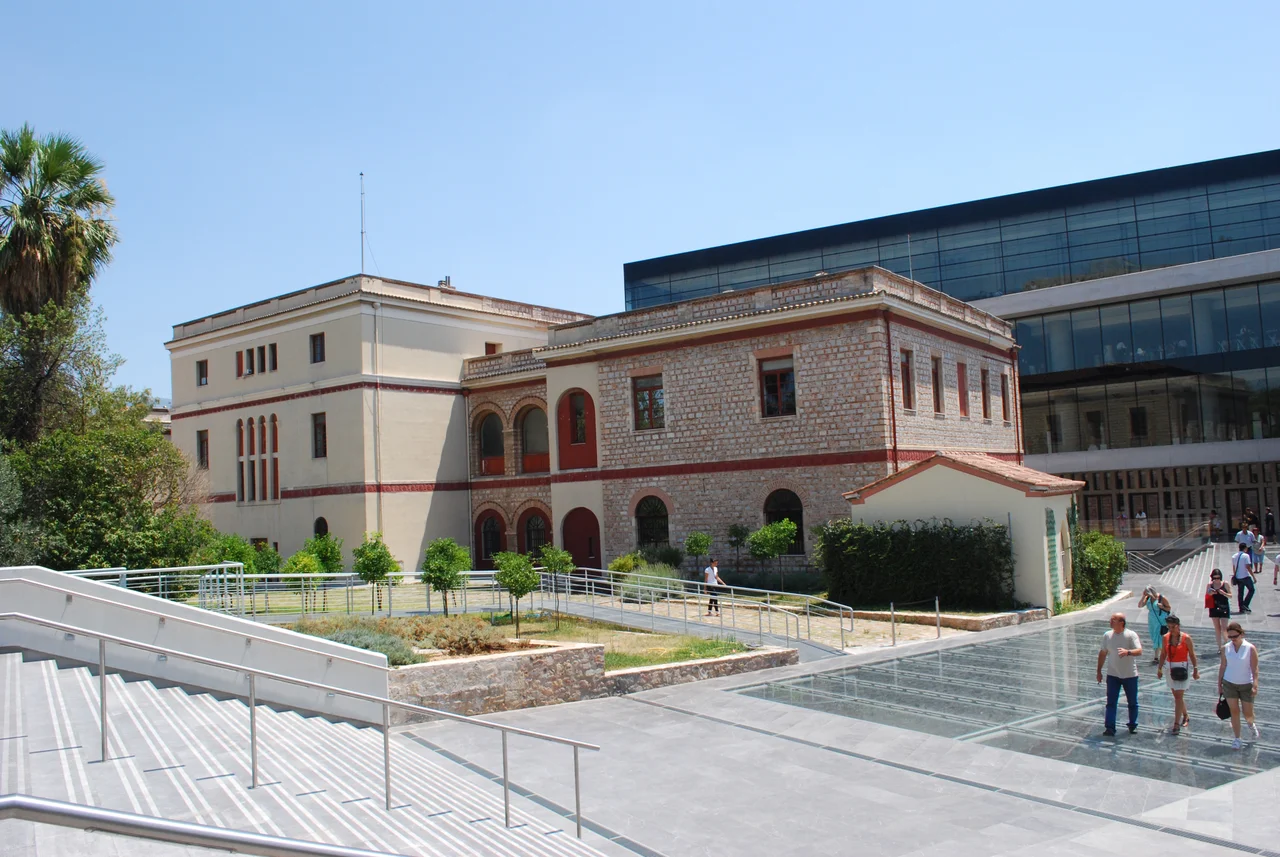
When a German engineer named Weiler drew up plans for a building in newly liberated Athens in 1834, he could not have guessed what it would one day hold. His sturdy structure, completed in 1836, would serve as a military hospital and a barracks for the gendarmerie before being reborn, a century and a half later, as something far stranger and more poetic: a place where the scattered sculptures of the Parthenon are gathered back together - not in marble, but in plaster. The Museum of the Center for the Acropolis Studies is where the great monument above is taken apart, studied, and modeled, a quiet workshop for understanding the most famous ruin in the Western world.
The Weiler Building
The museum is housed in the Weiler Building, named for the Bavarian engineer who designed it in 1834 and built it in 1836 - in the first years after Greece won its independence, when Bavarian influence ran deep in the young kingdom. For decades it had nothing to do with art. It served as a military hospital and later a gendarmes' barracks, a workaday government building near the foot of the Acropolis. Between 1985 and 1987 it was carefully remodelled and converted into a museum, its solid neoclassical bones preserved. That conversion was led by the archaeologist Evi Touloupa, then director of the Athens Ephorate of Prehistoric and Classical Antiquities, who shaped the building into a center devoted entirely to the rock that towers above it.
The Marbles in Plaster
At the heart of the collection are casts of the Parthenon sculptures - faithful plaster copies of the frieze, metopes and pediments carved under Pheidias in the fifth century BC. This is more meaningful than it sounds. The originals are famously dispersed: some remain in Athens, while many were removed in the early nineteenth century and sit in the British Museum and elsewhere, the subject of one of the world's longest-running cultural disputes. Gathered here in cast form, the sculptures can be seen as a single, continuous program again - studied as the unified composition their makers intended, even as the actual stones remain divided across nations and centuries.
Building the Acropolis, in Miniature
Beyond the casts, the museum traces how the Acropolis itself came to be. Plaster models lay out the architectural development of the monuments from Neolithic times to the present, letting visitors watch the citadel grow and change across thousands of years - rock, fortress, sanctuary, ruin. A permanent exhibition is devoted to the painstaking work of conservation and restoration, with displays focused on the Erechtheion and the other temples of the rock. As part of the wider Acropolis Museum and its research workshops, this is less a gallery of finished treasures than a window into the labor behind them: the measuring, modeling and mending that keeps a 2,500-year-old monument standing.
A Quiet Companion to the Rock
It is easy to overlook this museum in the shadow of its towering neighbors. Visitors climb to the Parthenon or fill the gleaming halls of the new Acropolis Museum nearby, while the Weiler Building keeps its older, scholarly counsel. Yet there is something fitting about studying the Acropolis from a building that has itself survived nearly two centuries of Athenian history - hospital, barracks, museum. To stand among its plaster casts is to understand the monument above not as a fixed, timeless ruin, but as something continuously researched, remodeled and cared for by generations of hands, working patiently in its shadow.
From the Air
The Museum of the Center for the Acropolis Studies sits at roughly 37.969 N, 23.729 E in the Weiler Building, on the southeastern side of the Acropolis near Makrygianni and the new Acropolis Museum in central Athens. The nearest major airport is Athens International (LGAV), about 28 km to the east-southeast. From the air, the Acropolis rock with the Parthenon on its summit is the unmistakable landmark; this building lies just to its southeast, between the ancient citadel and the dense neighborhoods running down toward the coast. The Attic basin's clear, dry air usually offers long-range visibility, with Lycabettus Hill to the north and the Saronic Gulf to the south aiding orientation.
Nearby Stories
- Great Sand Beach 5 km away
- Battle of Delium 7.7 km away
- Tower of Aliartos 9 km away
- HMHS Britannic 10 km away
- Saronic Gulf 15 km away
- Sousaki Volcano 17 km away
- Sanctuary of Apollo Maleatas 24 km away
- Skyros 66 km away