.jpg)
National Museums Liverpool
It is the only national museums group in England based entirely outside the capital. Its trustees are appointed by the Secretary of State for Culture. Its holdings include more than one million objects. Its eight venues all charge no admission. National Museums Liverpool exists because, in the mid-1980s, the Walker Art Gallery's masterpieces -- Rubens, Rembrandt, Hogarth, Holbein, Stubbs, Turner -- were threatened with sale to fund social housing by a Militant-controlled city council, and the only way the government of Margaret Thatcher could save them was to nationalise the lot. The Merseyside Museums and Galleries Order 1986 created a new trustee body to govern what had been Liverpool's civic collections, and the city has run them ever since with a charitable status, an independent board, and the quiet stubbornness of a place that long ago decided its art was as important as London's.
From Liverpool Corporation to County Council
Until 1974 the museums of Liverpool were owned and operated by the Liverpool Corporation, the city's main local authority. The Walker Art Gallery had been donated to the city by Sir Andrew Barclay Walker, brewer and mayor, in 1873. The Liverpool Museum (now World Museum) had grown out of donations starting in 1851. The Lady Lever Art Gallery at Port Sunlight had been established by Lord Leverhulme, the soap magnate, in 1922 to display his private collection. In 1974 the reorganisation of English local government created Merseyside Metropolitan County Council, and the museums passed to the new authority by mutual agreement with the Corporation. In 1978 the Charity Commission transferred trusteeship of the Lady Lever to the County Council, consolidating the collections under a single body. It seemed an orderly arrangement. Then Margaret Thatcher decided to abolish the Metropolitan Counties altogether.
The Walker for Sale
The political crisis came in the mid-1980s. Liverpool City Council was then dominated by the Militant tendency, a Trotskyist group that had effectively taken over the local Labour Party, led by Derek Hatton and Tony Mulhearn. Faced with deep central-government cuts and a city in serious economic distress, the Militant council pursued a defiant programme of council-house building funded by an illegal deficit budget. The government threatened to send in commissioners. The council threatened to issue redundancy notices to its entire workforce. And, as the Metropolitan County Council approached abolition in 1986 — with the Liverpool museums set to revert to the city — Militant councillors began openly discussing what they would do with the Walker Art Gallery's collection. The talk was of selling masterpieces to fund council housing. Sotheby's was approached. The art world panicked. Liverpool's cultural establishment, the Department of National Heritage, MPs of all parties, and the National Gallery in London mobilised to prevent it. A parliamentary select committee reported in 1984 on the situation.
Nationalisation, 1986
The compromise was unprecedented. Westminster passed the Merseyside Museums and Galleries Order 1986, nationalising all of Liverpool's principal museums and galleries — the Walker, the Liverpool Museum, the Lady Lever, Sudley House — and creating a new trustee body called National Museums and Galleries on Merseyside, modelled on the London trustee museums such as the National Gallery and Victoria and Albert. The Board would be appointed by the Secretary of State for Culture, Media and Sport. Funding would come direct from central government, bypassing the city council entirely. The collections would be held in trust for the nation. The first chairman was Sir Leslie Young CBE, who served from 1986 to 1995. The founding director was Sir Richard Foster, who served until his death in 2001. Under their leadership the new institution gradually expanded its remit: the Merseyside Maritime Museum had opened in 1980 and was incorporated into the group; the Conservation Centre opened in 1996; the Museum of Liverpool followed in 2011. The Trustees rebranded the institution as National Museums Liverpool in 2003, though the legal title remains National Museums and Galleries on Merseyside.
Eight Venues, All Free
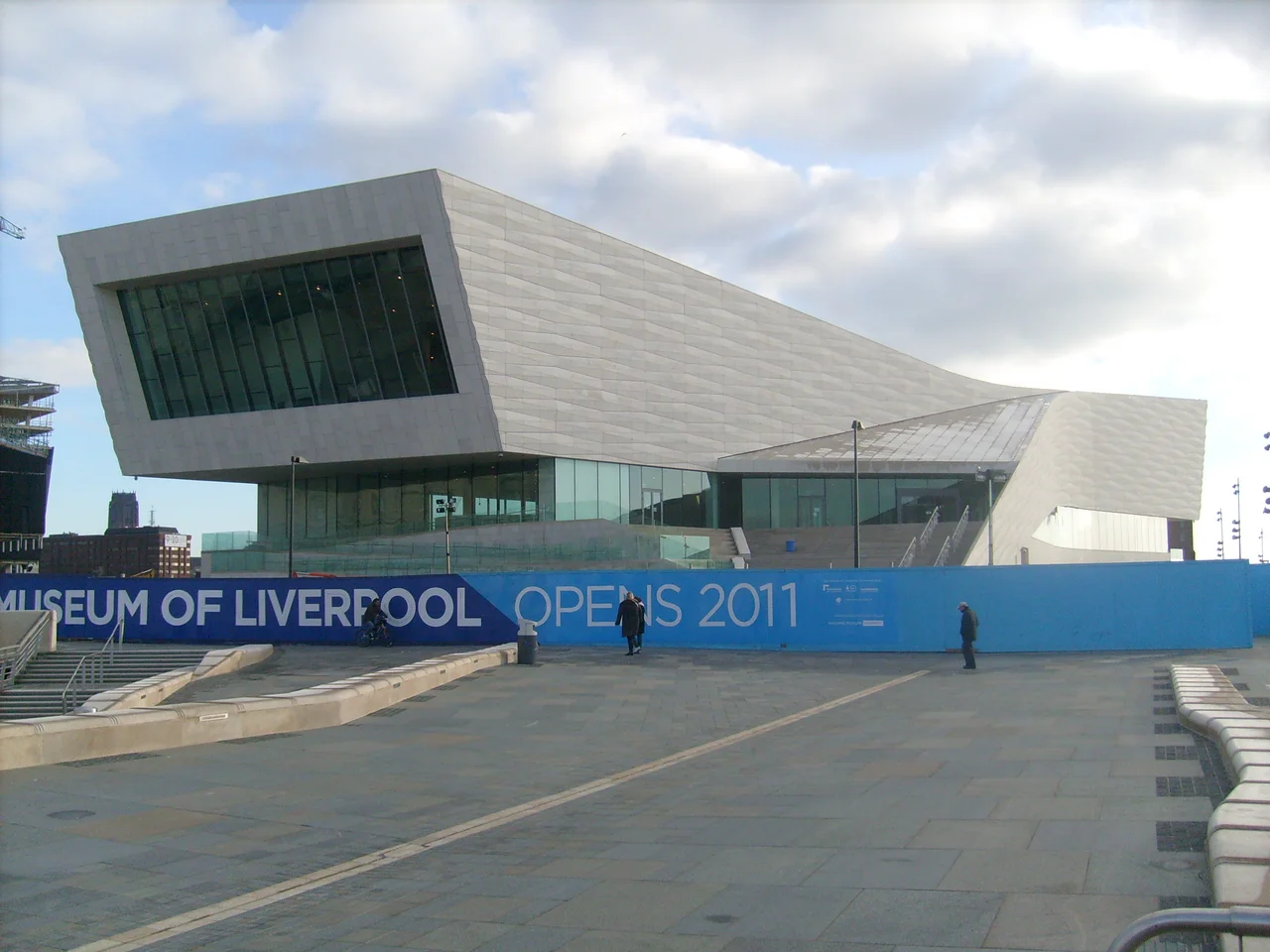
National Museums Liverpool now comprises eight different venues across Merseyside, all charging no admission. The Walker Art Gallery on William Brown Street holds one of the finest civic art collections outside London — Hogarth's David Garrick, Stubbs' horses, Holman Hunt's Triumph of the Innocents, Rossetti pre-Raphaelites, and a strong contemporary contingent. The World Museum, in the same building complex, covers archaeology, ethnology, natural history, and Liverpool's own Egyptology collection. The Merseyside Maritime Museum and International Slavery Museum share Warehouse D at the Albert Dock. The Museum of Liverpool sits at Mann Island. The Lady Lever Art Gallery at Port Sunlight on the Wirral holds Leverhulme's collection — Wedgwood, Chinese porcelain, English furniture, and a particularly fine collection of pre-Raphaelite paintings. Sudley House in Mossley Hill displays the collection of George Holt, a nineteenth-century shipowner and Liberal MP, in his preserved Victorian merchant's home. The Piermaster's House by Albert Dock recreates a Second World War family home and adds the eighth venue to the group. All free, all open to the public, all managed by a single trustee body that does not answer to Liverpool City Council. The compromise has held for forty years and is now simply how the city's collections work.
Boards and Directors
The chairmen since Leslie Young have been David Croft McDonnell (1995-2005), the television producer and broadcaster Loyd Grossman (2005-2008), Sir Phil Redmond — creator of Brookside and Hollyoaks — (2008-2018), Sir David Henshaw (2018-2025), and Andrea Nixon (2025-present). The directors after Sir Richard Foster have been Dr David Fleming (2001-2019), who oversaw the major capital projects including the Museum of Liverpool, and Laura Pye (2019-present), under whom the institution has navigated the renovation closures of the Maritime and Slavery Museums (2025-2028) and the Walker's 150th-anniversary refurbishment plans. The trust holds in its care more than one million objects, and the venues are open to the public six days a week, Tuesday through Sunday. England's only national museum group outside London continues to operate the city's collections under terms set, in panic and pragmatism, four decades ago. The Walker's Rubens and Rembrandts still hang in Liverpool. They were going to be sold once. They are not going anywhere now.
From the Air
Located at 53.408N, 2.989W in central Liverpool, but the institution operates eight venues across Merseyside. The Walker Art Gallery and World Museum are on William Brown Street near St George's Hall. The Maritime Museum and Slavery Museum share the Albert Dock complex south of Pier Head. The Museum of Liverpool is at Mann Island. Lady Lever Art Gallery is at Port Sunlight on the Wirral, approximately 4nm south-southwest. Nearest airport: Liverpool John Lennon Airport (EGGP), approximately 7nm southeast. Best viewed at 2,500-4,500ft.
Nearby Stories
- RAF Wrexham 3.3 km away
- Birkdale Palace Hotel 3.7 km away
- Turton Tower 4.1 km away
- Tatton Park 5.6 km away
- Abergele Rail Disaster 9.6 km away
- Diglake Colliery Disaster 13 km away
- Ysbyty Ifan 16 km away
- Celtic Array 62 km away