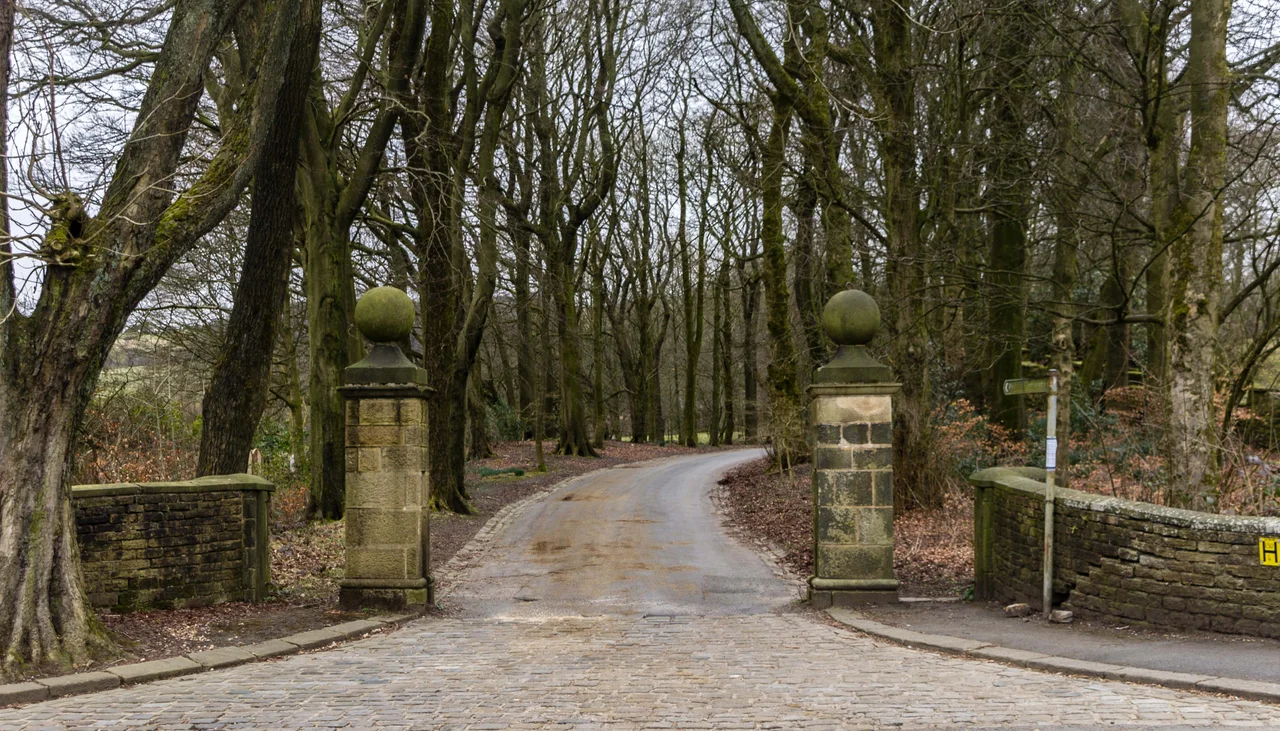

Turton Tower
Six hundred feet above the Lancashire plain, on ground William Camden once dismissed as standing "amongst precipices and wastes," a square stone tower keeps watch over the moors. Turton Tower began life in the early 15th century as a defensive pele - three squat storeys with four-foot walls and narrow slits for windows, the kind of structure built when the border to the north was a problem rather than a county line. The building you see today is the result of six centuries of owners deciding their tower needed to be something else.
From Defence to Display
In 1596 a thorough reinvention transformed the squat fortification into something its builders would not have recognised. The narrow defensive windows were blocked up. The walls were raised to a full forty-five feet, the new upper storey built in cleanly cut ashlar stone that contrasts visibly with the rough rubble below. Three, four, and five-light mullioned and transomed windows opened the dim interior to Elizabethan daylight. A north wing went up. The cruck-framed timber buildings around the tower were clad in stone during the next century. Almost everything that survives from the medieval phase is contained in those original four-foot walls and the projecting garderobe shaft on the northwest corner - a reminder that even fortified houses had to deal with the practicalities of indoor life.
The Merchant Who Bought It
In 1628 the Orrell family sold Turton Tower to Humphrey Chetham, a Manchester cloth merchant whose name would outlast every other owner the building ever had. Chetham used his fortune to found two of Manchester's most important institutions: Chetham's Library, the oldest free public reference library in the English-speaking world, and what became Chetham's School of Music. He never lived at Turton full time - the tower passed through his descendants in the Bland, Green, and Frere families, who mostly leased it out to tenant farmers. For two centuries the Elizabethan house slowly became a farmhouse with grand pretensions, its mullioned windows still admitting light to rooms used for ordinary work.
Victorian Romance
After 1835 the Kay family arrived and decided the building needed to look more like the medieval manor it almost was. They added a Dutch gable facade, restored interiors in the heavily upholstered taste of the day, and arranged rooms with the names visitors still encounter: the Tapestry Bedroom, the Bradshaw Bedroom, the Morning Room, the Drawing Room. The Victorians did not pretend to be restoring something - they were creating a romantic version of the past that had never quite existed. The mix is now part of what the building is: a real medieval tower, a real Elizabethan house, and a real Victorian fantasy, all stacked on top of one another.
What Survives
After local government reorganisation in 1974 split the old township of Turton, the tower passed to the Borough of Blackburn with Darwen, which still manages it. As a Grade I listed building and scheduled ancient monument, it carries the highest protections English heritage law offers. Visitors climb the same spiral stair the Elizabethan builders inserted, look out the same windows opened by the 1596 remodelling, and stand inside walls built when the defining anxiety of life on this hill was Scottish raids. The view from the battlements still takes in Bolton four miles south and the moors stretching toward Pendle in the east.
From the Air
Turton Tower sits at 53.633°N, 2.409°W, on high ground 600 feet (183 m) above sea level in the West Pennine Moors about four miles north of Bolton. Best viewed VFR at 2,000-3,000 feet AGL. Nearest airport is Manchester (EGCC) about 15 nm to the southeast. The tower's square stone profile and Dutch-gabled north wing rise above wooded grounds and are easy to pick out against the open moorland. Manchester Class D airspace begins nearby - check the chart before descending.
Nearby Stories
- Bank Hall 2.9 km away
- Huyton 3.7 km away
- Low Moor Explosion 5.1 km away
- Hat Works 8.8 km away
- Heysham Port 10 km away
- Hope Cement Works 11 km away
- Mercer Art Gallery 14 km away
- Malham Cove 14 km away