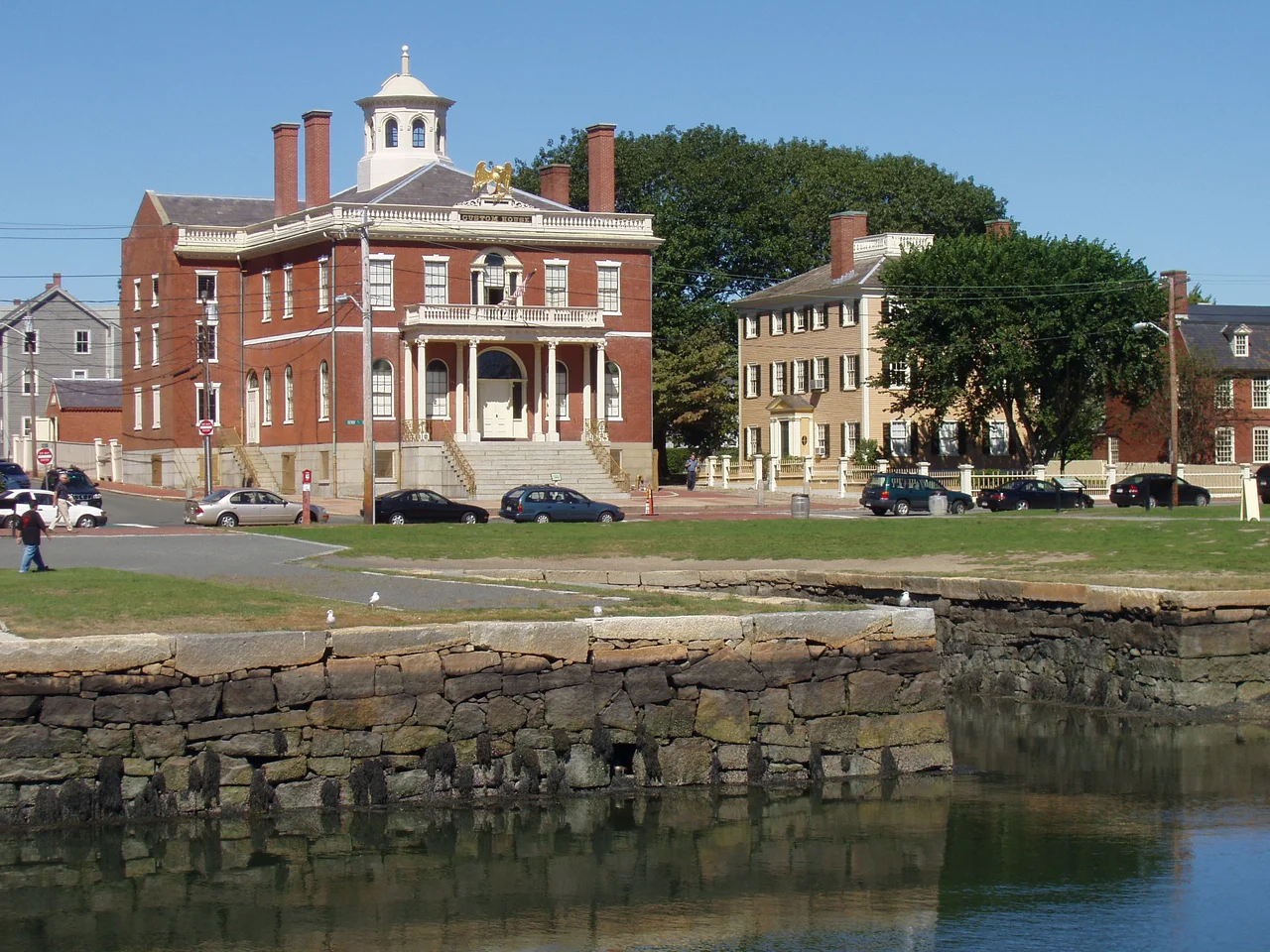

National Park Service
On August 25, 1916, President Woodrow Wilson signed the Organic Act creating the National Park Service. The agency was tasked, in language that has remained remarkably durable, to conserve the scenery and the natural and historic objects and the wild life therein and to provide for the enjoyment of the same in such manner and by such means as will leave them unimpaired for the enjoyment of future generations. The first director was a 49-year-old Chicago businessman named Stephen Mather, who had made a fortune in borax mining and now planned to spend his energy persuading the country that its national parks were not just remote curiosities but national assets worth defending. Mather's deputy was Horace Albright, who would succeed him as director. Together they built the agency that now manages 421 units across the country, employs roughly 20,000 people, hosts 331 million visitors a year, and is housed in a building three blocks south of the White House. The novelist Wallace Stegner later called the National Park Service idea America's best.
From Yellowstone to Organic Act
Yellowstone became the country's first national park on March 1, 1872, when Ulysses S. Grant signed the legislation. For the next forty-four years, the parks Congress created had no unified administration - the Army managed Yellowstone, Yosemite, Sequoia, and General Grant. Wind Cave was run by the Interior Department directly. Mesa Verde had its own custodian. By 1916, fourteen national parks and twenty-one national monuments were spread across multiple federal agencies. Mather and others argued the system needed a single coordinating bureau. The Organic Act of 1916 created the National Park Service within the Department of the Interior. Mather, who had been an unofficial advisor to Interior Secretary Franklin K. Lane on park policy, became the first NPS director - a position he held until ill health forced his retirement in 1929. Albright served as second director from 1929 to 1933. The agency grew steadily through the New Deal years, absorbing the national monuments managed by the Forest Service and the war memorials managed by the War Department through Franklin Roosevelt's 1933 reorganization order.
421 Units
The system now includes 421 units across nearly all U.S. states, territories, and the District of Columbia, totaling over 84 million acres. Sixty-three units carry the formal title National Park - Yellowstone, Yosemite, Grand Canyon, Glacier, Acadia, Hawaii Volcanoes, Joshua Tree, Death Valley, Great Smoky Mountains, and so on. The rest carry varied designations: National Monument, National Historic Site, National Memorial, National Battlefield, National Recreation Area, National Seashore, National Preserve, National Parkway. The Statue of Liberty is an NPS unit. So is the Lincoln Memorial. So is the entire 444-mile Natchez Trace Parkway from Nashville to Natchez. Great Smoky Mountains National Park, straddling the Tennessee-North Carolina border, draws around 12 million visitors a year - more than any other national park. Gateway National Recreation Area in New York and New Jersey draws another 7-8 million. The full system hosts 331 million visits annually.
The Maintenance Backlog and the GAOA
By 2019, the NPS operating budget had reached $4.085 billion - the largest budget allocation of any Department of the Interior bureau or program. Nonetheless, the agency carried an estimated $12 billion maintenance backlog: deferred repairs to roads, trails, water systems, employee housing, and visitor facilities accumulated across decades of inadequate appropriations. On August 4, 2020, President Trump signed the Great American Outdoors Act, which permanently funded the Land and Water Conservation Fund at $900 million per year and provided $9.5 billion over five years to address the maintenance backlog. The legislation passed with bipartisan support. As of 2025, the backlog had been reduced but not eliminated. In February 2025, over 1,000 NPS employees were dismissed in a federal workforce reduction. Many sites were left grossly understaffed, with seasonal hiring cycles disrupted at parks that had already been operating on thin margins. The long-term effect remains uncertain.
Rangers and the Uniform
The flat-brimmed Stetson, the gray-green wool uniform, the gold-buckled belt - the National Park Service ranger uniform is one of the most recognized civilian government uniforms in the United States. Rangers fill broad job categories: interpretation rangers lead programs, hikes, and visitor-center talks; law enforcement rangers carry firearms and police authority, functioning as the primary law enforcement in most NPS units; resource management rangers handle fire, wildlife, and natural-resource issues. The agency also employs the U.S. Park Police - a uniformed federal police force that patrols the National Mall and several large urban units. Beyond the uniformed rangers, the workforce includes architects, archeologists, botanists, geologists, historians, archivists, curators, firefighters, EMTs, dispatchers, lifeguards, plumbers, masons, heavy equipment operators, and the small army of office staff who keep the system functioning. The Volunteers-In-Parks program, authorized in 1969, brings in over 221,000 volunteers each year who contribute roughly 6.4 million hours.
The Ahwahnee Problem
In 2015, the Delaware North Corporation - a concessionaire that had operated lodging and restaurants at Yosemite National Park - sued the NPS in the U.S. Court of Federal Claims when it lost the concession contract to a competitor. Delaware North asserted that it had trademarked the names of major Yosemite landmarks during its tenure - including Ahwahnee Hotel, Curry Village, Wawona Hotel, Badger Pass, and Yosemite Lodge - and demanded $51 million from the new concessionaire for the trademarks. The NPS valued the names at $3.5 million. Rather than pay the demanded amount, the NPS in January 2016 simply renamed the landmarks: the Ahwahnee became the Majestic Yosemite Hotel; Curry Village became Half Dome Village; the Wawona became Big Trees Lodge. Public outcry was substantial - the Ahwahnee had been operating under that name since it opened in 1927. In 2019, after the litigation settled, the original names were restored. The episode highlighted what NPS leadership called an improper and wildly inflated valuation of public-domain Native words turned into private intellectual property. The agency continues to issue concession contracts to private companies including Xanterra, Forever Resorts, and the surviving Delaware North operations at other parks - because the NPS remains a public stewardship agency that needs private operators to provide visitor amenities, and the negotiations between them remain a continuing exercise in defining what belongs to the parks and what belongs to the businesses that serve them.
From the Air
The National Park Service headquarters is in the Main Interior Building at approximately 38.8945 N, 77.0420 W, on C Street NW in the Foggy Bottom area, several blocks southwest of the White House. Best viewed from 1,500 to 2,500 feet AGL. The Main Interior Building is a large limestone-clad federal building between C and E Streets, distinguishable by its broad rectangular footprint. The Washington Monument lies a half mile southeast. Reagan National (KDCA) is three nautical miles south. The site is inside the Washington Flight Restricted Zone; GA overflight prohibited.
Nearby Stories
- Gunston Hall 1.1 km away
- 2023 Baltimore Shooting 4.9 km away
- Battle of Middleburg 6.6 km away
- Crownsville Hospital Center 10 km away
- Battle of Loudoun Heights 13 km away
- First Battle of Rappahannock Station 20 km away
- Howard County, Maryland 21 km away
- Harriet Tubman Underground Railroad 50 km away