
Naval Museum Complex Balaklava
For decades, this place did not officially exist. No map acknowledged the tunnel mouth hidden in the cliff at the edge of Balaklava Bay, and the town that grew up around it was closed even to Soviet citizens without a permit. Behind a camouflaged door thick enough to shrug off a direct nuclear strike lay a full submarine base, hollowed out of Mount Tavros itself. Sailors could sail a boat in from the sea, seal the mountain behind them, refit and rearm, and slip back out without a single satellite ever glimpsing the vessel.
A City Inside the Rock
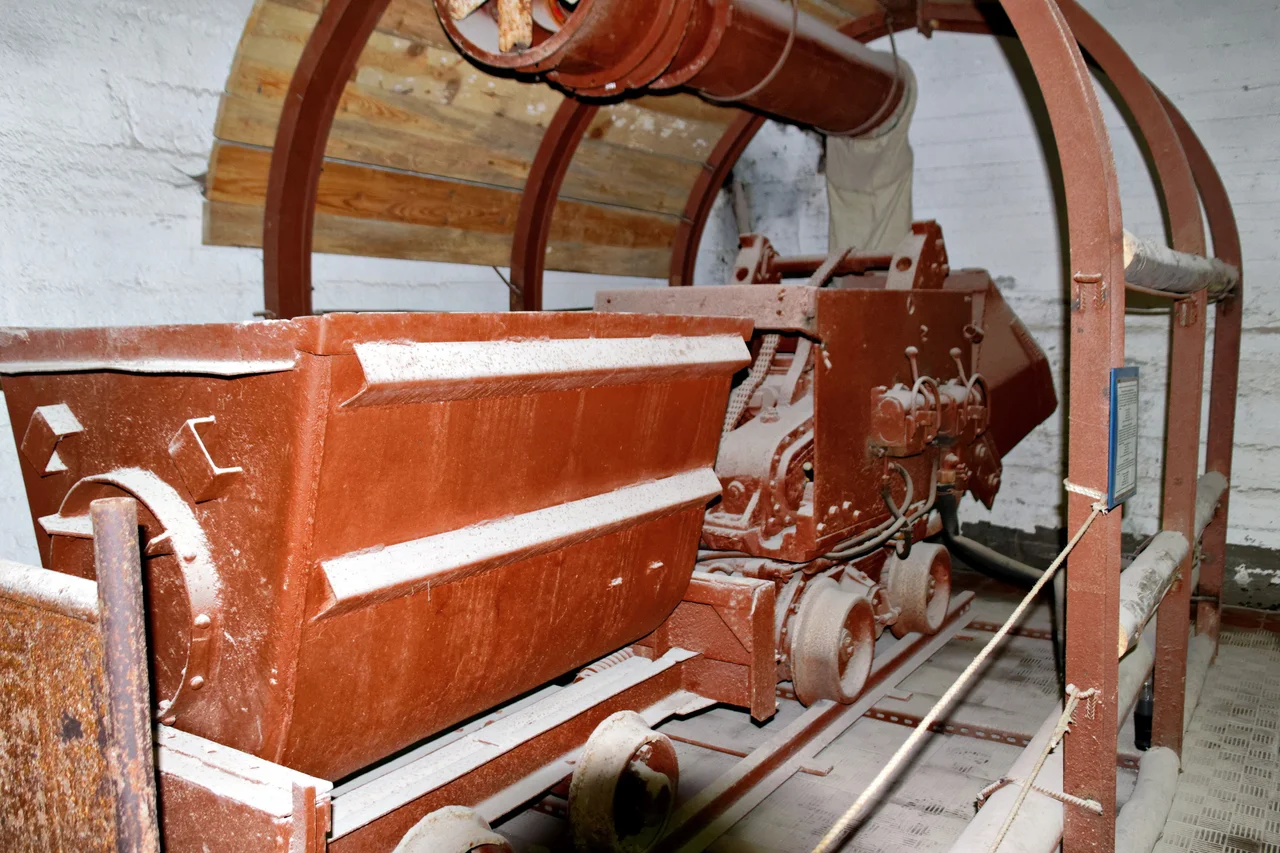
The engineers who dug Object 825 GTS between 1953 and 1961 were not building a hangar. They were building a fortress that could survive the end of the world. The complex was rated to withstand a category-I blast, a direct nuclear hit of roughly 100 kilotons, and everything essential was tucked behind the granite: a canal system that let submarines float straight through the mountain, a dry dock for hull repairs, machine shops, and warehouses stacked with torpedoes and other munitions. Fresh air, water, and food stores meant the crews inside could keep working while the surface above burned. In the logic of the Cold War, the point was not just to hide the fleet but to guarantee it could keep fighting after the first strike had already fallen.
The Bay That Kept the Secret
Balaklava was chosen for its geography as much as its remoteness. The bay is a narrow, twisting inlet, all but invisible from the open Black Sea, its entrance folded behind steep hills so that a passing ship might never notice the water beyond. A submarine could enter that hidden channel, disappear into the mountain, and reappear days later as if it had never surfaced. To preserve the illusion, the entire town was sealed off. Residents needed special documents, visitors were rare, and the word 'submarine' was not spoken aloud. For nearly thirty years the base operated in this silence, servicing the boats of the Black Sea Fleet while the fishermen and townspeople of Balaklava lived their lives a few hundred meters from a secret they were forbidden to name.
Opening the Door
The Cold War ended, and the mountain had no more secrets to keep. Decommissioning began in 1993, and by 1996 the last submarines had been towed out. For a while the abandoned tunnels were stripped and left to the damp. Then, in 2003, the base opened its blast doors to the public as a museum, its old repair shops and arsenals turned into exhibition halls, a chronicle of the confrontation between two superpowers now told to tourists walking the same channels that once hid nuclear-armed boats. Standing on the underground pier, in the cold and the echo, visitors feel the strange scale of an era when nations dug entire harbors into the earth, certain the sky might one day fall.
A Museum of Two Wars
The complex holds more than the memory of submarines. Alongside its Cold War galleries it houses a museum of the Crimean War, the nineteenth-century conflict whose most famous episodes played out in these very hills and bays. It is a fitting doubling. Balaklava has been a place of hidden military value for a very long time, its narrow harbor prized by armies and navies across the centuries, and the base beneath Mount Tavros is only the most recent, and most secretive, chapter. Walk the tunnels today and the two eras press together: the trenches and cavalry of the 1850s in one hall, the torpedoes and blast doors of the 1960s in the next, both born of the same hard truth that whoever controls this coast controls a great deal more than the water in front of it.
From the Air
The base entrance sits at 44.50°N, 33.60°E, at the mouth of Balaklava Bay on Crimea's southwestern coast. From 6,000 to 8,000 feet the twisting, near-hidden inlet of Balaklava is the standout landmark, with the larger harbor of Sevastopol a short distance up the coast to the northwest. The nearest major airport is Sevastopol/Belbek (UKFB), with Simferopol (UKFF) roughly 45 miles inland to the northeast.
Nearby Stories
- 1988 Black Sea Bumping Incident 5.4 km away
- Battle of the Alma 7.5 km away
- Yalta 8 km away
- Russian Battleship Ekaterina II 10 km away
- Akmesdzhyt Friday Mosque 12 km away
- Soviet Hospital Ship Armenia 15 km away
- KaZantip 52 km away
- Januarius MacGahan 338 km away